
This Thursday was the (somewhat arbitrary) milestone of 100 days until New Zealand’s general election in October, as noted in a number of news articles this week.
While a nice round number, 100 days is an odd choice to mark the countdown considering the pre-election period officially begins just one week later on Friday, July 14.
Then it will be exactly three months until the election and the start of the final three sitting weeks before Parliament is dissolved.
However, Friday is the second-ever Matariki public holiday (thanks Jacinda) and nobody wants to be reading about the election on a rare winter day off.
Readers will hopefully be busy staring at the stars, remembering passed loved ones, and reflecting on the (lunar) year ahead. Or, maybe just watching Netflix with the heater on.
Either way, let's do a quick stocktake on the political landscape before everything kicks off.
Poll position
The two major parties are literally neck and neck in the polls, right now, and that doesn’t change when you add in likely coalition partners.
In the most recent high quality poll, Labour was on 36%, National on 35%, Act on 11%, Greens on 7%, and Te Pāti Māori on 3.5%.
The methodologies used to smooth out polls can produce different results, but most show the two coalition blocs with an almost equal number of seats.
Labour, the Green Party, and Te Pāti Māori have generally had the advantage in recent polls but with razor thin margins. Even a tiny shift in support could change the next government.
In previous MMP elections there has often been a centrist party prepared to act as a kingmaker in a tight race. Not so this time.
National has ruled out Te Pāti Māori, New Zealand First (which is not in Parliament) has ruled out working with Labour, and the Act Party has all but ruled out working with NZ First.
Barring some exceptional circumstances, the coalition blocs have already been set in cement.
Issues
As in every election, the governing party will be running on its patchy track record and the opposition will be running on a vague sense of change.
In an environment of simultaneous recession and inflation, this should be the National Party’s election to lose but it has so far failed to pull ahead.
An issues poll conducted by Ipsos found 63% of respondents considered inflation/cost of living to be the top issue facing the country.
In second place was crime/law and order with a record 40% of respondents a top issue — that’s another issue National should feel confident discussing.
Crime was only number five on the list a year ago, but has climbed steadily into second place.
The next three top issues are ones more associated with the left-leaning coalition bloc: housing costs, healthcare, and climate change.
Over the 2020 Parliamentary term, respondents to Ipsos’ poll have given the Labour government a progressively worsening score. It has fallen from 7.3/10 down to 5/10.
Personalities
Like it or not, many people vote based on their personal affinity with party leaders.
An Interest.co.nz commenter once compared it to picking who you’d rather sit next to on a long haul flight.
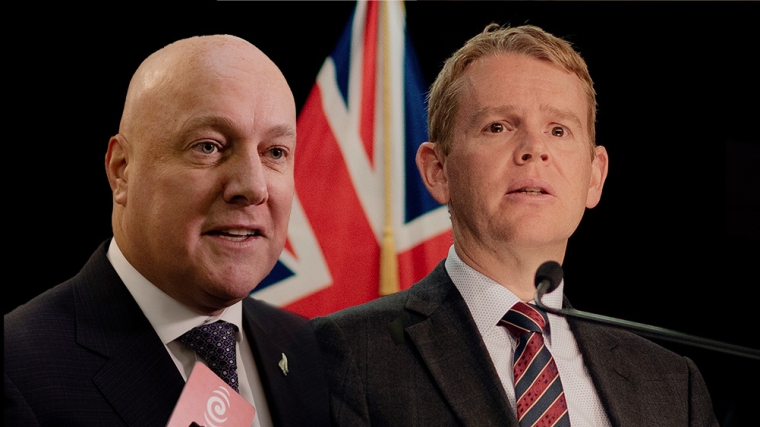
Chris Hipkins has consistently led Chris Luxon in the preferred Prime Minister polls and is generally considered the more likable of the two.
This should be taken with a grain of salt however, as the preferred PM poll tends to lean heavily towards whomever is currently in the job.
Luxon is a relative newcomer to politics and hasn’t performed as well in the media as Hipkins, who is a career politician. The TV debates will be worth a watch.
Economy
Bill Clinton’s 1992 campaign advisor made famous the phrase “it's the economy, stupid” and it has been taken as given that a recession will destroy a government’s chance at reelection.
However, that thinking has changed in recent years and Labour’s steady poll performance shows that voters aren’t punishing them for the downturn yet.
One possible reason for this, is that unemployment remains very low and wages are generally tracking inflation higher. The famous phrase might need to be re-coined as “it's the jobs, stupid”.
Read David Hargreaves piece from Friday for a more detailed take on the economy, but the Reserve Bank expects unemployment to rise to 4.6% by the end of the year.
Meanwhile inflation is predicted to fall to below 5% and economic growth to be virtually zero.
Whether that is enough to decide the election is an open question. With the polls this tight, almost anything could tip the balance.
We welcome your comments below. If you are not already registered, please register to comment
Remember we welcome robust, respectful and insightful debate. We don't welcome abusive or defamatory comments and will de-register those repeatedly making such comments. Our current comment policy is here.