
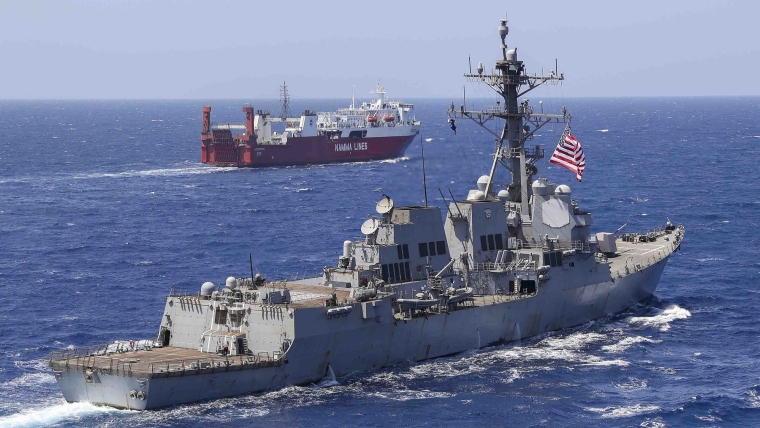
New Zealand will deploy six Defence Force personnel to the Middle East, where they will help target US missile strikes against Houthi forces in Yemen and the Red Sea.
The Houthi are an Islamic militia which seized parts of Yemen, including the capital Sanaa and some of its Red Sea coastline, during a 2014 revolution.
Houthi forces, which are supported by the Iranian Government, have been attacking shipping vessels in the Red Sea in retaliation for Israel’s war in Gaza.
While they claim to be only targeting ships associated with Israel, the attacks have been relatively indiscriminate with vessels from many different countries damaged.
Prime Minister Christopher Luxon announced on Tuesday NZ will deploy a “six-member Defence Force team” to the region to “uphold maritime security in the Red Sea”.
“Houthi attacks against commercial and naval shipping are illegal, unacceptable and profoundly destabilising,” he said in a statement.
The Red Sea and the Suez Canal in Egypt is a critical trade route for goods being transported between Asia and Europe. Usually, almost 15% of global trade travels past Yemen.
But many vessels are now being diverted around the south of Africa to avoid the attacks, adding roughly 10 days to the journey and pushing up shipping costs.
Inflation risk
In a note, Kiwibank economists said the Houthis attacks were causing shipping rates to spike and adding pressure to inflation.
Freight disruptions were a big driver of inflation following the pandemic and the normalization of shipping routes has helped slow the speed of price increases.
“We are unlikely to see the same sort of spike caused by the Covid crisis. But any spike in costs is unwelcome,” the economists said.
The Shanghai Shipping Containerized Freight Index has jumped from $1,000 in December to $2,200 now, but prices are still well below the near $5000 levels seen during late 2021.
Luxon said about 10% of NZ’s exports and about 20% of its imports travel through the Red Sea on their way to the UK, Europe, and North Africa.
“So, it will have an impact on New Zealand, and we've all gone through a COVID experience and seen what disruption to supply chains can do,” he told reporters.
International law
While inflation is an important domestic concern, the NZ Defence Force deployment aims to protect the much larger principle of freedom of navigation which underpins global trade.
NZ already has 12 service people deployed to a combined naval force, based in Bahrain, which protects international shipping routes from smugglers and pirates.
Luxon said secure shipping lanes were “integral to our national interests” and Defence Minister Judith Collins said NZ’s remote location made stability “even more important”.
Collins said the team of six being deployed to the Middle East would not enter Yemen but would be involved in targeting US airstrikes based on intelligence information.
The American Government asked New Zealand to contribute to a joint-effort to counter the Houthi attacks in the Red Sea. Canada, Australia, and the UK are also involved.
Green Party co-leaders, James Shaw and Marama Davidson, said they were “deeply disturbed” by the deployment to the Red Sea.
“Right now, what we are witnessing in the Middle East is a regional power play between different state and non-state groups. This decision is only likely to inflame tensions”.
The party said it will seek a Parliamentary debate on the issue, push ministers to focus on de-escalating the conflict, and continue to call for a permanent ceasefire in Gaza.
We welcome your comments below. If you are not already registered, please register to comment
Remember we welcome robust, respectful and insightful debate. We don't welcome abusive or defamatory comments and will de-register those repeatedly making such comments. Our current comment policy is here.