
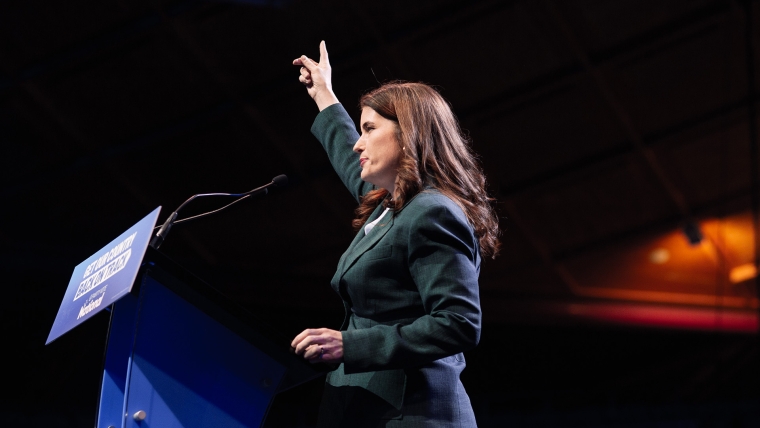
A group of economists have written to the Minister of Finance asking her to rethink plans to aggressively rein in government spending, which they believe is worsening the recession.
The open letter was written by former Productivity Commissioner Ganesh Nana and was co-signed by 14 other economists, researchers, and company directors.
Most of these signatories are known left-leaning thinkers, such as union economist Craig Renney, but they also have led impressive careers.
For example, Girol Karacaoglu was the Treasury’s chief economist and Deputy Secretary for Macroeconomics from 2012 to 2016 — and prior to that he ran the Co-operative Bank.
The letter was also signed by three Order of Merit recipients, Suzanne Snively, Rob Campbell, and Susan St John, who were each recognised for their services to governance, business, and social policy.
In the letter, they argue planned spending cuts will “needlessly exacerbate” the recession and restrictive debt targets will motivate under-investment in infrastructure.
“Failure to correct this course will lead to higher economic scarring, with the costs borne by those with the least ability to pay, as has been demonstrated repeatedly in New Zealand’s history,” they wrote.
Additionally, they said the fiscal plan would risk “hollowing-out” business capacity and was in “direct conflict” with the goal of doubling exports in the next 10 years.
Rationale unclear
Nana told Interest.co.nz the core idea of the letter was that the Government should focus more on the economics of their budgets, rather than just the fiscal aspects.
It was pointless to balance the Crown accounts—and pay down debt—if doing so didn’t reduce the country’s dependence on foreign borrowing, and therefore its economic vulnerability.
“Importantly, private sector debt is being driven upwards by your government’s fiscal policy in pursuit of surpluses for itself and its aim of rapidly reducing public debt,” the letter said.
The current account deficit would not improve if public spending cuts shifted costs onto businesses or households, and forced them to borrow more from overseas lenders.
Similarly, cuts to departmental and capital spending could erode long-run economic resilience and constrain the ability of private firms to scale up.
“There is ample evidence that government spending, including the necessary infrastructure and allied networks, has for many years fallen well short of that required for population growth and demographic changes,” the letter said.
“This under-funding simply passes the burden of adjustments, and investment spending, to future generations”.
Another argument in the letter is that accelerating spending cuts while the economy is in a downturn could cause a vicious cycle, as happened in the United Kingdom during Conservative government austerity.
Continuing to cut spending could further weaken vulnerable sectors like retail, hospitality, and construction, leading to more job losses and a shrinking tax base, which might force yet another round of cuts.
“Arising from this situation is the long-lasting scar of the loss of entrepreneurial aspiration in our communities as the cyclical downturn is unnecessarily prolonged,” the economists said.
They called for any additional spending or infrastructure cuts to be suspended, and seek advice for a clearer economic strategy ahead of Budget 2025.
An icy response
Finance Minister Nicola Willis, who was on a trip to Antarctica, said the letter was consistent with the views of these economists — some of whom were closely associated with the previous Labour government.
“This Government fully appreciates the need for increasing investment in frontline government services and growth-enhancing infrastructure. We will continue to deliver budgets consistent with those objectives,” she said in a statement.
“We will also continue our approach of being careful with taxpayers’ dollars. The wasteful spending approach of the last government contributed to a rapid rise in debt, high inflation and rapidly rising interest rates. We won’t be repeating those mistakes.”
Budget 2024 added $7 billion to the multi-year capital allowance and $3.2 billion to annual operating spending (including the fiscal cost of tax cuts).
Future budgets will include $2.4 billion in new operating spending each year, and a total of $68 billion is expected to be spent on infrastructure over the next five years.
We welcome your comments below. If you are not already registered, please register to comment
Remember we welcome robust, respectful and insightful debate. We don't welcome abusive or defamatory comments and will de-register those repeatedly making such comments. Our current comment policy is here.