
By Chris Trotter*
What did the Government expect when it appointed a Governor of the Reserve Bank of New Zealand from Sweden? If right-wing parties wanted a house-trained Kiwi in the job, someone who understands the fundamental rule of New Zealand public administration – “don’t stick your neck out” – then why on earth didn’t they appoint one? More particularly, if they wanted a Governor willing to eat everything that emerges from the fundamental orifice of the United States and tell the world it’s chocolate, then a Swede was probably the last nationality they should have considered.
The Swedes aren’t accustomed to bending the knee to the United States. After all, this was the country that welcomed American draft dodgers to its shores back in the days when Richard Nixon and Henry Kissinger were bombing North Vietnam back to the Stone Age.
For the second half of the Twentieth Century, neutral Sweden was the one of the very few “developed” nations that the Third World could rely upon to stand with them in solidarity against the serried ranks of overbearing western capitalists.
It’s been a long time since the Swedes were obliged to tug their flaxen forelocks to an imperial overlord. (The last person in that role was Napoleon Bonaparte!) Indeed, it took the fearsome rattling of Vladimir Putin’s nuclear sabres to persuade Sweden to abandon two centuries of neutrality and fall into the arms of Nato. The Swedes didn’t really want to but, as their Finnish neighbours were discovering at roughly the same time, needs must when the Russians are driving tanks.
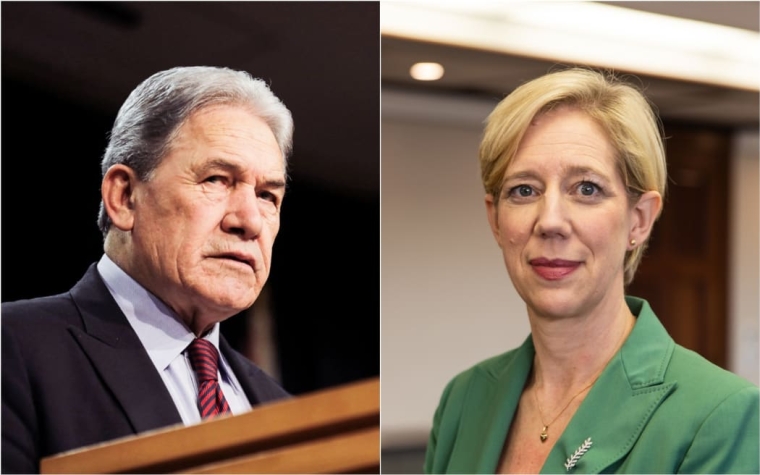
Anna Breman, in accepting the job of Reserve Bank Governor, was also assuming the moral, economic, and legislative obligations that come with it. First among these is the Governor’s obligation to preserve the independence of New Zealand’s most important financial institution.
It was, after all, New Zealand that provided the world with the model of a staunchly independent central bank, and its first Governor, Don Brash, who showed the world how it should be run.
That being the case, President Donald Trump’s overt menacing of the Chair of the United States Federal Reserve, Jerome Powell, and with him the whole principle of central bank independence – itself a key building block of the neoliberal economic order – required a strong public rebuke from the men and women charged with upholding that order.
When this rebuke was duly delivered, it was entirely proper that the signature of New Zealand’s Reserve Bank governor should be upon it.
That was not the way New Zealand’s foreign minister saw the matter. Very sternly, and very publicly, Winston Peters put Anna Breman in her place:
“The Reserve Bank of New Zealand (RBNZ) is statutorily independent of central Government on matters of monetary policy.
“However, the RBNZ has no role, nor should it involve itself, in US domestic politics. We remind the Governor to stay in her New Zealand lane and stick to domestic monetary policy.
“That would have been the advice of the Ministry of Foreign Affairs and Trade if the Governor had sought its advice, which she did not.”
Except, as Peters well knows, matters of monetary policy cannot be confined within the borders of a single nation state. It was this key conceptual understanding that inspired New Zealand’s Reserve Bank Act in the first instance.
Pretending that New Zealand could go it alone against the rest of the world was the besetting sin of “Muldoonism” – just as it is the besetting sin of Trumpism. The all-important difference being that Rob Muldoon was the leader of a tiny nation of three million citizens, and Donald Trump is the most powerful man on the planet.
And that is the problem. A stable and predictable global economy cannot be achieved if it is subject to the erratic whims of a single individual.
As the signatories to the central bankers’ letter put it:
“The independence of central banks is a cornerstone of price, financial and economic stability in the interest of the citizens that we serve. It is therefore critical to preserve that independence, with full respect for the rule of law and democratic accountability.”
The Post’s politics, business and economics editor, Luke Malpass, responded to the imbroglio by acknowledging the disruptive global impact of Trump’s actions and hence, by implication, the justification for the central bankers’ letter. That done, however, he defaulted to the classic Kiwi journalist’s response to any political action smacking of either courage or principle – laconic pragmatism.
“It is clear”, wrote Malpass, “that Peters’ response — and the fact ministers were not forewarned — was calibrated for, and no doubt quickly conveyed to Washington or its representatives in New Zealand. Under Peters, New Zealand’s approach to the Trump administration has been consistent and cautious: stay out of the President’s eyeline unless there is a compelling national interest to do otherwise.”
There will be many New Zealanders who applaud this approach. Like Tolkein’s hobbits, they will tell themselves that the Shire is a long way from Mordor and, therefore, the best course of action is to avoid doing anything that might attract the dread eye of Sauron. But this is no solution at all. By doing nothing which might offend Mordor, those who fear Sauron are effectively placing themselves in his thrall.
Surely Malpass is not suggesting that New Zealand has no “compelling national interest” in preserving the rules-based international order upon which its security and prosperity has depended since the 1990s? But, if this country does opt to abandon its allegiance to the rules of the international game, then it will have no choice but to align itself with one of the global superpowers and start playing a very different game with very different rules.
There will be some who argue that this is pretty much what New Zealand did from the late-1940s, when the Cold War between the USA and the USSR began, until 1991 when the Soviet Union disintegrated. New Zealand chose the United States – and prospered.
Why not do it again? Sending soldiers to fight alongside the Americans in Vietnam was a small price to pay for four decades of protection from the world’s most powerful and prosperous democracy.
That word, “democracy” is crucial. The political and cultural turmoil of the 1960s and 70s notwithstanding, America’s commitment to democratic ideals (within its borders) was indisputable. Few New Zealanders doubted their country had picked the right side.
Clearly, this is still the view of Winston Peters. The Foreign Minister is convinced that, historically, the relationship with the United States has been one of immense benefit to New Zealand. Its maintenance is thus a central tenet of this country’s foreign and defence policy. Peters believes that New Zealand, and the USA itself, can ride out the political storms associated with Trumpism, and that eventually the world will return to normal.
Hence the need for important figures, like the Governor of the Reserve Bank, to stay in their lanes.
But what if Peters is wrong? What if the USA ceases to be a democracy? What if, increasingly, the “allies” of the United States are expected to reshape their political and cultural institutions in conformity with Trump’s new, authoritarian, designs?
Today, the price of avoiding the American president’s economy-destroying tariffs is Greenland. What will the USA’s “friends” be expected to sacrifice tomorrow?
Anna Breman’s call was the right one. The America which Winston Peters seems so determined to placate is fast becoming a nation undeserving of New Zealanders’ allegiance.
*Chris Trotter has been writing and commenting professionally about New Zealand politics for more than 30 years. He writes a weekly column for interest.co.nz. His work may also be found at http://bowalleyroad.blogspot.com.
We welcome your comments below. If you are not already registered, please register to comment
Remember we welcome robust, respectful and insightful debate. We don't welcome abusive or defamatory comments and will de-register those repeatedly making such comments. Our current comment policy is here.