
By Natalia Albert*
Energy. Fuel. Oil. Iran. War. Cost of living. Strait of Hormuz. The past three weeks have given New Zealanders a crash course in terms we’re all now supposed to understand. Even though the legislation involved spans five decades, the data comes from the companies being regulated and the minister formally responsible for energy isn’t running the response. This is by any counts a complex crisis. Complex systems favour insiders, which is why mapping the room matters. If you can’t follow the data and information, let’s at least follow the people making them.
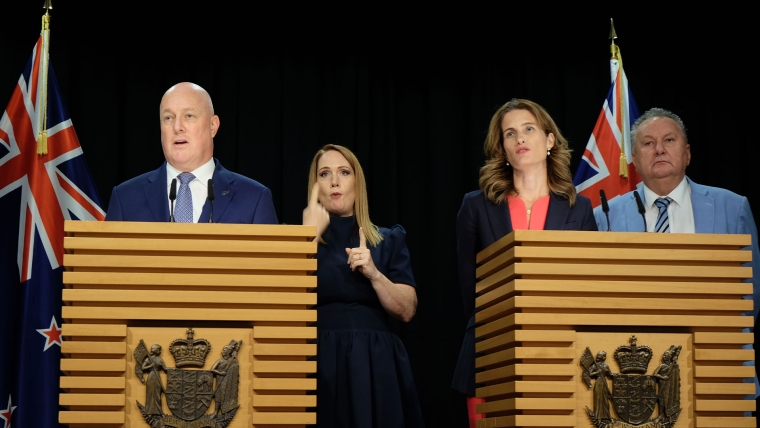
There have been long press conferences with Nicola, Shane, and Chris. Anna Breman, the Governor of the Reserve Bank, was asked directly whether New Zealand was insulated from the war and said she didn’t know. Geoffrey Miller, whose PhD is literally about New Zealand’s relations with the Gulf states, has been explaining the Strait of Hormuz across LinkedIn, radio, and the Democracy Project simultaneously. There are day-count trackers telling us how much fuel we have left. This is a lot to follow.
So, who is doing what, and how do the rest of us keep up?
The ministers
The Prime Minister has delegated the decision-making to his deputy, so the public face of this crisis has been Nicola Willis and Shane Jones. The minister formally responsible, Simon Watts, is largely absent. The architecture underneath is worth understanding, because it is less tidy than the press conferences suggest.
Nicola Willis — Finance Minister — The Crisis Manager in Someone Else’s Portfolio
Willis’s role has expanded well beyond what Finance Ministers normally do. She chairs the Fuel Security Ministerial Oversight Group, the group that decides whether New Zealand moves between the four fuel phases, with delegated Cabinet authority. She is co-ordinating public messaging and fronting joint press conferences with Shane Jones, often without the PM present.
The commentary has been unusually unanimous: she is across the detail, concerned without panicking, and thinking through several ways the crisis could go. One headline will probably define this period in political memory: “Can Christopher Luxon be more than Nicola Willis’ press secretary?”
There is one tension. Willis is being praised as a communicator, but is the policy behind the communication adequate? She has signalled that inflation could go significantly higher than current forecasts, while declining to share Treasury’s worst-case scenarios. She is reportedly operating without a clear central economic scenario from Treasury at all. That is genuine uncertainty about where this goes, and no amount of crispness resolves it.
Shane Jones — Associate Minister for Energy — The Plan Builder Who Cancelled the Plan
Jones is technically subordinate to Watts on energy, but in practice he designed the crisis response, cancelled the insurance policy that might have softened it, and is now fronting both.
Two years before the Iran war, New Zealand’s own officials warned the country was dangerously exposed to a diesel shortage and proposed a fix: 70 million litres of emergency storage in old crude tanks at Marsden Point, at a cost of $84 million. Jones cancelled it. His reason, in writing: too expensive. He acknowledged in the same document that New Zealand would remain vulnerable until at least 2028.
Whether that was reasonable fiscal caution or a catastrophic miscalculation depends entirely on when you’re making the judgement. In July 2024, with a tight budget and a coalition promise not to raise fuel taxes, declining an $84 million insurance policy against a low-probability risk was defensible. In April 2026, with petrol at $3.42 a litre, it looks like the most expensive saving this government ever made. Jones is now reportedly considering using regional development funds to buy the very storage he scrapped 18 months ago.
On the data: Jones told reporters he had not seen “one single report” suggesting New Zealand would be caught short. But the crisis management framework relies on forecasts supplied by the fuel companies themselves, not independent government intelligence. His reassurance describes the architecture of the system he managed. It is not an independent verdict on the situation.
*(On Thursday Jones announced the government will commit up to $21.6 million from the Regional Infrastructure Fund to Channel Infrastructure NZ Ltd, which owns and operates the former refinery site at Marsden Point, to increase its diesel storage by recommissioning storage tanks with a combined 90 million-litre capacity within two months).
Simon Watts — Minister for Energy — The Minister on Paper
Watts holds the full energy portfolio.* He is not, in any meaningful sense, running the energy crisis response. The Beehive’s own energy portfolio page lists Willis and Jones at the top of fuel-related releases. The four-phase Fuel Security Plan was developed by Jones and announced jointly by Willis and Jones. When RNZ needed a minister to discuss oil consumption data, they got Watts. When the country needed someone to explain the crisis framework, Willis and Jones turned up.
The response architecture has formed around him rather than through him. Whether that reflects a deliberate division of labour or something more uncomfortable is a question his government has not been asked loudly enough.
*(Thursday's cabinet reshuffle saw Simeon Brown replace Watts as Energy Minister).
Christopher Luxon — Prime Minister — The Delegator-in-Chief
Luxon is technically running the country. The question this crisis has made unavoidable is whether he is running the response. The answer, structurally, is no and this appears to be by design. Willis chairs the crisis decision-making group with delegated Cabinet authority. Luxon has not chaired it. His most documented active intervention was changing the language from “alert levels” to “phases” so New Zealanders would not think of COVID.
On the day Willis announced the four-phase fuel security plan, Luxon was in Christchurch opening One New Zealand Stadium. The governance question is plain: is this a crisis, or isn’t it? If it is, where is the Prime Minister?
Who decides, with what data, and under what law?
The decision nobody is explaining
The minister who decides whether New Zealand moves between fuel phases is Nicola Willis. There are no automatic triggers. Even when specific criteria are met, like a recent three-day reduction in jet fuel stocks, that does not mean a phase change follows. What Willis is looking for is a “material worsening” of the overall supply situation: multiple signals assessed together, not any single threshold crossed in isolation.
That framing is reasonable, it prevents panic-driven escalation. But it also means the decision is inherently personal. “Material worsening” is Willis’s call, not a formula. What we do not know is what that explanation looks like in practice, how quickly it comes, and whose advice carries the most weight when the picture is genuinely ambiguous.
Where the numbers come from
The government publishes twice-weekly fuel stock figures measured in “days of cover”, how long current stocks would last if no new supply arrived at all. As of 29 March, New Zealand had 58.7 days of petrol, 52.2 days of diesel, and 46.2 days of jet fuel.
But roughly half of that total is still at sea. Of the petrol figure, only 29.3 days is physically in the country. Another 4.3 days is on ships already in New Zealand waters. The remaining 25.1 days is on10 ships still up to three weeks away. Whether it arrives depends on supply chains and geopolitical conditions that nobody fully controls.
Those numbers come primarily from the five companies that import fuel: Z Energy, BP, Mobil, Gull, and Tasman Fuels. The government cross-checks against shipping data but that is a check against the same supply chain, not an independent audit. The reassurances are only as good as the data being received.
The 44-year-old law
If the crisis escalates to Phases 3 or 4, the government’s ability to mandate restrictions, ration fuel, restrict driving, control distribution, depends on a piece of legislation from 1981: the Petroleum Demand Restraint Act. The Muldoon-era law that also gives the government the power to bring back carless days. It is still on the statute books.
The problem is the law was written for 1970s oil shocks, not a complex modern supply chain crisis. The trigger conditions are legally ambiguous, the government must show that “reasonably available supplies” are likely insufficient to maintain “normal prudent levels.” Nobody has defined what “normal prudent levels” means in 2026. Willis has confirmed the government is considering updating the legislation. It has not yet done so.
The broader framework also includes the Fuel Industry (Improving Fuel Resilience) Amendment Act 2023, the legislation that created the minimum stockholding obligations currently operating. That Act was passed under Labour. The current government is running a resilience framework it inherited, not one it designed.
What the COVID inquiry told us — and why it matters now
The Royal Commission of Inquiry (RCOI) into COVID-19 released its final report on March 10. The Iran conflict began less than two weeks later. The lessons from our last major crisis, including specific recommendations about emergency powers, transparency, and the laws that govern them, were handed to the government while this crisis was still forming.
The commission recommended dedicated legislation clearly outlining the powers governments can use in a crisis, the conditions for using them, and the safeguards protecting transparency and human rights. It also recommended that an independent body monitor public trust and social cohesion during emergencies.
The RCOI’s lesson was not “governments shouldn’t act in a crisis.” It was: when governments act in a crisis, we need to know how and why — and they need legal architecture that makes that legible.
The government is not operating under pandemic legislation right now. But the underlying democratic question is identical: when a government gains expanded powers over how citizens live, whether you can drive, whether you can buy fuel, what counts as a priority, what are the transparency obligations? Who reviews the decisions? Whose advice counts? The government changed “alert levels” to “phases” so New Zealanders would not think of COVID. The structural questions are the same regardless of what you call the levels.
The questions worth asking
None of this is to say the government is managing this badly. The fuel stock framework was largely built under Labour and is functioning. This government is running a system it inherited. Credit where it is due.
But “we’re not mismanaging it yet” is a low bar. Here are the things I think are still unanswered:
Willis is the sole decision-maker on moving between phases, applying a judgement call about “material worsening.” What does that explanation look like in practice, and how quickly will it come?
Jones cancelled an $84 million diesel reserve in 2024, knowing it left New Zealand exposed. He is now trying to buy it back. Who is accounting for that decision, and at what cost?
Phases 3 and 4 have published priority bands, from emergency services down to general retail. But who decides which band your business or community falls into, and what is the appeals process?
When will the government update the 1981 Petroleum Demand Restraint Act, the law it may need to use if this gets worse?
Complex systems favour insiders. To be clear, this is not corruption, it is how institutions work. When decision-making is distributed across multiple ministers, agencies, legislative frameworks, and industry relationships, the people who navigate it daily have an enormous informational advantage over everyone else. They know which minister chairs which group. They know the data comes from the companies being regulated. They know the law enabling rationing was written for a different century.
Most voters don’t know any of that, not because they’re not paying attention, but because the system doesn’t require them to. It requires them to trust. And trust, in a democracy, is supposed to be earned through transparency and accountability, not assumed because the numbers are still okay and the Finance Minister is across her brief.
That is the democratic stakes underneath this crisis. Not whether we run out of fuel. But whether the people making decisions on our behalf are visible enough to be held accountable for those decisions, before, during, and after the fact.
*Natalia Albert is a political scientist living in Wellington exploring how to govern divided societies in diverse, liberal democracies, with a focus on New Zealand politics. She writes weekly on her Substack, Less Certain. Albert stood as a TOP candidate in the 2023 election.
We welcome your comments below. If you are not already registered, please register to comment
Remember we welcome robust, respectful and insightful debate. We don't welcome abusive or defamatory comments and will de-register those repeatedly making such comments. Our current comment policy is here.