
Although an accommodation levy isn’t locked in for Auckland’s ‘city deal’, Mayor Wayne Brown thinks it will ultimately happen.
Brown said: “We will live long enough. [A] bit like the CRL (City Rail Link), it will ultimately happen.”
Asked if he wanted to see it potentially sooner, Brown said he’s got long-term views and he does things for the long term. “It takes a little bit longer to get a good thing for the long term.”
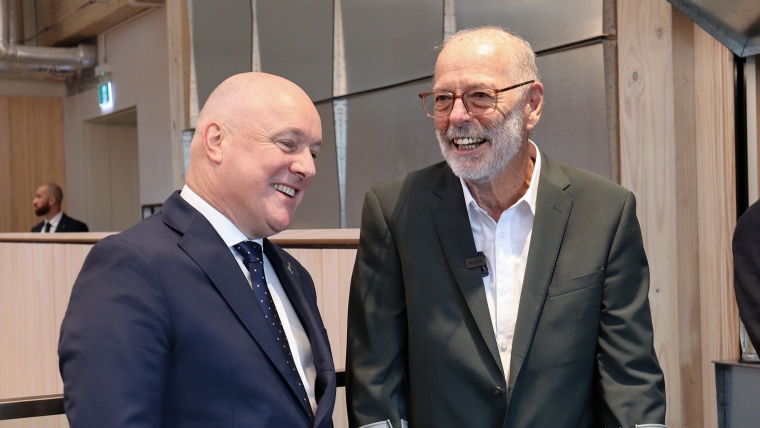
Brown’s comments come after he and Prime Minister Christopher Luxon officially signed Auckland’s ‘city deal’ on Friday. Infrastructure Minister Chris Bishop and Auckland Minister Simon Watts were also in attendance.
A ‘city and regional deal’ is a 10-year partnership between local and central government, and has been described by central government as a way to progress shared priorities including economic growth, more housing, better management and use of local assets, and a way to close the infrastructure deficit.
In the lead up to signing the deal, Brown said it was a good start. “It’s not everything either side wanted but it is a good beginning.”
As part of the deal, central government “will explore an accommodation levy policy in 2027”.
Brown has long been advocating for Auckland to have a ‘bed night’ visitor levy - this levy would mean visitors to the city would pay a 2.5% to 3% levy when they stay in short-term accommodation.
This would require a change in legislation. And if legislation did change, Auckland Council suggests the ‘bed night’ levy would raise around $27 million annually to fund more major events and activities.
Speaking to reporters after the announcement, when asked about this levy, Luxon said; “what you’ve got is a commitment from the government to explore that in 2027”.
“We’ll do that working with Auckland,” Luxon said.
“I know [Tourism and Hospitality Minister] Louise Upston is already starting to think about that policy so that we can come to the mayor ... and we can work that up together.”
Brown was also asked by a reporter about a message he sent to Luxon about why a levy on natural gas that you can’t avoid if you buy electricity is not a tax, but a bed night levy is a tax even if you don't stay at a hotel, Brown said that was mainly aimed at Deputy Prime Minister David Seymour.
“He’s the one who’s been the fly in ointment as far as I can understand.”
Brown said he signed the deal with Luxon.
Luxon said as part of this deal, they wanted to formalise their engagement with each other.
“To formalise our arrangements at least three times a year is a chance for us … as top to top leaders, to actually say if there’s any clearing house issues that we need to work through together so that we free up our teams to continue to advance the things we’ve got in our deal.”
“That’s really important for us," Luxon said.
Asked about how these things would be paid for, Brown said; “one of the things that’s important about this deal we signed today is we didn’t ask for any money. It’s not about money. It’s about mutual respect”.
“It’s about no more stuff arriving unannounced and unwanted and impractical, because, in fact, this is a practical city. Wellington is a policy city and that’s not bad. That’s what it’s there to do, but we have to bring policy and practicality together. And that’s been missing.”
The Auckland ‘city deal’ also includes:
- Establishing a long-term partnership between the Government and Auckland Council which involves regular meetings between the Prime Minister, Ministers and Mayor
- Reviewing Eden Park’s ownership and operating model, and recognising it as New Zealand’s national stadium
- Investing in the redevelopment and roofing of the Auckland Tennis Centre
- Creating a strategy for “innovation precincts” in areas such as surround the University of Auckland’s Medical School, and strengthening Auckland’s global trade and investment links
- Developing a destination and major events strategy
- Establishing a 30-year transport strategy for Auckland
- Working together on the additional Waitematā Harbour crossing, time-of-use charging and “more efficient” transport network management
- Introducing a new Crown uplift funding tool for mutually-agreed, high priority projects
In 2025, councils were asked to submit up to five projects that would help create economic growth in their area. Eighteen proposals were submitted and in July, the Government signed its first Memoranda of Understanding to negotiate ‘city and regional deals’ with Auckland, Otago/Central Lakes and Western Bay of Plenty.
We welcome your comments below. If you are not already registered, please register to comment
Remember we welcome robust, respectful and insightful debate. We don't welcome abusive or defamatory comments and will de-register those repeatedly making such comments. Our current comment policy is here.