
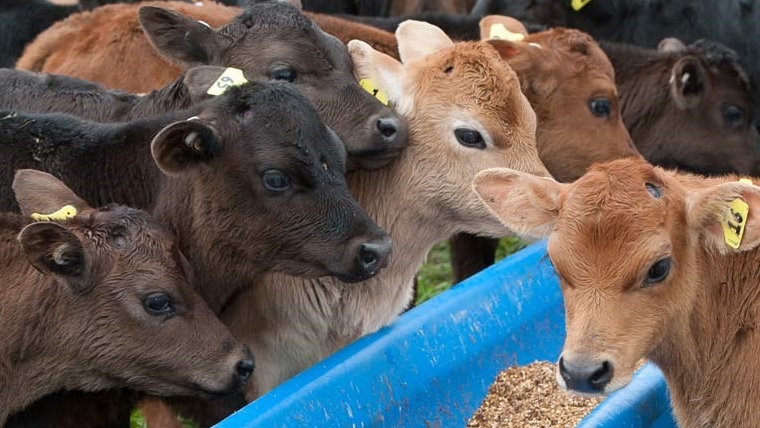
The news that “Hundreds of thousands of dead animals risk being left uncollected on farms because of a collapse in the price of leather”, due to the collapse of the pelt value of animals but in particular bobby calves, should come as no surprise.
The same issue will also spread to slinky lambs and downer cows.
All these animals have limited value from meat and the same situation that has afflicted wool is also affecting the leather industry.
Reduction in consumer demand due to the COVID-19 slowdown to economies, plus the slowdown in processing in many countries, has impacted upon returns. And then there is also the animal welfare issues that some consumers are reacting to. All have impacted to make ‘skin harvesting’ a loss making enterprise.
The problem with bobby calves are two fold; the first are the on-farm deaths that are picked up for disposal and apparently dairy farmers are reacting poorly about the possibility of now receiving a bill for this service.
The second regards the smaller and surplus female bobby calves which go onto the bobby calf truck which have also had a reduction in value and now worth next to nothing.
This raises the specter of the clock being turned back several decades when prior to the bobby calf pick-up service surplus calves were ‘put down’ on farm and presumably buried in pits etc. The bobby service was set up and from my understanding for little or no payment to the farmer for providing a service which removed farmers from the unpleasant practice. As the market developed the service then become to show a profit which the farmers have benefited from.
In reality all the bobby calf service has done is to sanitise an unpleasant practice by removing it from the farmers hands and by putting an economic value on the animals somehow making the practice more palatable.
If farmers still had to take responsibility for the humane disposal of their animals there may have been more progress to finding more acceptable means to give these animals some dignity.
The dairy goat industry also has the same issue with most surplus animals being euthanised and the sheep milking industry could potentially face similar problems although most current sheep dairy farmers are committed to seeing their lambs reared. To date the dairy industries have managed to avoid the consumer spotlight going on them although there are plenty of them aware of the practice who have chosen to either give up on animals milk harvested from these industries or seek small distributors who rear all their milking animals progeny. However, more and more consumers are becoming aware and there are plenty of animal rights groups who are more than happy to inform them.
In my view, the time is well overdue for dairy farmers as an industry to look at adopting new practices which enable this bobby calf practice to cease.
It has been discussed long enough and plenty of consultants et al have put together programs which show it can be made profitable for beef finishers to rear and finish appropriate animals.
One of the barriers there is to greater pick-up by the finishing sector are the lack of the appropriate genetics to make these animals more attractive to the meat industry. Back in a previous life I was involved in several conversations which attempted to link in dairy farmers to finishers and get the right genetics used on dairy farms. It sounded simple in theory, the finisher or breeder who wanted the dairy cow progeny supplied the bulls or semen and the dairy farmer in turn supplied the progeny at an agreed price. However, in reality it just never seemed to work and generally, although not always, it was from the dairy farmers perspective that there wasn’t enough in it for the dairy farmer, and when there was, it was too expensive for the finisher. The issue of what happened to the calf if the deal didn’t go ahead was seemingly irrelevant in the conversation.
The potential resource that is wasted, many would think, is a pretty damming indictment on the dairy industry.
At some point in the not too distant future unless there is a change in outlook from many in the industry it will contribute to lesser returns as milk will only remain as a commodity as the consumer will not be prepared to pay the extra that a ‘good story’ may extract. As the bulk of milk is exported and there is less feedback farmers may feel somewhat immune from the direct impacts.
But perhaps more importantly, domestically the ‘social license to farm’ will have another barrier to meet.
As the issue of the bobby calf outcome becomes more widely known and considered, less and less acceptable pressure will be turned up on the dairy industry and change will be forced upon them, and in the meantime, goodwill lost. At the moment, it is not too late for a proactive stance for a new or different approach to be taken.
For some dairy farmers there will be little issue. With large Friesian-type cows the progeny are already or with little extra genetic change are quite attractive to the beef industry.
Those dairy farmers with Jersey cows face the largest hurdle as the progeny are particularly undesirable due to the lower growth rates and yellow fat of animals with a predominance of Jersey blood, despite many believing the actual taste of the meat being superior to other breeds. Perhaps some clever marketing needs to be employed to create a niche for these animals, such as the Wagyu.
Otherwise it may be that larger animals, not always suitable to the environment, come in as replacements. These discussions should have been taking place years ago as it is not as though the issue has suddenly crept up on the industry.
Unfortunately, returns have always trumped good sense and now practices that shouldn’t be condoned have become deeply embedded.
We welcome your comments below. If you are not already registered, please register to comment
Remember we welcome robust, respectful and insightful debate. We don't welcome abusive or defamatory comments and will de-register those repeatedly making such comments. Our current comment policy is here.