
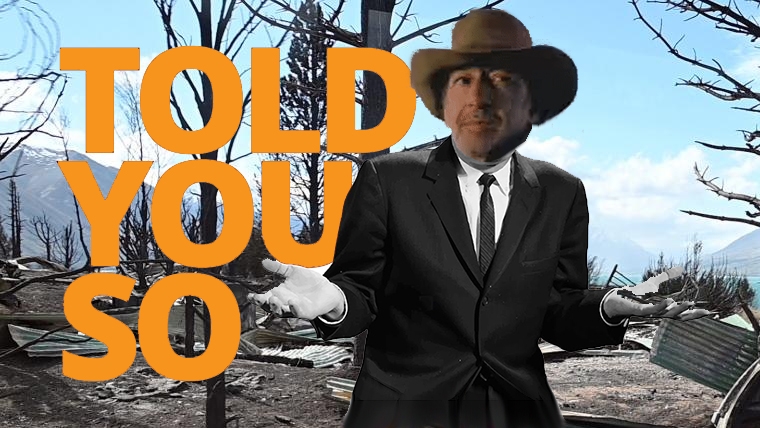
Many in the South Island high country will be thinking “told you so” when thinking about DoC's role in the recent fires in the Mackenzie Basin.
The intentions of the reform of land tenure in the high country in taking back of grazing lease land and putting back into the Conservation Estate, while well intentioned, was always going to be fraught with the law of unintended consequences. Rights and wrongs of the whole tenure process aside as this is a complicated issue which has been driven by philosophy as much as anything and relitigating this is not likely to serve any immediate benefit.
However, there was a part of the process which did get farmers ire up. This is the problem of weed and pest control on the land which farmers ceded to the Crown.
It has been long recognised that DoC has been grossly underfunded given the size and scope of the land they administer. In part some concerns, especially around the spread of wilding pines has finally been recognised and something is being done. With $100 million being allocated over the next four years the ‘cost’ of not doing enough in past years has become obvious.
As long as Eugenie Sage has any say, the farmers concerns about the ‘weed’ build-up being controlled by livestock are not likely to see the light of day.
One of the issues with the return of ‘high country’ back to its natural state is the phases it will need to go through to get there. Getting rid of the wilding pines is the first and obvious target however, that is not the only transformation that needs to take place.
One of the problems that contributed to the recent Lake Ohau fires spreading so fast was the ready source of fuel in the form of dried grasses that had built up through the lack of grazing.
Pre the introduction of Europeans and livestock farming this country was covered in tussocks and snow grasses. Still flammable but not to the same level as the dried grasses that have been encouraged to become established to feed livestock. Another problem that has built up is due the phosphate being applied to tussock lands (to encourage clovers) is matagouri, a native thorny shrub has become abundant.
This is another great source of fuel to wildfires.
On a visit to a station up the Rakaia Gorge some years ago, I viewed some interesting photographs on the wall of the woolshed where we had lunch. From memory there were three photographs and they showed the view onto a nearby face over a period of time. Plus of course there was the current live view.
The photos clearly showed how the plant cover on the face had changed over time. Close on 100 years ago it was clean (mostly) of matagouri and other shrubs and looked like pristine tussock country.
A later photo showed how the matagouri had taken over much of the country and then more recently it showed, and which was reflected in the live view, how improved grasses had been established through more subdivision and improved management with fertilisers etc.
Most of this country has now reverted back to the Crown under the Tenure Review reforms. To get country that has been transformed as this example has (probably typical of much of the Tenure Review lands) is going to be a multi-generational process and from listening to a wise head in DoC he at least recognised this.
Unfortunately, when the Tenure Review started off, climate change and the risk of fires was not such a major consideration. Actually, the Lake Ohau fires were believed to have started from a faulty power line, but then the climate took over with strong winds and the early onset of the dry season. However, the risk of fires appears to be increasing dramatically if the experience of other countries is anything to go by. The California fires which are still burning have covered an area approaching 2 million hectares a similar area to what was burnt in Australia last fire season which make the 5,000 hectares at Lake Ohau pale in comparison.
But the risk of fires spreading, once away in the high country, must be considerable. I don’t know whether reintroducing livestock onto some of this country will reduce the risk of fire. Some farmers seem to think it will but having a conversation, which includes DoC and farmers, about what might help protect the high country seems overdue. I suspect no-one has all the answers especially in how long it will take to revert past farm land back to pristine tussock as anything else seems a waste of time and effort, but if we add fire into the equation then it is likely to slow down any improvements.
The global perspective
Judging by the latest report from the UN, we are close to the point of no return on Climate Change, and as the reports quotes UN member Mami Mizutori, it was “baffling” that nations were continuing knowingly “to sow the seeds of our own destruction, despite the science and evidence that we are turning our only home into an uninhabitable hell for millions of people”. At the moment the world is +1.1oC above pre-industrial temperatures, however, the report says the world is on course for a temperature increase of +3.2oC or more, unless industrialised nations can deliver reductions in greenhouse gas emissions of at least -7.2% annually over the next 10 years in order to achieve the +1.5 degree target agreed in Paris.
It all sounds rather depressing and the impact New Zealand can make on the global scene is minimal especially when the likes of the US leadership are still in denial.
Some of the positive changes that have come out of the coronavirus pandemic has shown with the right motivation and political well swift action can occur. Unfortunately, we have also seen the reverse with countries that should know better contributing to the problems created by the pandemic. So, it is anyone’s guess as to how things will progress into the future, both at the local level and globally. But I for one won’t be holding my breath for anything positive with the current lack of a united view.
With summer rapidly approaching many farmers on the East coasts of both Islands are already nervous with multiple dry seasons behind them. Up until last season New Zealand seemed to be getting through periods when other countries were being seriously affected by weather extremes relatively well. However, the extremes of climate are now starting to spill over into our neck of the woods and I suspect the Lake Ohau fires won’t be the only adverse event this season.
We welcome your comments below. If you are not already registered, please register to comment
Remember we welcome robust, respectful and insightful debate. We don't welcome abusive or defamatory comments and will de-register those repeatedly making such comments. Our current comment policy is here.