

In the period from the start of 2018 until the end of November 2020, the amount of rural debt rose by +$2.2 bln and now tops $62.7 bln. This is data released by the RBNZ in their C5 series.
Details about this debt and where is is concentrated, and who holds it, are relatively hard to piece together. The RBNZ has released summary details about the agri sector holdings, and farming lobby groups like Beef+LambNZ and DairyNZ also have details related to their sectors
This article however is looking at the lenders and how their appetite for funding the rural sector has changed over this period. Data for this analysis is based on the RBNZ Dashboard releases. They are currently quite high level, but some interesting trends are emerging.
Firstly, here is the core data over the period of the Dashboard releases so far:
| Mar-2018 | Sep-2020 | change | |
| $ bln | $ bln | $ bln | |
| ANZ | 17.166 | 16.634 | -0.532 |
| ASB | 10.302 | 10.187 | -0.115 |
| BNZ | 13.627 | 13.096 | -0.531 |
| Heartland | 0.712 | 0.607 | -0.105 |
| Rabobank | 9.711 | 11.103 | +1.392 |
| Westpac | 7.963 | 9.181 | +1.218 |
| All other banks | 0.550 | 0.583 | +0.033 |
| All other non-bank lenders | 0.767 | 1.472 | +0.705 |
| ------------------------ | ---------- | ---------- | ---------- |
| Total per C5 | $60.797 | $62.862 | +$2.065 |
A quick scan of this table clearly shows that four banks have been quite deliberate in pulling back from this sector. Even though lending has risen by more than +$2 bln in this period, those four have reduced their exposure by a combined -$1.3 bln.
Picking up this retreat are both Rabobank (+$1.4 bln or +14%) and Westpac ($+1.2 bln or +15%), and also note that non-banks almost doubled their commitment over the period (+92%).
The rejection of support by ANZ and BNZ is notable.
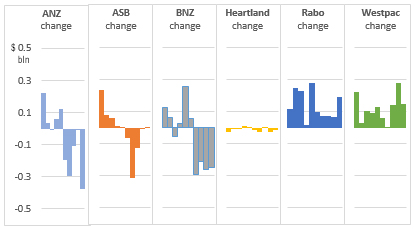
It is clear that this move away has mainly been in 2020. And the cumulation of the moves makes them substantial.
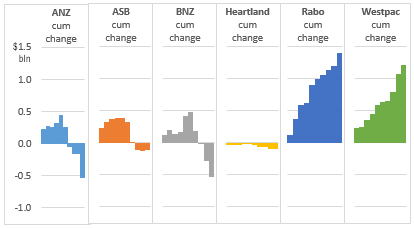
Rabobank and Westpac have moved aggressively to pick up both the business being shed by ANZ and BNZ, but also the modest growth in demand for more debt.
Lenders experience of non-performing loans are only a partial explanation of these shifts. Clearly managers have different risk views about the prospects on New Zealand's agri-business sector.
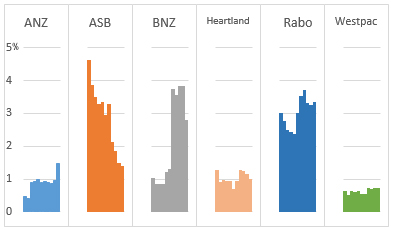
ANZ (and Heartland Bank) are pulling back despite having among the least exposure to non-performing loans. BNZ may be pulling back because its portfolio is causing them some grief. ASB on the other hand is clearly getting on top of its rural credit problems.
But Rabobank's appetite for growing its book is undiminished despite a relatively elevated non-performing section of their overall loan book.
Best-in-class is clearly Westpac, and it is easy to see why they may wish to grow their share.
Market share changes are happening even though they are relatively slow to build. A $2 bln shift over almost three years isn't a lot, but it is happening.
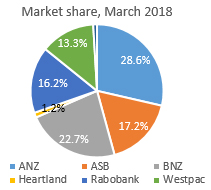
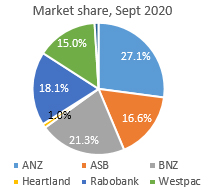
And we should keep an eye on the non-bank moves into this sector. It is still at the margins, but clearly this is where some growing action is taking place.
We welcome your comments below. If you are not already registered, please register to comment
Remember we welcome robust, respectful and insightful debate. We don't welcome abusive or defamatory comments and will de-register those repeatedly making such comments. Our current comment policy is here.