
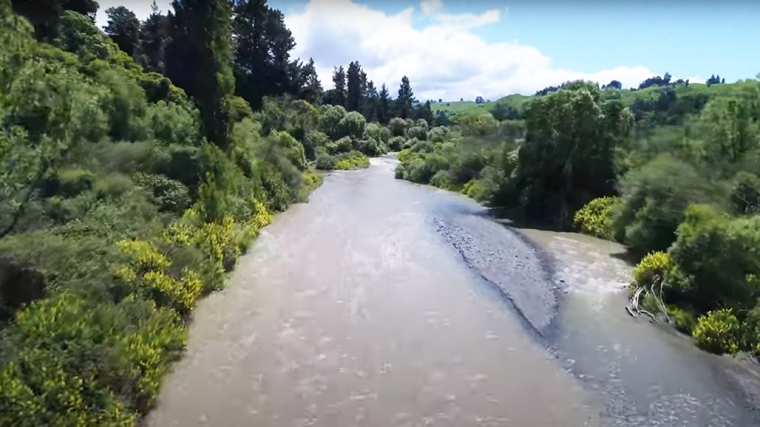
As the clean up in Hawke’s Bay and the Gisborne continues, its important to remember the resources farmers and growers need is ongoing and the reality of the dire situation for many is only beginning. The Rural Support Trust and Beef+Lamb are doing a superb job in coordinating ongoing support. If you can help in any get in touch with either of those organisations.
This week Dr Adam Forbes from Forbes Ecology joined me to discuss the recent flood events and what is need in terms of land management.
Firstly I asked him what his first impressions were when first arrived to the hardest hit areas, he said it was extremely confronting to see acute devastation. Sites that he had been familiar with for decades, through restoring wetlands, and native plantings have been absolutely erased from the landscape. He saw hedgerows upside down, and he likened it a war zone.
“I think the scale and the nature and the strength of what happened during that event is hard to comprehend. The volumes and the forces in play are clearly enormous. So yeah, that was probably my first realization was wow, this is really a powerful big event that's occurred here.”
It’s important to remember that this isn't the first time these types of events have happened in these regions, and Forbes says what we need to do is take a serious look at how to respond in a manner that actually makes a difference in the future so that we're not in 30 years time having the same conversations in same devastating effects. So in his mind that needs to be front and centre in terms of what happens next.
I believe in the right tree in the right place, but I do think we have a forestry catastrophe on our hands especially farming carbon and I don't think it's fully being recognised yet. Forestry in my mind has its place and it works well integrated into a farming model, of course we need forestry to a certain degree and at some level, it has export value in terms of products produced from the timber and it provides a revenue stream for farmers. I asked Forbes if he thinks we have a forestry problem, particularly carbon farming and whether the industry needs to be managed better.
“Yeah that plant-and-leave carbon farming I think that that's setting up major problems for future generations, in the sense that those forests that are planted in the notion that they will replace themselves to be permanent.”
“Management of those forests is absolutely essential to see regeneration occurring and a sense that you could have a replacement canopy. Why would we necessarily expect those investors [carbon forestry]to be invested in controlling landscape scales, and analysing the forest in terms of the amount of regeneration and what level of management is required? And the thing is, the management topic really goes across most of our forests, not just those transition forests but into native forests as well. So you know, and you mentioned the sheep and beef farmers and the good stuff that they're doing, and I agree, a lot of those people are also grappling with these management issues when the management tasks cross boundaries, and you know the neighbours might have a very different view or they might be absentee or something and it just becomes quite tricky. So the forest management topic is a really big one. And I think it underpins most forest land use and like if you look at what's happened in Tairāwhiti, putting aside the plantations but just getting permanent forest cover is flawed at the moment because there are so many goats there are so many deer, there are weed issues, and unless we can address those management issues, we're on shaky ground in terms of having permanent forest.”
Forbes asks, what more evidence do we need that the forestry industry needs to be seriously looked at and in particular lock-up-and-walk-away forests, he also went into some alternative options to pine trees.
Listen to the podcast to hear the full story
Angus Kebbell is the Producer at Tailwind Media. You can contact him here.
We welcome your comments below. If you are not already registered, please register to comment
Remember we welcome robust, respectful and insightful debate. We don't welcome abusive or defamatory comments and will de-register those repeatedly making such comments. Our current comment policy is here.