
Last weeks GDT auction failed to make much of a stir with an almost flat line event with a 0.7% drop on the previous auction. It did coincide with a 1 cent fall against the US$ which regained at least half the following day which means some were watching the result.
Probably the most concerning aspect is the lack of any real upturn when the Chinese economy (main driver of dairy demand) is looking reasonably positive, at least by western standards. China is targeting a +5% lift in its GDP this year, less than most previous years (pandemic excepted) but enough to help maintain dairy demand. Especially given the importance the Chinese Communist Party has attached dairy to the peoples well being this should help ensure that demand for milk products are kept at reasonable levels.
Despite some positive market signals coming from China Rabobank has decreased their farmgate forecast, dropping this to NZD $8.50/kgMS, from NZD $9.00/kgMS previously. Rabobank’s pessimism comes largely on the back of the global downturn, increased costs and despite lower production from New Zealand. Perhaps the most concern to future returns comes from the sabre rattling of President Xi particularly over his designs to bring Taiwan back into the fold.
Of more interest lately than the GDT results is the parring back of Labour’s policies to help ensure that they get back into power.
While rural folk whose roads and infrastructure have been severely damaged will welcome the focus and additional funding that Waka Kotahi will be able to apply to roads damaged by Cyclone Gabrielle, they should not think this is the end of a Labour focus on environmental matters. The cynic in me wonders what deals have been done with the Greens to maintain their support post the upcoming election.
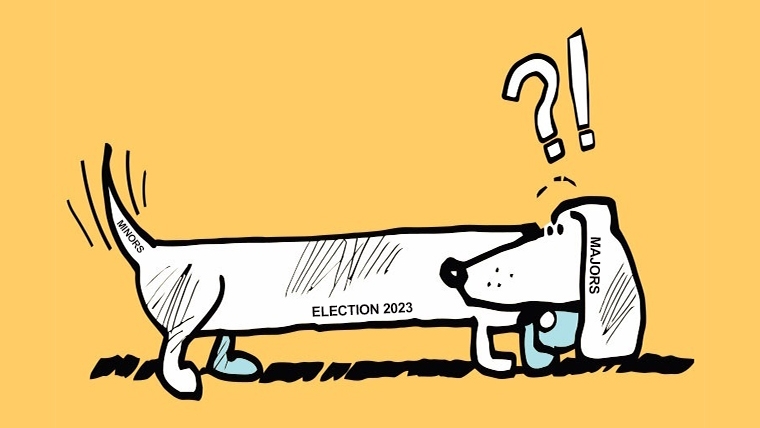
Labour moving further to the centre where they are almost indistinguishable from National leaves more of the leftist space wide open to the Greens just as National moves to the centre to counter Labour will leave more space on the right for Act to populate. So, while the numbers of left versus right may have or will get re-distributed actually nothing has really changed except the further right and left parties will be feeling more emboldened.
So, if a Labour-led coalition is returned then there could be more pressure than ever to make up for lost time regarding matters environmental (assuming Labour is reliant upon the Greens support) while if a National-led coalition is elected then Act will be able to apply more pressure to get its policies incorporated; largely a decrease in the role of government and a ‘freeing up’ of individual rights.
Ironically it may be that the closer Labour and National get to having similar policies or approaches the wider may be the gap between which ever is the coalition government (which appears to be almost a certainty) and the opposition bench due to the influence of the minority support parties.
The current wildcard is Te Parti Maori, at the moment likely to support a Labour-led coalition and may increase the voice from the further left.
What upcoming policies are likely to sway the rural sector is open to speculation however, the result of the inquiry into forestry and will be of interest to some key electorates. While the inquiry is focussed on the East Coast, Tairawhiti region the recommendations will likely spill out into other regions. Many of these regions were fairly closely fought at the last elections and so forestry and land use plus both blocks views on what should be done next will be of great interest to many.
The map below shows that many regions but especially Northland, Central N.I. and the Hawkes Bay and Wairarapa regions weren’t that far apart in the last 2020 elections and the upcoming one is likely to be considerably closer.
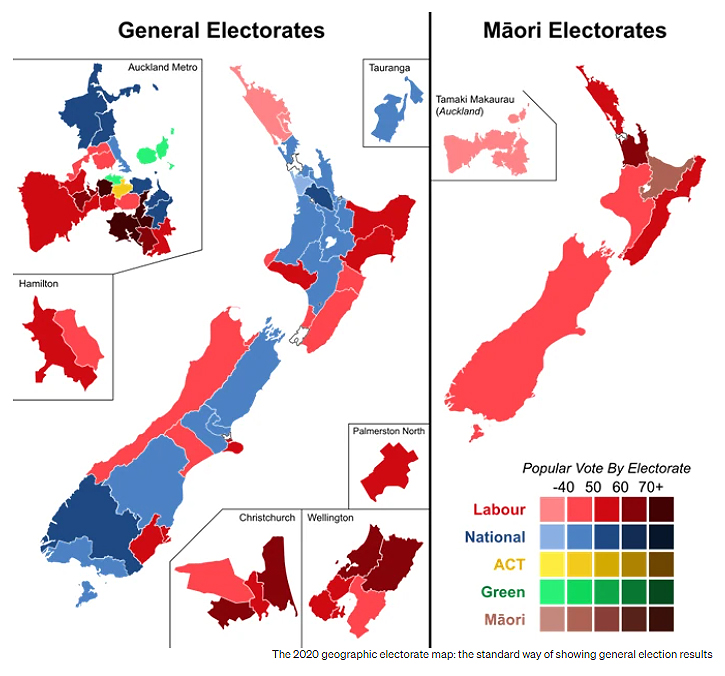
Source: The Spin Off
Given the large number of people employed in the industry it won’t be just those affected by the slash that will be interested in the inquiry recommendations and the various parties’ responses to it.
While the latest voter surveys have shown that matters relating to the “Cost of Living” are by far the one that concern people, the issues surrounding the environment still rated high. Until we see what the respective parties roll out it is going to be very difficult to get a feel for likely outcomes (always a guess at best anyway). However, it will be worth watching the minor parties’ policies as they may be what gets adopted by the “big brothers” if that is what it takes to get into power.
We welcome your comments below. If you are not already registered, please register to comment
Remember we welcome robust, respectful and insightful debate. We don't welcome abusive or defamatory comments and will de-register those repeatedly making such comments. Our current comment policy is here.