
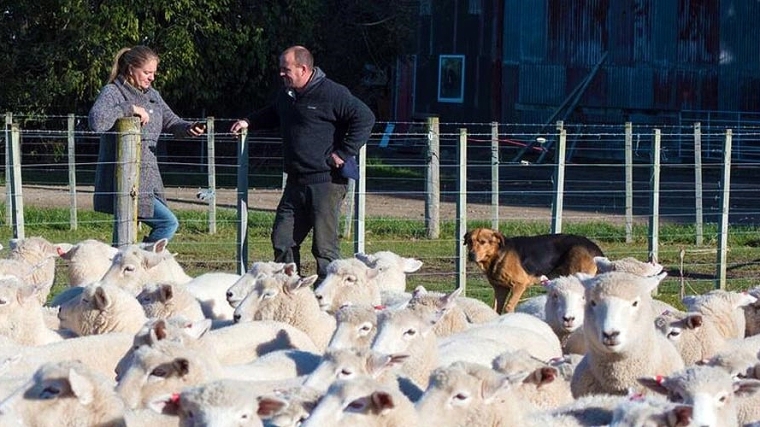
The National Party has promised to slash farming regulations, double the number of Recognised Seasonal Employer (RSE) workers, and ban foreign buyers from converting farmland into carbon forests.
Party leader Christopher Luxon said farmers had been buried in a mountain of red tape which would be cut if a National government was elected in October.
He pitched the policy as a remedy to New Zealand’s widening current account deficit, which is forecast to become one of the worst in the developed world next year.
The current account measures the value of a country’s imports relative to its exports. A deficit means the value of imports is higher than the value of exports.
“Farming is the backbone of our economy. Last year agriculture exports totalled $41 billion or 63% of our goods exports. When farmers succeed, New Zealand succeeds,” Luxon said.
The Labour government had introduced or changed more than 20 laws and regulations which were adding extra costs for farmers.
National said it would “end the war on farmers” with its Getting Back to Farming package which contained 19 changes to various rules and regulations.
It includes more rigorous reviews of new regulations, doubling the RSE worker cap, banning foreign investors from turning rural land into carbon farms, limiting environment protections to specific areas, and improving stock exclusion rules.
The policy document said farmer confidence had reached an all-time low in various surveys of the agricultural sector. For example, the NZ Business Confidence Survey recently recorded every agricultural business reporting negative confidence.
A lack of confidence was hurting investment and production in farming businesses and it was becoming increasingly difficult for pastoral farmers to access financing with banks reluctant to lend.
Review group
The policy would require more rigorous assessment for regulations by establishing a Rural Regulation Review Panel to advise on every local and central government regulation.
Local and central governments would be required to assess the cost of any new rural rules and to publish the findings, and must remove two regulations for each one they introduce.
The policy would double the RSE worker cap over five years to 38,000 per year and possibly add more countries. It would create a pathway to residency and eliminate the median wage requirement for Accredited Employment Work Visas.
This part of the policy has the support of the Green Party, which welcomed the possibility of residency for imported workers and called on the Labour government to get involved.
Green Party immigration spokesperson Ricardo Menéndez March said the government needed to “act urgently” to provide a pathway to residency for RSE workers.
Other elements
National’s policy would ban foreign investors that intend to convert farms into forestry to collect carbon credits, something which has been incentivized by the emissions trading scheme.
Some environmental protections would be narrowed to only apply to “areas that are actually significant” while land use rules for highly productive land would be broadened.
Scott Simpson, National’s environment spokesperson, said well-targeted rules could project the environment while allowing farmers to get on with business.
National would also restart the live exports of cattle with “gold standard rules” to protect animal welfare and safety. This would require purpose-built ships and a certification regime to ensure destination countries kept animals in similar living conditions to NZ.
The policy document also promised further announcements on emissions pricing, research and development, and water rules.
We welcome your comments below. If you are not already registered, please register to comment
Remember we welcome robust, respectful and insightful debate. We don't welcome abusive or defamatory comments and will de-register those repeatedly making such comments. Our current comment policy is here.