
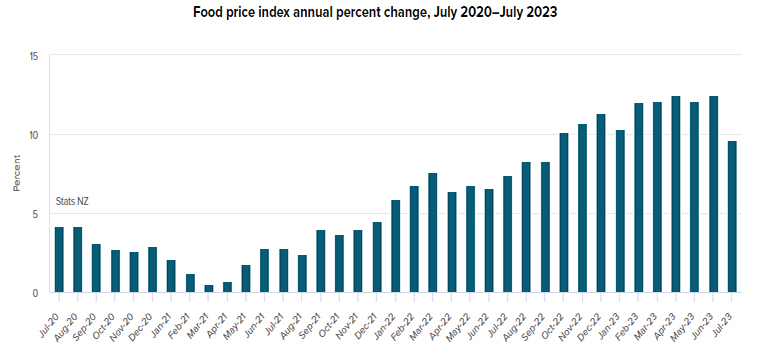
While New Zealand livestock farmers are suffering under low returns, the high cost of food for consumers seems to have barely shifted. To be fair, July was the first month in two years when prices showed some sign of flattening with only a +9.6% increase in the 12 months ended July 2023.
Cheese, which is included in grocery foods is in the bracket that has had the greatest increases.
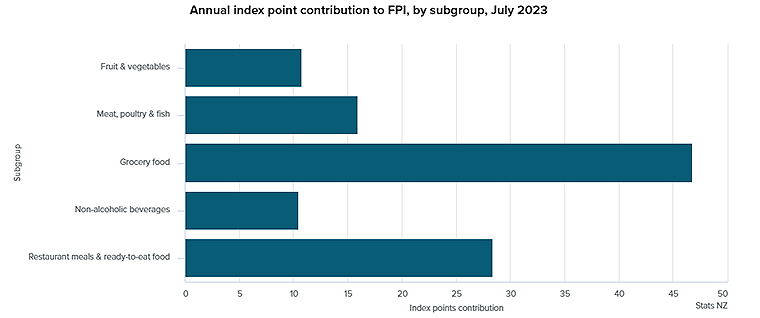
Ironically, the decreases in price has been led by the fruit and vegetable segment which usually are going up at this time of year. Perhaps they peaked early as a result of Cyclone Gabrielle and had further to fall. Meat, poultry, and fish prices increased +9.3% and grocery food prices increased +11.9%.
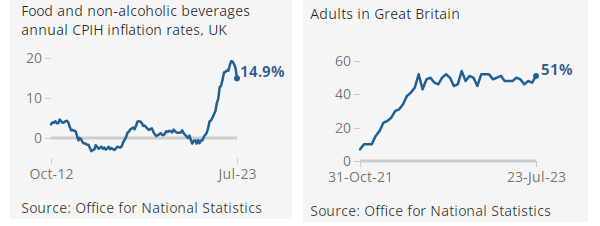
A similar increase in all groceries has been experienced around the globe and only now are we seeing a reduction in increases. As the UK data shows the increase in food prices has had a direct impact upon the amount of food adults are purchasing with over 50% saying they have reduced their weekly food spend.
Food inflation in the US has perhaps surprisingly not got to the dizzy heights experienced in other countries and looks to be coming into more sensible realms quite quickly. Although reading their media, the cost of food is still a major issue for most people.
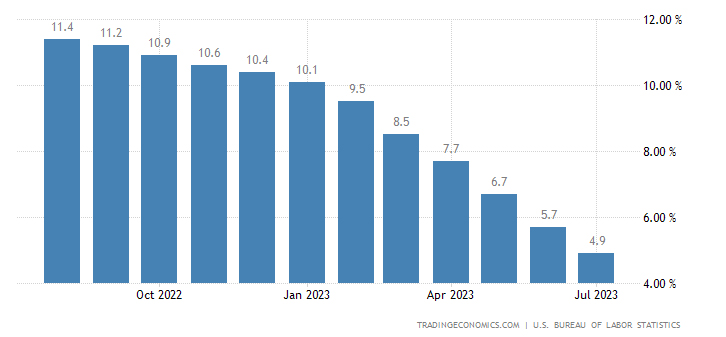
Despite less impact upon food prices, US farmers are also complaining about the prices they are receiving. US sheep farmers in particular have been complaining about the amount of imports of sheep meat coming into the country.
The reality is local producers would be unable to supply demand with them only having 26% of the market although if higher tariffs were imposed upon import sheep meat it certainly could lift their prices. (It actually sounds very much like what pork producers are putting up with in New Zealand with 60% of pork consumed imported). Looking at the best estimate of prices (below), they have been down although their forecasts for the rest of this year and the next show very little improvements. The US only accounts for 9% of total sheep meat export volume from New Zealand although still our third largest market after China and EU/UK. Australia is the largest exporter of sheep meat to the US and with their sheep numbers increasing, it’s not something that is likely to change soon.
Farm gate milk prices are predicted by some US analysts to “have bottomed out” and they see improvements ahead. Production forecasts for 2023, while still marginally ahead of 2022, are lower than previous forecasts and 2024 is predicted to fall lower. This is largely based upon the miserable weather and reduced cow numbers, especially in Texas and other southern states.
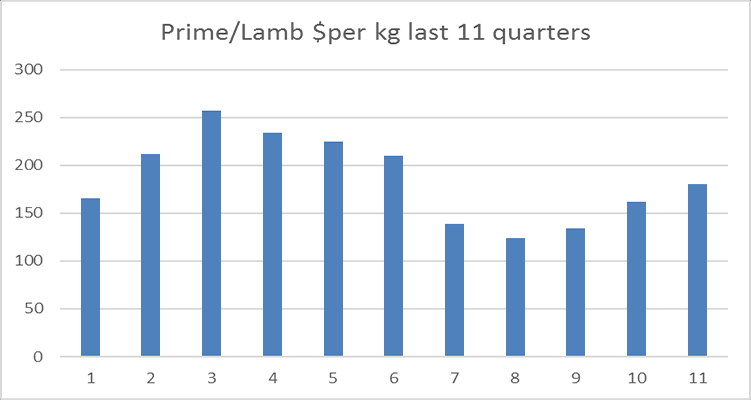
Source: Compiled from USDA data (Jan 2021 to 3rd Q 2023)
Back to the UK, and farmers and food producers there are also complaining about food and meat in particular coming in from the EU with little checks despite the UK government promising at least five times that these would be done as part of the Brexit fallout.
Dairy farmers are also disillusioned with nearly one in 10 dairy farmers saying they are likely to stop producing milk by 2025 as insufficient returns and volatile markets impact the sector.
The sheep sector in the UK, despite the grumblings, appear to be bucking the trend and receiving good prices which will have sheep farmers here scratching their collective heads.
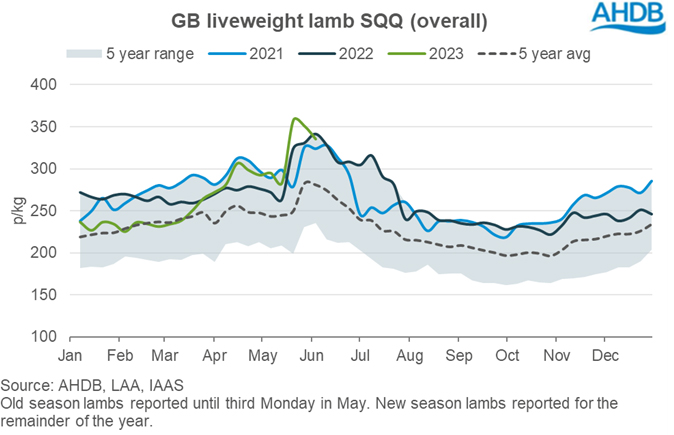
In the meantime, with farmers here receiving the poorest returns in years and also facing the highest cost for even longer, supermarkets have cranked up food prices beyond anything seen before. In Britain commentators are calling the high price “greedflation”.
With New Zealand prices at similar levels the term could well be applied here also.
The government has said that the new Grocery Commerce Commissioner will oversee prices and help prevent excesses. Most have pointed to the lack of competition for current duopoly as the major reason supermarkets have ‘got away’ with their high profits at the expense of consumers and it would appear producers.
However the UK has more competition than New Zealand and has it appears similar (or higher) price increases.
The UK’s Competition and Markets Authority (CMA) said “it had not seen evidence pointing to specific competition concerns in the grocery sector at this stage, but it was important to be sure that weak competition is not adding to the problems”. In a separate article it also is quoted as saying; “Supermarkets are not the cause of food price inflation in the UK with profits down by more than 40%”. So prices are obviously not being driven up by producers and it (supposedly) is not the supermarkets, then presumably it only leaves wages and logistics that are responsible for the massive price increases. Mmm, the Tui placard banners might have something to say about it.
Given, as in the UK and likely to be the same everywhere, people are spending less on food, then perhaps it’s the consumers' fault for not keeping up the supermarkets profits.
We welcome your comments below. If you are not already registered, please register to comment
Remember we welcome robust, respectful and insightful debate. We don't welcome abusive or defamatory comments and will de-register those repeatedly making such comments. Our current comment policy is here.