
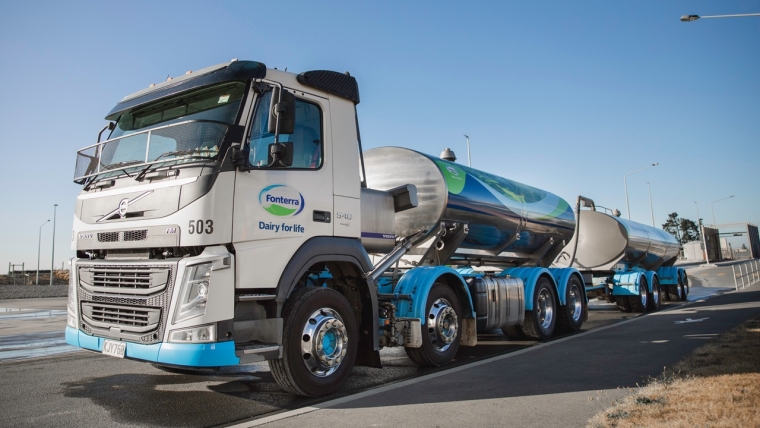
Fonterra's plan to sell its consumer and associated businesses including brands such as Anchor and Mainland could reap the giant co-operative $3 billion and might lead to farmer shareholders getting a bumper payout of maybe $2 a share. Analysts like it. The sharemarket loves it.
So, why do I feel so disappointed?
The word that keeps coming to mind is 'ambition'. Or more to the point a lack of it.
I don't want to appear churlish. And this whole subject is one with many points and counter points. There's plenty of room for debate on this one.
Nobody would seriously argue with the view that Fonterra has never got the bang for the buck that certainly I think it should have been able to get from running longstanding brands such as Anchor and Mainland.
But what irks me is the implicit thread running through this that says to me, 'oh, we can't do this - so let's get out now and stick to our comfort zone'.
After the woes of around 2019 the management of Fonterra have done a very good job of cleaning up the mess and getting the co-op back on track.
But without wanting to minimise that achievement, it's always seemed to me that the courses of action in cleaning up Fonterra were 'obvious' enough. Debt was too high. It needed bringing down. Sell things. Restructure. Nobody says that's easy, but it's straight forward enough.
The trick for Fonterra was always going to be what came next. Having got things back on an even keel, what was the strategy that would take it forward? Well, the answer seems to be to take more steps back. To move Fonterra more to being simply a commodity supplier.
After the blood noses Fonterra has received over the years, I understand the thinking. And no business is going to fail short term by taking the 'safe' option. But longer term?
Here is a genuine question that I think has a very open answer: If a strategy fails, has it done so because the strategy was wrong, or because you fudged it up? As I indicate in the asking of that, I think that is a question that's actually hard to answer. History is littered with folk who kept doing the same things and expecting different results only to mess up time and again. So the strategy was wrong.
But an opposing point of view is that it can be very difficult - particularly when big business egos are involved - to survey the ruins of a strategy and to pinpoint that 'well, yes, that was actually the right strategy, but we made a mess of it'. Far easier to blame the strategy and turn around and do something else. That's very human.
I don't think that wanting Fonterra to be able to take its product and make it into internationally saleable brands was the wrong idea. Isn't that what the NZ public actually hoped for in 2001 when Fonterra was able to skip through the normal competition rules and be created?
At the heart of Fonterra's travails has always been its capital structure and the inability to easily access new capital.
The big hole Fonterra found itself in during 2019 was due to trying to fund a massive global expansion with a massive amount of debt. That's the proverbial recipe for disaster. Unless you execute such a strategy perfectly and can quickly start generating returns from your investments then struggle city is always going to be the destination. And that strategy was not executed well. A flawed strategy executed badly.
So what about that whole capital thing at Fonterra and the farmer-shareholder desire to maintain control - without the ability to pour in big quantities of money?
Well, was there even now, at this stage, some sort of compromise that could still have been reached between the farmer shareholders' desire to maintain that control and the ability to access greater amounts of fresh money?
In terms of the consumer business, surely it might have been worth at least attempting a plan whereby the consumer brands were put into a new separate business with a majority shareholding held by the Fonterra co-operative, but with access for outside investors. That's right, a new business separate from the co-op, but with access to fresh money.
So, you would have the co-operative exactly as of now running the collection and processing of milk and the ingredients and food service business, while the brands business would be run separately. And with different, brand specialist, management. The farmer shareholders would maintain control of the co-op as now and everything would remain the same. The only difference might be that if the consumer business goes well the dividends the co-op could pick up from investment in the brands company may be more attractive than the dividends that have been seen to this point. Maybe. Yes, maybe the farmers would have been able to have their cream and eat it as well.
I think such a plan would have been worth trying.
I don't ultimately see a great future in just being a supplier of commodities. Look around. It's the end providers of brands that make the money in this world.
By ceding control of the value-added part of your product chain you leave yourself hostage to the global commodity cycles. And to changes in supply, consumption and usage.
Wasn't this the great argument in New Zealand going way back? That we used to simply supply the world with undeveloped commodities and then buy back the developed, finished products from the rest of the world at inflated prices?
I don't think it was wrong of Fonterra to want to run international brands. I think that was a good strategy.
Has Fonterra done it well?
No.
What was really needed was a proper way of working out how to do it well.
What seems to have happened is an acceptance of 'we can't do this'. A lack of ambition.
In the short term, providing a sale of the consumer business does go ahead, then things should be looking pretty solid for Fonterra and its shareholders. No doubt.
But longer term I fear that Fonterra may find itself falling behind overseas competitors that do have ambition and do back themselves.
'Safety first' is a good short term strategy. But long term, being unadventurous can leave you as a sitting duck. What's worse? Failing? Or simply fading into insignificance?
So, yes, I'm disappointed.
We welcome your comments below. If you are not already registered, please register to comment
Remember we welcome robust, respectful and insightful debate. We don't welcome abusive or defamatory comments and will de-register those repeatedly making such comments. Our current comment policy is here.