
Across the world, food systems are under pressure. Whether the topic is food waste, land governance, soil health or climate resilience the global conversation is shifting toward systems thinking, the understanding that no part of the food chain exists in isolation.
This message comes through clearly in the international discussions captured in a recent episode featuring Brian Thompson, Michelle Tang and voices such as Amanda Owen-Brain and Marcy Vigoda, who all touch on an idea farmers have long understood: small shifts can create big impacts when they happen consistently over time.
“What strikes me most about these conversations,” Brian Thompson says, “is that none of them are talking about silver bullets. They’re talking about systems, complex interconnected ways of thinking about food that consider everything from soil health to gender equality.” It is a sentiment that would resonate with any New Zealand sheep farmer, because as the latest 30-Year Report Card from Beef + Lamb New Zealand shows, the real story of our sheep sector is not one of dramatic overnight change but of long-term, steady, often unseen improvement.
Over the past three decades New Zealand’s national flock has reduced dramatically, yet the industry has delivered more with less. Lambing percentages have lifted from around 100 per cent to 137 per cent. Average carcass weights have increased from 14 kilograms to nearly 20. Greenhouse gas emissions per kilo of product have fallen. Meat quality, genetics, feeding systems and farm management have all improved. These are not the results of a single breakthrough but the cumulative impact of thousands of decisions made by farmers year after year.
That kind of progress sits squarely within the systems-thinking lens that much of the world is only now embracing. In the interview on food waste, Amanda Owen-Brain, CEO of the Upcycled Food Association, says the goal is to “make sure that the food we produce is being put to its highest and best use.” New Zealand farmers have been doing exactly that, not through upcycling food waste but through continuous improvements in efficiency, animal performance and land use. Every extra lamb weaned, every kilogram added to carcass weights, every pasture renewal and every genetic gain represents food produced more sustainably, more efficiently and with less waste across the system.
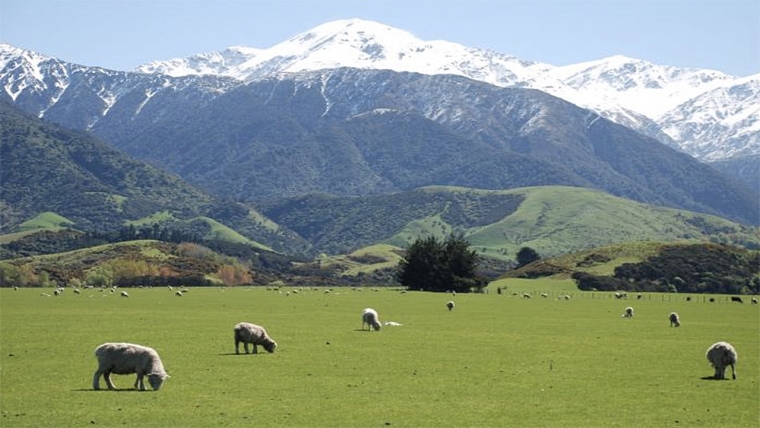
Owen-Brain also highlights that “30 to 40 per cent of food globally goes to waste,” a staggering figure at a time when many countries are struggling to feed their populations. New Zealand sheep farmers, working within some of the strictest environmental frameworks in the world, have been proving that it is possible to lift production while minimising waste at every stage of the system. There is no better demonstration of this than the fact that our national flock is half the size it once was, yet the country produces similar volumes of sheepmeat and wool and does so with lower emissions intensity.
The international conversations also raise another question central to global food security: who controls the land. Marcy Vigoda of the International Land Coalition puts it plainly when she says, “How societies use their land and who owns that land determines how people live, who flourishes, who falters and who has a say in what happens next.” She reminds us that around one third of the world’s food is grown by smallholders farming less than two hectares, often without secure land tenure making them vulnerable to land grabs, eviction, poverty and climate change.
New Zealand’s situation is different, yet the lesson is similar. Secure land ownership and a stable regulatory environment give farmers the confidence to invest, to adopt new genetics, to plant trees, to protect waterways, to improve pastures and to experiment with new grazing systems. These investments underpin the gains captured in the 30-Year Report Card. Without security and the space to think long-term, such progress would not have been possible.
Vigoda also notes that “one in three people across the world lack legally recognised rights to the land they depend on,” leading to uncertainty and a lack of investment in food production. The contrast with New Zealand’s sheep sector helps explain why our farmers have been able to steadily lift productivity while reducing environmental impacts: long-term thinking requires long-term certainty.
These international voices share another thread that mirrors the New Zealand story. Innovation is rarely about radical reinvention and more often about incremental improvement. Owen-Brain talks about companies taking “really small percentage changes that can have a really big impact.” The same could be said for the genetic and management gains captured in Beef + Lamb New Zealand’s report. Lamb survival did not jump overnight. Carcass weights did not rise in a single season. Emissions intensity did not fall because of a single tool. Instead, farmers made countless small improvements, from better feeding at tupping, to improved ewe condition, to scanning use, to more accurate drenching decisions, to refined pasture management, to improved animal health. The result is a transformed industry achieved without expanding the land footprint.
This is the context that matters when New Zealand agriculture is held up to global scrutiny. The conversations in New York, Denver, Nairobi or Bogotá reflect the scale of the world’s challenges. But the solutions often sound very familiar to a New Zealand sheep farmer. Reduce waste. Improve efficiency. Strengthen land governance. Support biodiversity. Build resilience. Plan for the long term. It is exactly what our sector has been doing.
That does not mean the future is easy. The report card shows enormous progress, but it also highlights the headwinds ahead. Environmental regulation, climate change, labour shortages, falling profitability and the growing urban-rural divide all present real pressures. But the story of the last thirty years suggests that the sector has the resilience, adaptability and systems mindset needed to navigate what comes next.
If there is a message to take from both the global voices and the New Zealand data, it is that food systems thrive when people stay committed to the long view. Brian Thompson captured it best when he observed that progress comes from “complex, interconnected ways of thinking about food.” New Zealand sheep farmers have not only been thinking that way, they have been living it.
In a world searching for examples of food systems that deliver more with less, New Zealand’s sheep sector has a report card worth reading.
Have a listen to the podcast to hear the full story.
Angus Kebbell is a producer at The Weekly Hotwire. You can contact him here.
We welcome your comments below. If you are not already registered, please register to comment
Remember we welcome robust, respectful and insightful debate. We don't welcome abusive or defamatory comments and will de-register those repeatedly making such comments. Our current comment policy is here.