
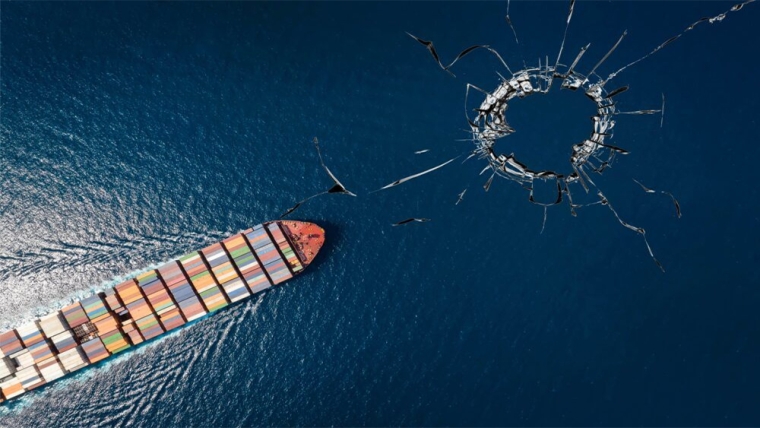
Whether or not the decision to bomb Iran turns out to be as successful as President Trump proclaims, there is no doubt Operation Epic Fury has seriously damaged the global outlook.
In addition it has almost certainly stalled New Zealand’s fragile economic recovery, made Nicola Willis’s job as Finance Minister even harder, and quite possibly sounded the death knell for National’s hopes of winning the election later this year.
Its only hope is for the conclusions of the Covid report to remind people just how profligate the last Labour government was, blowing $30 billion of taxpayer money on monetary stimulus which was no longer necessary. This caused inflation to rise, reflected in a massive gain in house values funded by low interest borrowings, followed by a surge in unemployment and rising interest rates.
Fortunately agricultural exports have soared at the same time; resulting in unprecedented returns to farmers. Without this major contribution to GDP, New Zealand’s balance of payments would be in dire straits.
Inflation in farm inputs has already robbed farmers of even higher profits from the commodity upturn, but the Iran campaign has made it certain the cost of fertiliser and fuel will reduce margins even more. It has also suddenly halted exports of dairy and red meat to the Gulf States, worth $3.4 billion annually. We can only hope it doesn’t depress global demand which would inevitably damage market prices.
The online dairy auctions still appear to be holding firm despite higher production volumes in most countries and this year’s payout was largely guaranteed before the war in Iran. The one-off injection of money into dairy farmers’ bank accounts from the shareholder distribution from the sale of Mainland is one bright spot.
Next year’s payout will be subject to volatility from global uncertainty and a downturn in trade, especially if the present conflict drags on longer than predicted. Rabobank’s analysts consider New Zealand’s strong dairy price to be an outlier and therefore there is a strong chance it won’t last in any case.
Meat processors are already suffering the effect of high procurement prices and weather-induced lack of throughput. In the past the industry’s goal was to maximise volume, hence overpayment for livestock. In contrast this season the schedule is justified by the market price, but the volumes aren’t sufficient to satisfy customer orders or optimise plant capacities.
The industry will be hoping for a late rush of livestock in the last two months of autumn, even an extension into July, to compensate. But high beef prices and good grass growth are encouraging retention of prime beef and dairy cows on farm, while the number of bobby calves is likely to be lower for the same reasons. Year to date the cattle kill is 6% down on last year, with both prime and dairy showing a similar trend.
High lamb prices have been predicted to continue which will mean the ewe kill is down, as farmers rebuild flocks. Meanwhile supply of lambs to the works is lower than last year, both because of good feed supplies which enables good weight gain and buying of lambs by farmers who met Christmas chilled orders and didn’t replace them in anticipation of dry conditions.
However the effect on demand from the current geopolitical situation is likely to be felt beyond the Gulf States, as other economies are hit by higher oil prices and shipping costs. A major concern is the potential impact of the war and the closure of the Straits of Hormuz on China’s economy. China obtains a large part of its oil from Iran and supply will be hit by the American bombing campaign on the oilfield defences. New Zealand will also suffer from delayed shipments of crude oil from South Korea which is one of our suppliers of refined oil products. Korea will almost certainly give priority to its domestic needs.
MIA chairman Nathan Guy has highlighted industry concern about congestion in the Gulf, although he emphasises NZ exporters’ agility when finding ways to circumvent obstacles and find alternative markets. But other options will involve extra cost – freezing down chilled shipments and double handling – and potentially lower prices than desired.
ANZCO general manager, sales and marketing, Rick Walker told me their European shipments take the longer route round the Cape of Good Hope which is still fast enough for chilled product to reach its final destination in a saleable state.
China is paying slightly more for beef, driven by demand and the impact of the recently imposed quotas. Brazilian beef is shipped to China via the Gulf and it now has access into the United States both of which will reduce its share of Chines beef imports.
Walker said the industry’s main problem from the war on Iran is the state of uncertainty it has created, but the longer it goes on, the greater the damage that will be felt by our exporters.
At this stage there is no sign Trump and his Minister of War, Pete Hegseth, have any idea how to finish what they have started. From here it seems anything could happen, none of it good.
We welcome your comments below. If you are not already registered, please register to comment
Remember we welcome robust, respectful and insightful debate. We don't welcome abusive or defamatory comments and will de-register those repeatedly making such comments. Our current comment policy is here.