
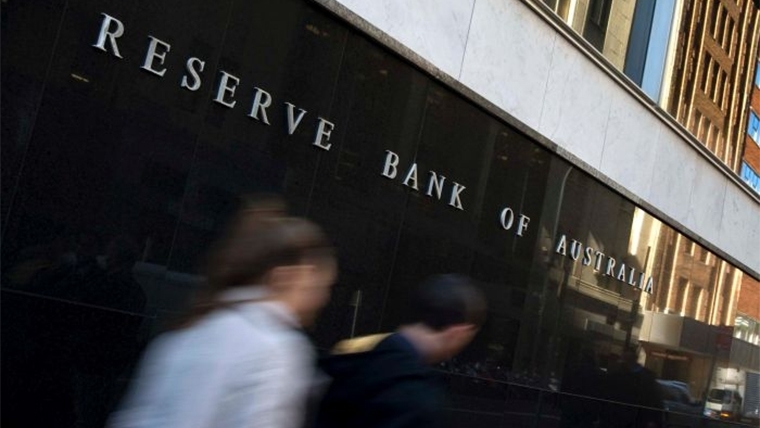
The Reserve Bank of Australia (RBA) has increased its cash rate by 25 basis points to 3.10% as expected, saying it anticipates increasing interest rates further, but isn't on a pre-set course.
The RBA says it "remains resolute in its determination" to return to its target of keeping consumer price inflation to between 2% and 3% on average over the medium term, and "will do what is necessary to achieve that."
The Australian Consumer Price Index (CPI) rose 7.3% in the September year, while the RBA says inflation in Australia is too high, at 6.9% over the year to October.
"Global factors explain much of this high inflation, but strong domestic demand relative to the ability of the economy to meet that demand is also playing a role. Returning inflation to target requires a more sustainable balance between demand and supply," the RBA says.
"A further increase in inflation is expected over the months ahead, with inflation forecast to peak at around 8% over the year to the December quarter. Inflation is then expected to decline next year due to the ongoing resolution of global supply-side problems, recent declines in some commodity prices and slower growth in demand. Medium-term inflation expectations remain well anchored, and it is important that this remains the case. The Bank’s central forecast is for CPI inflation to decline over the next couple of years to be a little above 3% over 2024."
The RBA goes on to say the labour market remains very tight, with many businesses finding it difficult to hire workers.
"Wages growth is continuing to pick up from the low rates of recent years and a further pick-up is expected due to the tight labour market and higher inflation. Given the importance of avoiding a prices-wages spiral, the [RBA] Board will continue to pay close attention to both the evolution of labour costs and the price-setting behaviour of firms in the period ahead," the RBA says.
"The Board expects to increase interest rates further over the period ahead, but it is not on a pre-set course. It is closely monitoring the global economy, household spending and wage and price-setting behaviour. The size and timing of future interest rate increases will continue to be determined by the incoming data and the Board’s assessment of the outlook for inflation and the labour market. The Board remains resolute in its determination to return inflation to target and will do what is necessary to achieve that."
Whilst the Reserve Bank of New Zealand has acknowledged it's trying to engineer a recession in order to return inflation to its target range, the RBA says it's seeking to keep the economy on an even keel as it returns inflation to its target. It does, however, note uncertainties mean there are a range of potential scenarios.
"The path to achieving the needed decline in inflation and achieving a soft landing for the economy remains a narrow one," the RBA says.
The RBA started increasing its cash rate, from a low of just 10 basis points, in May this year. That means it has lifted the cash rate by 300 basis points in eight months. It next reviews monetary policy on February 7.
The RBA's statement is below.
Statement by Philip Lowe, Governor: Monetary Policy Decision
At its meeting today, the Board decided to increase the cash rate target by 25 basis points to 3.10 per cent. It also increased the interest rate on Exchange Settlement balances by 25 basis points to 3.00 per cent.
Inflation in Australia is too high, at 6.9 per cent over the year to October. Global factors explain much of this high inflation, but strong domestic demand relative to the ability of the economy to meet that demand is also playing a role. Returning inflation to target requires a more sustainable balance between demand and supply.
A further increase in inflation is expected over the months ahead, with inflation forecast to peak at around 8 per cent over the year to the December quarter. Inflation is then expected to decline next year due to the ongoing resolution of global supply-side problems, recent declines in some commodity prices and slower growth in demand. Medium-term inflation expectations remain well anchored, and it is important that this remains the case. The Bank’s central forecast is for CPI inflation to decline over the next couple of years to be a little above 3 per cent over 2024.
The Australian economy is continuing to grow solidly. Economic growth is expected to moderate over the year ahead as the global economy slows, the bounce-back in spending on services runs its course, and growth in household consumption slows due to tighter financial conditions. The Bank’s central forecast is for growth of around 1½ per cent in 2023 and 2024.
The labour market remains very tight, with many firms having difficulty hiring workers. The unemployment rate declined to 3.4 per cent in October, the lowest rate since 1974. Job vacancies and job ads are both at very high levels, although they have declined a little recently. Employment growth has also slowed as spare capacity in the labour market is absorbed. Wages growth is continuing to pick up from the low rates of recent years and a further pick-up is expected due to the tight labour market and higher inflation. Given the importance of avoiding a prices-wages spiral, the Board will continue to pay close attention to both the evolution of labour costs and the price-setting behaviour of firms in the period ahead.
There has been a substantial cumulative increase in interest rates since May. This has been necessary to ensure that the current period of high inflation is only temporary. High inflation damages our economy and makes life more difficult for people. The Board’s priority is to re-establish low inflation and return inflation to the 2–3 per cent range over time.
The Board recognises that monetary policy operates with a lag and that the full effect of the increase in interest rates is yet to be felt in mortgage payments. Household spending is expected to slow over the period ahead although the timing and extent of this slowdown is uncertain. Another source of uncertainty is the outlook for the global economy, which has deteriorated. The Board is seeking to keep the economy on an even keel as it returns inflation to target, but these uncertainties mean that there are a range of potential scenarios. The path to achieving the needed decline in inflation and achieving a soft landing for the economy remains a narrow one.
The Board expects to increase interest rates further over the period ahead, but it is not on a pre-set course. It is closely monitoring the global economy, household spending and wage and price-setting behaviour. The size and timing of future interest rate increases will continue to be determined by the incoming data and the Board’s assessment of the outlook for inflation and the labour market. The Board remains resolute in its determination to return inflation to target and will do what is necessary to achieve that.
We welcome your comments below. If you are not already registered, please register to comment
Remember we welcome robust, respectful and insightful debate. We don't welcome abusive or defamatory comments and will de-register those repeatedly making such comments. Our current comment policy is here.