
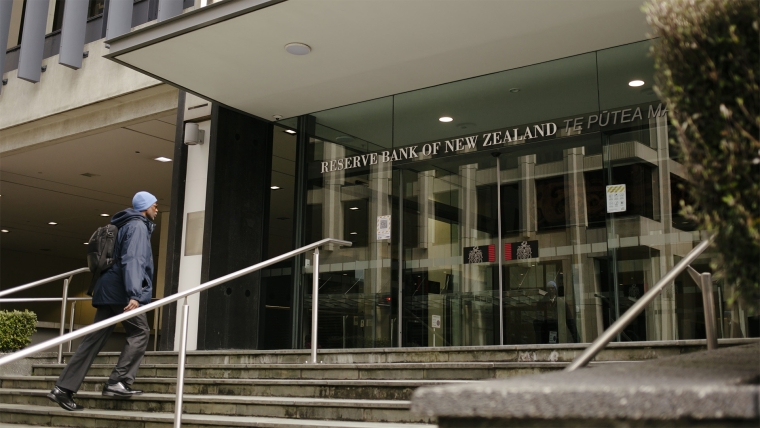
The Reserve Bank’s Monetary Policy Committee is expected to leave interest rates unchanged on Wednesday, April 10, and repeat the key messages from its February statement.
Stephen Toplis, head of research at BNZ, said the central bank preferred to make significant changes to policy at full monetary policy statements, rather than these interim reviews.
Full statements are backed up with fresh forecasts and a press conference, while monetary policy reviews only include a record of the meeting and the final decision.
Regardless, there have not been any big changes in economic data that would prompt the Reserve Bank to bring forward rate cuts or tighten policy any further.
Toplis said the central bankers could almost “cut and paste” the assessment from their meeting six weeks ago, when the Official Cash Rate was left at 5.50% where it has been since May last year.
“From a bigger picture perspective very little has changed: growth is moribund, the unemployment rate is rising, inflation and inflation expectations are trending lower,” he said.
Sharon Zollner, chief economist at ANZ, was forecasting more rate hikes prior to the February meeting but was surprised by its more dovish tone.
Unders and overs
Reserve Bank Governor Adrian Orr said the committee had growing confidence that inflation was coming under control and that it was more willing to tolerate upside surprises.
“We're saying with the degree of excess capacity … we think we can weather through some of these relative price spikes at present,” he said, during the February press conference.
Zollner said there had been some “unders and overs” in the data since then but nothing that should materially change the thinking.
She said she would look out for a comment on higher-than-expected consumption data and any discussion of near-term inflation risks.
Many economists expect the next Consumer Price Index data release to be hot. For example, ASB has forecast a quarterly number of 0.7%, compared to the Reserve Bank’s 0.4%.
Staff at the Reserve Bank will have similar updated forecasts which will be shared with the committee and may discourage them from sending any extra dovish signals.
“With the upcoming inflation data for [the first quarter] unlikely to give much comfort, it looks realistic for the Reserve Bank to wait for a further two quarters to establish more certainty,” ASB said.
Toplis said any upside surprise to inflation was “disconcerting” as it could feed inflation expectations and make it harder to get back to the Reserve Bank's 2% target.
ANZ’s Business Opinion Survey recently showed pricing intentions and inflation expectations were falling, although not quite fast enough.
Inflation expectations were down from just over 4% to 3.8%, the same level as October 2021, and a net 45.2% of businesses intended to lift prices — down from 48.2%.
Economic growth has been weaker than expected but employment has been surprisingly resilient. However, public sector job cuts are yet to appear in the data.
Distress?
While the Reserve Bank has signaled it won’t loosen monetary policy until next year, most economists and traders expect the economy to buckle before then and force earlier cuts.
Bond markets were priced for a full cut in August, as of Friday morning, while economists mostly expected the first shift downwards to happen in November.
Nic Guesnon, an economist at UBS, said it may be financial stress levels that will push the central bank to back off its policy settings.
The policymakers were faced with a difficult tradeoff in “balancing sticky domestic inflation, against clear signs of broadening financial stress”.
“The Reserve Bank is not yet signalling a rate cut in 2024. However, this outlook seems premised on a relatively benign outlook for financial stress,” he said.
But that assessment could change materially in the May Financial Stability Review, as arrears and nonperforming loans have been trending upwards.
While monetary policy and financial stability are separate responsibilities, they do feed into one another and the Monetary Policy Committee is tasked with avoiding instability.
Guesnon was still forecasting the first rate cut to be in November but thought the July, August and October meetings could all be considered ‘live’.
We welcome your comments below. If you are not already registered, please register to comment
Remember we welcome robust, respectful and insightful debate. We don't welcome abusive or defamatory comments and will de-register those repeatedly making such comments. Our current comment policy is here.