
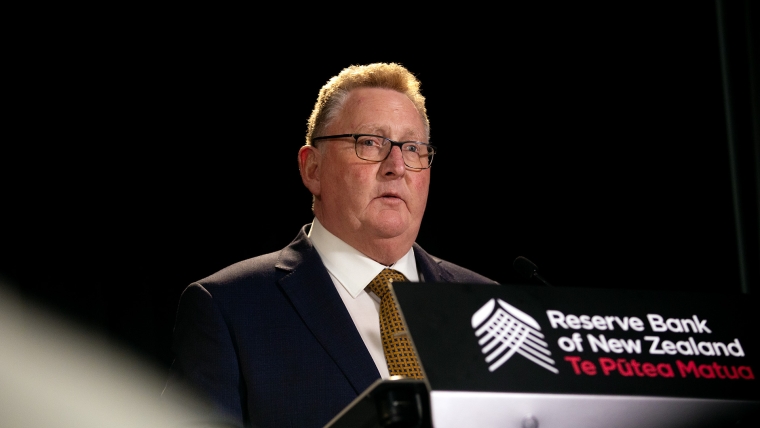
The Reserve Bank (RBNZ) has become more confident inflation is falling towards its 1% to 3% target and is thus more willing to tolerate surprises than it was in November.
Its first Monetary Policy Statement for the year struck a more dovish tone than many market participants had expected, especially ANZ's economists who had forecast further rate hikes.
The RBNZ held the Official Cash Rate (OCR) at 5.50% and lowered its projection by a few points, signaling the chance of a hike was diminishing.
It is important to note the OCR track still has a bias towards a hike. The February Monetary Policy Statement projects the rate going to 5.60%, but that is nine basis points lower than in November.
At its previous meeting in November, the RBNZ underlined it was impatient to get inflation back in the target range and it would not tolerate any surprises or delays.
After a summer of mixed economic data, they are feeling more comfortable that an extra hike will not be needed after all.
RBNZ Governor Adrian Orr said the Monetary Policy Committee (MPC) was now more tolerant of upside risk than it was in November, although its appetite was still asymmetric.
“What I would say is, the data we have seen has given us more confidence around the outlook that we've held for over a year or so now,” he said.
The central bank is forecasting a shock to the tradable inflation rate in the third quarter of this year, as increased shipping costs from the Red Sea conflict show up in local prices. Higher shipping costs will add to near-term inflation but the MPC has “looked through” the price shock on the expectation it will reverse.
When asked whether this counted as tolerating an upside surprise, Orr said the balance of inflation pressure was still broadly as expected.
“We're saying with the degree of excess capacity, and with our projected excess capacity ahead, we think we can weather through some of these relative price spikes at present”.
The Governor noted that other data points, such as headline inflation and gross domestic product, had been weaker than expected.
Lower-for-longer
Traders in the financial markets reacted swiftly. Two-year swap rates fell 20 basis points, to about 5%, and the New Zealand dollar fell 50 basis points to be about US61.2 cents.
Market pricing for future OCR settings dropped roughly 10 basis points, and a full rate cut has been priced in for the meeting in November this year.
Nick Tuffley, chief economist at ASB, said there was a high threshold for a move in either direction for the time being.
“The important take-out from this statement is that, after very conflicting signals in the key data out over the recent months, the RBNZ has signaled some degree of comfort with the inflation outlook,” he said.
Sharon Zollner, the chief economist at ANZ, said her forecast for two more rate hikes couldn’t have been more wrong.
The forecast for a hike at this meeting was always a “line ball call” but the RBNZ’s assessment inflation risks had become less pronounced since November was particularly surprising.
“We took the November MPS at face value as suggesting that the threshold for a further hike was low, whereas it appears there may indeed have been a bigger element of ‘talking tough’ to support rate expectations and thus mortgage rates over the summer,” she said.
Zollner said she still thought there was a “good chance” the OCR at 5.50% was not enough to bring inflation back to 2% in an acceptable time frame.
But the threshold for the MPC to pull the trigger on a rate hike was “clearly much higher” than it seemed from the November statement.

We welcome your comments below. If you are not already registered, please register to comment
Remember we welcome robust, respectful and insightful debate. We don't welcome abusive or defamatory comments and will de-register those repeatedly making such comments. Our current comment policy is here.