
By Roger J Kerr

Interest rate risk in New Zealand is always twofold: Short-term interest rates out to three years determined by the RBNZ’s monetary policy settings and outlook, whereas the three to 10 year part of the yield curve is driven by US long term interest rate movements.
The simple explanation of why our three to 10 year swap interest rates are highly correlated to the US bond interest rate movements is that foreign investors into NZ Government Bond essentially treat our market as an enhanced yield extension of the US market i.e. they buy and sell NZ bonds alongside their buying and selling of US bonds.
Borrowers who have been reading our commentaries will have noticed the warnings we have been providing over the last 12 months that even though the RBNZ may keep the OCR static through 2017, future interest rate risk was still very real as both short-term and long term US interest rates were expected to increase.
The Trump pledges on corporate tax cuts, infrastructure investment and border taxes have been viewed by the markets as inflationary on top of the strong US economic data already lifting their inflation rate. Therefore the 0.80% increase in US 10 year Treasury Bond yields to 2.50% since November has pushed the NZ longer term interest rates higher.
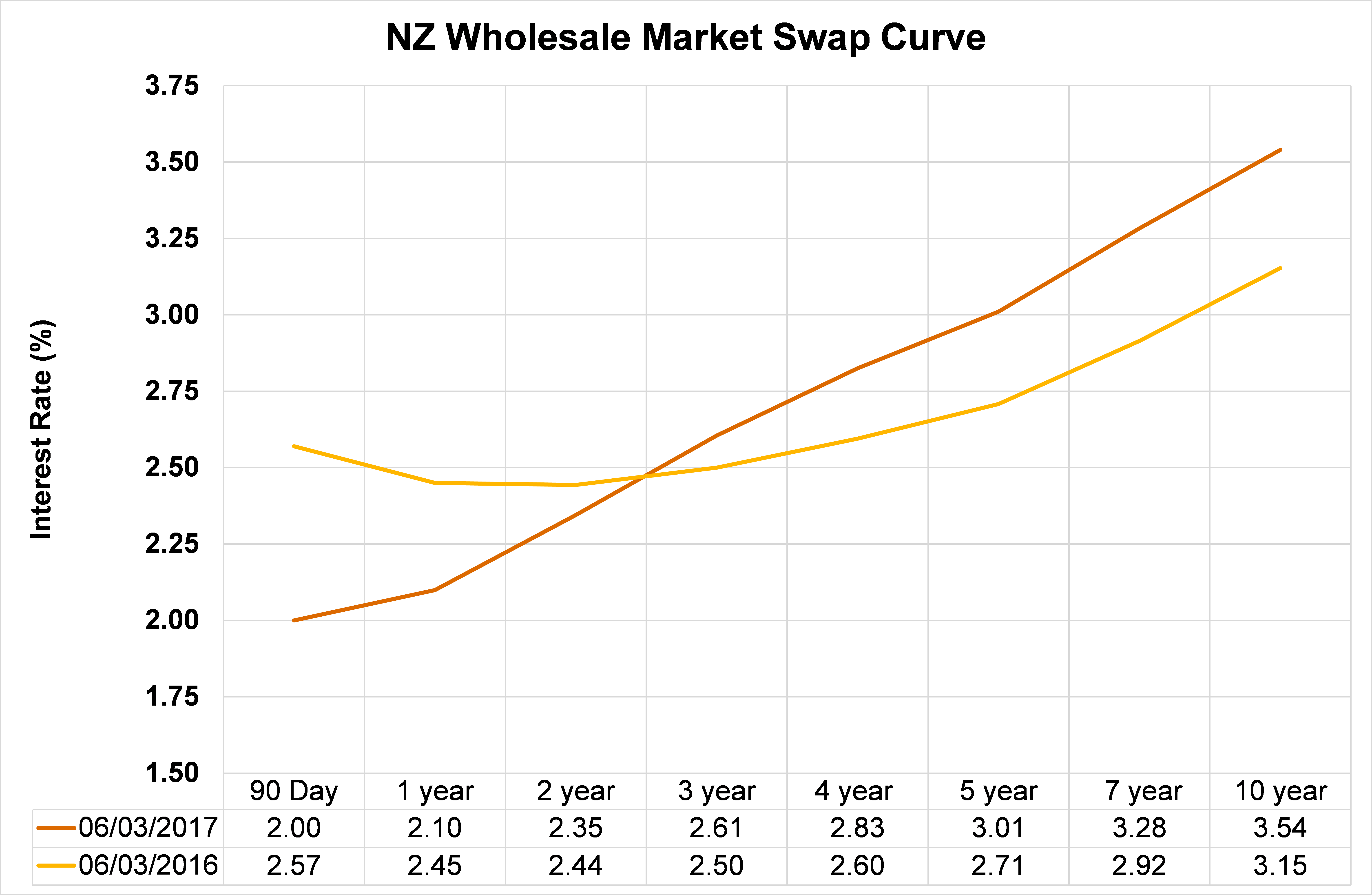
As the chart below depicts, the upward slope of the NZ yield curve has steepened considerably over the last 12 months.
Whilst some borrowers may not see the risk with our OCR being static for some time ahead, the risk is that when short-term rates do start to increase next year the term rates will be higher than where they are today.
In other words, how much additional interest cost do you pay (over and above floating 90-day rates) for the next 12 to 18 months by fixing via a swap now? If the decision of the borrower is not to fix, then how high would 90-day rates have to go over coming years to be worse off in terms of annual interest cost.
No-one has the definitive answers to these questions and the impact of changes to interest cost on financial performance will determine the level of fixing (or as hedging policies dictate).
Daily swap rates
Select chart tabs
Roger J Kerr contracts to PwC in the treasury advisory area. He specialises in fixed interest securities and is a commentator on economics and markets. More commentary and useful information on fixed interest investing can be found at rogeradvice.com
We welcome your comments below. If you are not already registered, please register to comment
Remember we welcome robust, respectful and insightful debate. We don't welcome abusive or defamatory comments and will de-register those repeatedly making such comments. Our current comment policy is here.