
sign up log in
Want to go ad-free? Find out how, here.

Kaushik Basu warns that the Trump administration's recklessness is jeopardising the greenback's global primacy

Currencies / opinion
Kaushik Basu warns that the Trump administration's recklessness is jeopardising the greenback's global primacy
image

As the economic consequences of US President Donald Trump’s war against Iran become evident, policymakers around the world are running out of patience. The recent Spring Meetings of the International Monetary Fund and World Bank in Washington made this abundantly clear, with UK Chancellor of the Exchequer Rachel Reeves lamenting the “folly” of a war that is “not ours.”

But much of the cost will be borne by the United States itself. The immediate effects are visible: a sharp rise in gas prices, inflation climbing to a two-year high, and growing concerns that, as consumers cut back on spending to offset higher costs, unemployment will rise. While these short-term shocks are serious, a major risk that has received less attention is that the dollar could lose its status as the world’s primary trade and reserve currency.

The decline of a reserve currency is a slow process. The British pound ceded its dominance to the US dollar over roughly two decades, beginning in the 1920s. As Barry Eichengreen has noted, the Roman denarius—arguably the world’s first international currency—also unraveled over a long period, starting when Emperor Nero debased it in the first century CE.

Any international currency ultimately depends on trust. I witnessed this during my time as chief economic adviser to the Indian government under Prime Minister Manmohan Singh. On August 5, 2011, S&P downgraded the US long-term credit rating from AAA to AA+, fueling fears of immediate capital flight. Instead, the opposite happened: money flowed into the US economy. In the face of global turbulence, investors trusted that the US would honor its obligations, no matter the cost.

That trust, a cornerstone of soft power, is rapidly eroding. Samantha Power, the former administrator of the US Agency for International Development (USAID), highlighted this in a recent lecture at Cornell University, where she criticised the Trump administration’s decision to dismantle the agency. The abrupt and “heartless” manner in which it was shut down, she said, halted humanitarian aid without warning, leading to immense suffering among populations around the world that had depended on its continuity.

The closure of USAID, alongside Trump’s military adventures in Iran and Venezuela and relentless attacks on long-standing allies like Canada and Denmark, has cast a shadow over America’s global standing and trustworthiness. This, in turn, puts the dollar’s hegemonic status at risk.

To understand the potential cost, consider seigniorage: because the dollar is globally trusted, the Federal Reserve can print a $10 bill for less than seven cents, and it will be accepted at full value around the world. As empires from Rome to Britain have shown, issuing the world’s leading currency allows a country to create value almost out of thin air. Losing that capacity would slow economic growth.

Unless US policy reverses course, this year may go down in history as the moment the US dollar began to lose its status as the world’s currency.

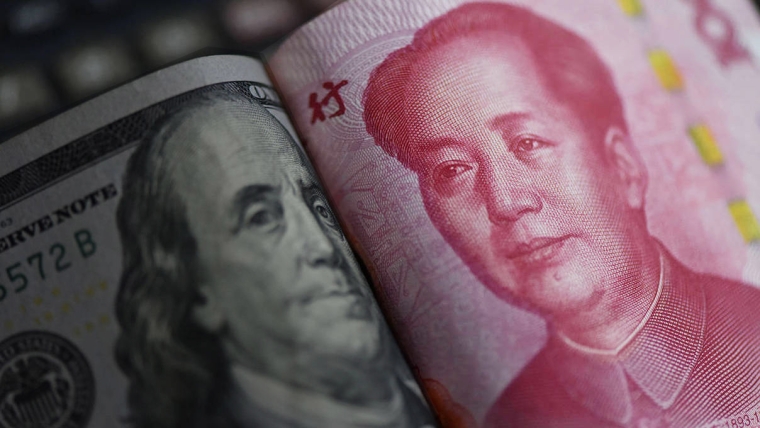
This raises the question: Which currency will replace the dollar? The renminbi appears to be the strongest candidate. A decade ago, the Chinese currency gained credibility when the International Monetary Fund included it in the basket of global currencies underpinning Special Drawing Rights (the Fund’s reserve asset), but it was still widely dismissed as “no match” for the greenback. Today, the prospect of renminbi primacy no longer seems unthinkable.

Yet China’s ability to assume that global role is far from assured. As economist Qiao Liu observed in his 2016 book Corporate China 2.0, the country combines an “authoritative political regime” with more flexible institutional arrangements in which “relationships still matter,” a hybrid that does not readily inspire the kind of global confidence a reserve currency requires.

Chinese President Xi Jinping appears to understand this dynamic. In a 2024 speech, Xi emphasised the need to internationalise the renminbi to bolster China’s soft power, calling for a “powerful currency that can be widely used in international trade, investment, and foreign-exchange markets and attain reserve currency status.” But the main obstacle to reserve-currency status for the renminbi—the maintenance of capital controls—remains firmly in place.

The strongest rebuke of Trump’s policies over the past year came from an unexpected source: King Charles III. His address to Congress on April 28, delivered with characteristic British wit and restraint, sent a clear message that the US is on the wrong path, one that could destroy its global standing.

There was, however, cause for optimism. The repeated bursts of bipartisan applause Charles received from members of Congress suggested they were already aware of America’s predicament.


*Kaushik Basu, a former chief economist of the World Bank and chief economic adviser to the Government of India, is Professor of Economics at Cornell University and a non-resident senior fellow at the Brookings Institution.Copyright: Project Syndicate, 2026, published here with permission.

We welcome your comments below. If you are not already registered, please register to comment

Remember we welcome robust, respectful and insightful debate. We don't welcome abusive or defamatory comments and will de-register those repeatedly making such comments. Our current comment policy is here.

9 Comments

Massive economic challenge for third world and SE asia Eurodollar loans etc

Up
0

Whilst I agree with the broad message of this article, the following paragraph is utterly bewildering. It suggests to me that perhaps the author has scant understanding of the process of money creation.    

"To understand the potential cost, consider seigniorage: because the dollar is globally trusted, the Federal Reserve can print a $10 bill for less than seven cents, and it will be accepted at full value around the world. As empires from Rome to Britain have shown, issuing the world’s leading currency allows a country to create value almost out of thin air. Losing that capacity would slow economic growth."

In reality, within the typical Western casino financial system, 90-97% and of broad money is created by commercial banks... out of thin air. This money creation involves zero paper or printing costs. As such, for the author to try to frame seigniorage as a factor in 'helping us understand' the potential cost of dedollarisation, is farcical.

Is this deliberate obfuscation? Or is this just more mainstream eCONomics, where false narratives are deliberately peddled?

Perhaps this writer is another innocent victim of a system which deliberately pulls the wool over the eyes of the working class, so that the private banking cartel's monopolistic heist can continue, even as the entire fiat system's architecture is going up in smoke, and TOOFOO and Bessent throw the petrodollar onto the bonfire as well?     
 

Up
3

Has de-dollarisation begun?

India dont appear to think so, having specified USD for FDI in our new FTA.

Up
0

First heard this when I started in markets in 1996. Still waiting. 

Up
0

It has been predicted a long time. But Pound Sterling was also predicted to fall long before it eventually did 

Up
0

We will know when this actually happens when dairy products, red meat products, seafood, and horticulture are priced for international trade in something other than USD. This is different to what the invoices say - they may be recorded and paid in anything (and may be already, such as CNY), but that invoice value is still likely to be determined from an agreed USD base agreement or reference point (auction outcome?). So following the SWIFT data is a bit of a red herring.

Up
3

Dedollarisation is a process, not an event.

And, as Hemingway said when asked how he went bankrupt... "Two ways: Gradually and then suddenly.”

And how apt, that this line came from his novel... The Sun Also Rises

As the RoW wakes up to the fact that all fiat currencies have already lost at least 98% of their purchasing power, the end could arrive very abruptly as U$D holders make a mad dash for the elevator door.

Countries already have a huge choice in terms of how they customise their reserve portfolios. Using swaps/bartering/etc, and settling only the trading surplus/deficit in currencies of their own choosing, there will no longer be the need for a hugely dominant national currency that plays this dual role as the global reserve currency. 

The effect of the Triffin Paradox is that, by definition, the incumbent nation will always run trade deficits as it provides global liquidity for global trade.

This extra demand for the currency strengthens it even when the country is technically insolvent. It also renders many of their exports uncompetitive on the global market - no country in its right mind should seek this "exorbitant privilege", which history has proven to be a structural burden 

In effect, the incumbent nation's domestic footing is weakened, as its manufacturing sector is hollowed out, and inflation is spurred. When that country cuts its deficits and supplies less liquidity, the global markets need to find it elsewhere.

The new model will involve many countries sharing in this liquidity provision. The total amount required in the form of currency will be far less, in total, because countries will have so many more options in terms of how they hold their reserves.

The days of a single hegemonic entity holding that role are over. This will be a huge positive for humanity, just as the death of the fiat casino experiment will be as well.      


Up
1

It is my view that the 'Reserve Currency' (an outdated term I suggest) is only that due to consensus of other nations. The US$ value is made up of two significant components; the economic value generated from the internal economic activity within the US, and the external demand due to it's reserve status. As indicated by Let Me Be Frank, above, India has specified the US$ in our new FTA, supporting the external demand for the US$. 

It is my view that any future international currency should not be one denominated in a national currency anywhere in the world and thus subject to the political vicissitudes of that nation. Instead an international bank should develop and maintain the currency based on common treaty from all nations.

Up
0

As the RoW wakes up to the fact that all fiat currencies have already lost at least 98% of their purchasing power

Good analysis, but where did you come up with this from?

Up
0

-

Up
0

The answer is yes. Data from the IMF's Currency Composition of Official Foreign exchange Reserves showed that the Dollar's share of global reserves had fallen to 59.30% by Q3 2024 from 65.30% in 2016. 

Again, China's Cross-Border interbank Payment system(CIPS) processed an average of 9.60 trillion yuan daily in 2024, representing 65% year-on-year growth. The system then connected over 1700 financial institutions across 180 countries. 

The dollar's 'Exorbitant Privilege' is in decline and I believe this will continue.

Up
0