
Risk sentiment is weaker amid escalating tensions in the Middle East, which are driving inflation fears, pushing bond yields higher, weighing on equity markets, and supporting the USD. Concerns about the scale of capex in the AI sector have added to the drag on US equities.
Yesterday morning, there were reports that the Houthis had claimed responsibility for attacks on two Saudi oil tankers in the Red Sea, a claim backed up by the Saudi government and other sources. This was the first attack in the area, which has been used as an alternative shipping route to the Strait of Hormuz.
The report sent oil prices higher during the NZ trading session, and the steady lift in prices continued overnight, taking Brent crude above USD101 per barrel. In an interview with Axios, President Trump said that he was close to making a decision on a massive attack that would be bigger than before. In a social media post, he noted that “major military punishment” would be directed at Iran, which he holds responsible for the Houthi attacks.
Higher oil prices continue to apply upward pressure to global rates. The US 2-year Treasury rate is up 6bps to 4.36%, reaching levels not seen since early 2025. The 10-year rate is up 5bps to 4.70%, breaking above the May peak and also reaching levels not seen since early 2025. European rates are up by around 3-7bps.
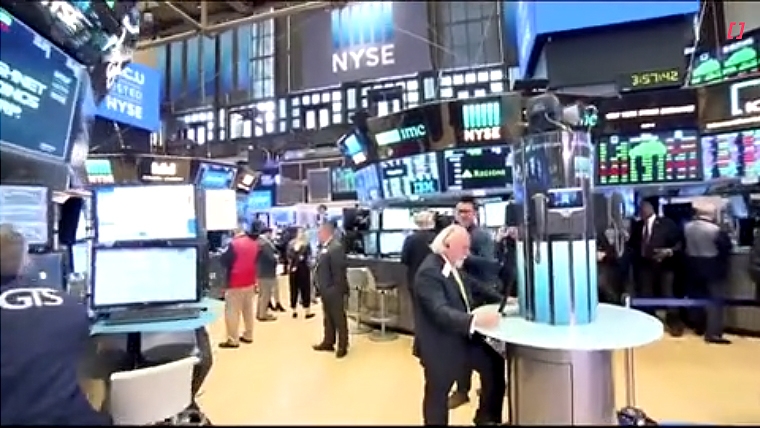
US equities are much weaker, with the S&P500 down 1.4% in late-afternoon trading and the Nasdaq down 2.4%. Adding to investor angst was a poor result from Tesla after yesterday’s close, which saw its stock price plunge 14%. While Alphabet reported strong earnings, there was concern about its massive and higher-than-expected capex plans for the next year, with the company looking to spend as much as $205b. At $5.9b, the company reported its first-ever quarter of negative free cash flow. This has reignited concerns about the scale of spending in the AI sector. Similar capex concerns also applied to Tesla. Bloomberg’s Mag 7 index is currently down 4.8%, while the S&P500 ex-Mag 7 index is currently down only 0.2%.
In economic news, US initial jobless claims plunged 22k last week to 187k, remarkably the lowest level since 1969. Seasonal adjustment can be difficult at this time of year, given annual retooling shutdowns in the auto sector, so the market did not overreact to the figures. The data were consistent with the narrative of a low-firing environment.
In currency markets, the USD is broadly stronger overnight and the NZD is near the bottom of the leaderboard, an easy sell after its strong recent rally and amid weaker risk appetite. This morning, it is trading at 0.5770. The AUD is down to 0.6970. A nudge higher to 0.7020 after the Australian labour market report showed stronger-than-expected employment growth of 76k in June has been completely reversed, and then some, given the risk backdrop. NZD/AUD fell to 0.8290 after the labour market report and has extended the fall slightly overnight to 0.8280.
EUR and GBP are 0.5% weaker overnight, but the NZD’s underperformance has pushed NZD/EUR down to 0.5075 and NZD/GBP down to 0.4335.
As expected, the ECB left its policy rates unchanged, leaving the deposit rate at 2.25%. President Lagarde noted that risks to inflation are to the upside, flagging the energy shock and adding that underlying inflation was contained for now. She gave a nod to market pricing, which sees the Bank hiking for a second time this cycle in September. She indicated that some governors had discussed considering a hike at today’s meeting but noted that the Bank was “positioned adequately to wait and be very attentive in the next few weeks to the development of the situation and to the data that we will be receiving”. With no surprises, the market reaction was muted.
USD/JPY continues to push higher to new multi-decade highs, reaching 163.99 overnight. While official yen intervention remains an ever-present risk, it makes little sense in the current environment of daily rises in oil prices. NZD/JPY is softer at 94.5.
In the domestic rates market, global forces, including higher Australian rates after its employment report, drove NZ rates higher across the curve, although the NZ market outperformed on a cross-market basis. NZ swap rates rose 2-3bps, while NZGB yields rose 1-4bps. Overnight, Australian rates rose again, with the 10-year rate up about 5bps, as implied by futures, setting the tone for the NZ market at the open.
On the economic calendar, Japan CPI data will be released for June, with figures continuing to be distorted downward by government subsidies, leaving headline and core inflation rates artificially below 2%. European and US PMI data are released tonight.
Daily exchange rates
Select chart tabs
Jason Wong is the senior Markets Strategist at BNZ Markets.
We welcome your comments below. If you are not already registered, please register to comment
Remember we welcome robust, respectful and insightful debate. We don't welcome abusive or defamatory comments and will de-register those repeatedly making such comments. Our current comment policy is here.