
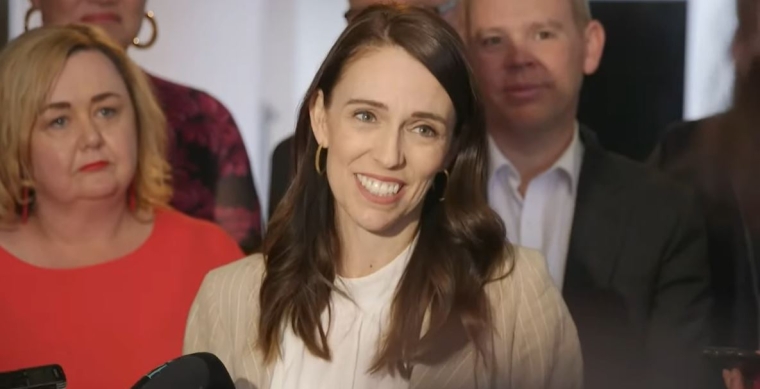
Labour leader Jacinda Ardern expects to form a government within the next two to three weeks, but won’t comment on whether the Greens will be a part of that government.
“We clearly have a mandate on behalf of New Zealand to crack on with government formation.” Ardern told media on Sunday afternoon.
“I have said I want to talk with the Greens and will do that next week. But as I say, that mandate does exist for Labour.”
Ardern said she had a “very brief” conversation with Greens co-leader, James Shaw, to acknowledge the party's election "success". She also put in a call to the other co-leader, Marama Davidson.
“We have left it that we will speak again next week. So, nothing further to report there, other than that initial conversation,” she said.
“I have been a consensus builder, but I also need to work with the mandate that Labour has been given.”
Labour's caucus will meet on Monday and Tuesday.
Ardern was confident the party had enough talent to fill ministerial roles.
Asked what Labour’s “strong mandate” meant in practical terms, Ardern signalled Labour would continue on the path it was on in terms of policy.
She said she maintained the Labour-led Government’s Covid-19 response and the Labour Party’s plan going forward were what New Zealanders, particularly new Labour voters, endorsed at the election.
In terms of the economic recovery, Ardern mentioned Labour’s policies to extend the Small Business Cashflow Loan Scheme until the end of 2023, and expand the existing “flexi-wage” subsidy available to employers who hire people "at risk of long-term unemployment".
Asked if the result was a vote for a “progressive New Zealand”, Ardern said, “I think last night’s vote was a vote of confidence in… our Covid response and recovery, and to keep going…
“I’d like to think that New Zealand has always been a relatively progressive country. Even at times, we may’ve had a centre-right government, you still have some of those conscience issues coming through.”
Special votes yet to be counted
The Electoral Commission says around 480,000 special votes (17% of total votes) are yet to be counted. This includes an estimated 66,000 overseas and dictation votes.
Voter turnout is estimated to be 82.5% of those enrolled as at 6pm, October 16. This compares with a final 79.8% turnout of those enrolled in 2017.
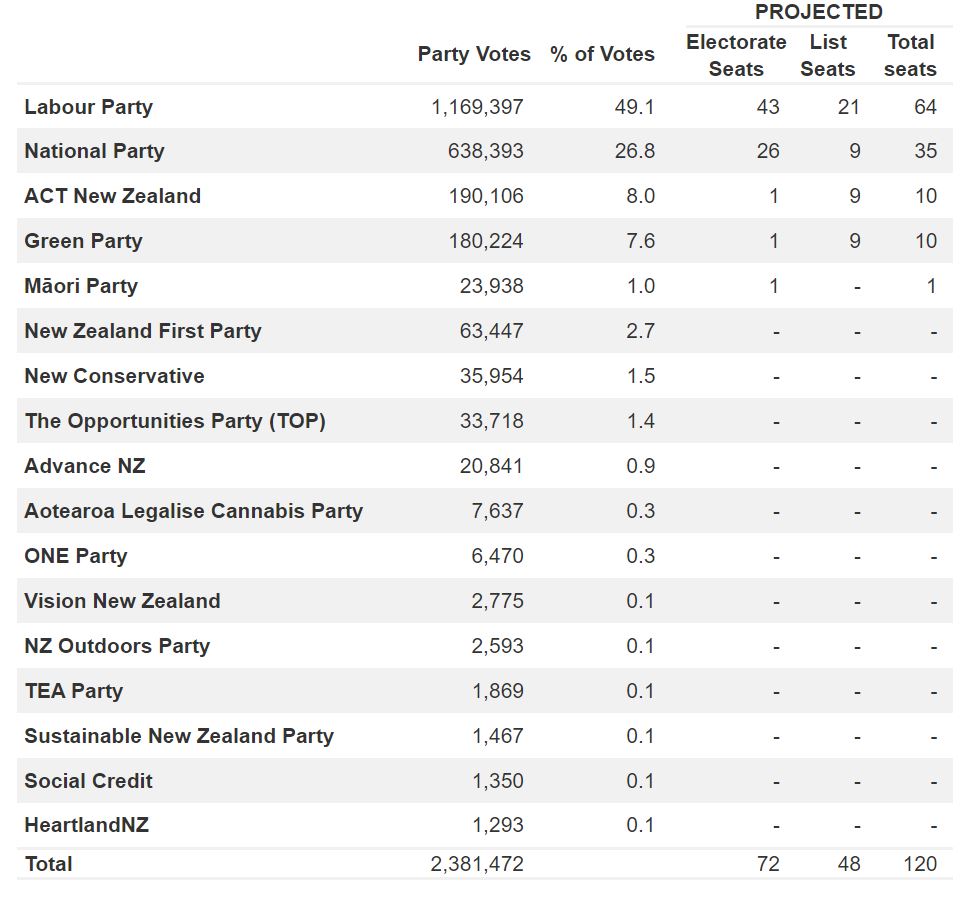
Here are the preliminary election night results:
We welcome your comments below. If you are not already registered, please register to comment
Remember we welcome robust, respectful and insightful debate. We don't welcome abusive or defamatory comments and will de-register those repeatedly making such comments. Our current comment policy is here.