

Auckland may still be struggling to see the light at the end of this lockdown tunnel, but bureaucrats at number 1 and 2 The Terrace are turning their attentions to getting the government’s books back in shape.
Outgoing Reserve Bank (RBNZ) deputy governor Geoff Bascand, in a speech delivered on Thursday, made the point New Zealand has weathered the Covid-19 storm relatively well economically, largely because the government, businesses and banks went into the crisis with strong balance sheets.
Referencing the Treasury’s recently released Statement on New Zealand's Long-term Fiscal Position, Bascand noted the government will at some stage need to consider how to generate more tax revenue and/or spend less.
He noted how instrumental the likes of the Wage Subsidy has been, supporting businesses to help keep people employed.
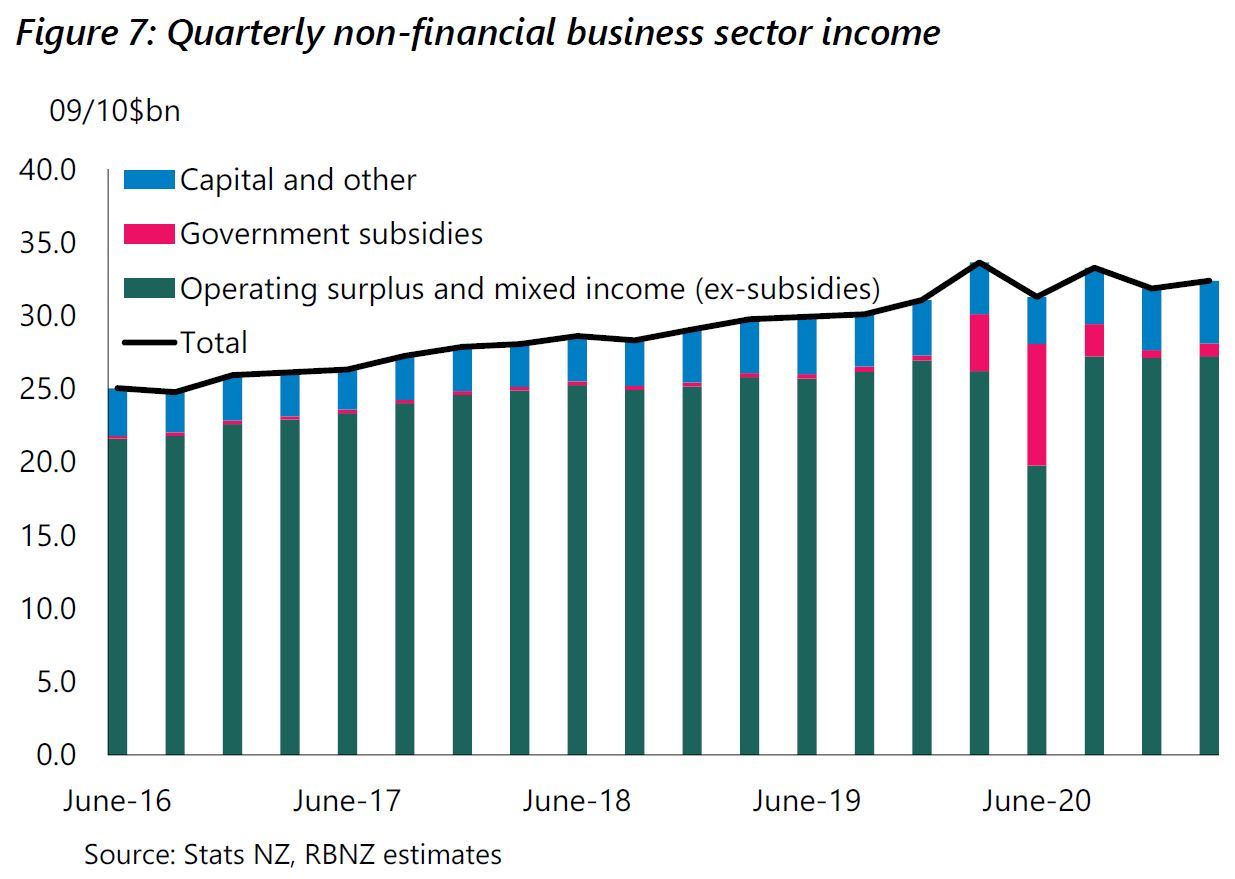
However, Basacand said, “Household and government balance sheets appear a little more vulnerable now than they were at the outset of the pandemic and the uncertainty surrounding the outbreak of the Delta variant continues to weigh on the growth outlook.
“Government debt levels are expected to peak just below 50 percent of GDP in 2023, up from around 20 percent prior to the pandemic. While still relatively modest compared with many advanced economies, the importance of preserving fiscal space to accommodate unforeseen events will confront policy makers in coming years, especially given the adverse long-term fiscal trends, particularly from demographic ageing.
“The reasons for public debt expansion matter to its sustainability and potential constraint on future borrowing.
“Debt that is associated with increased investment, boosting the economy’s potential growth, is worthwhile and presents few risks to investor confidence. However higher debt driven by rising social expenditure transfers or discretionary policy choices exceeding revenue trends could see less favourable investor perceptions, potentially adding a risk premium to New Zealand’s borrowing costs.
“Significant policy decisions will confront fiscal decision-makers in the next 20 years to modify expenditure, revenue and debt trends to ensure the government balance sheet does not become a threat to economic resilience, rather than a support as it has during the pandemic.”
Treasury calls for 'small and gradual changes in the near term'
Similarly, the Treasury in its Statement on New Zealand's Long-term Fiscal Position, said, “[L]ong-term expenditure trends mean that, without any policy adjustments, net debt will likely breach the prudent upper limit at some future point either within or beyond the projection period…
“Although the increased uncertainty as a result of Covid-19 makes it difficult to calculate the exact speed of adjustment, considering changes to improve the long-term fiscal position now is likely to be beneficial.
“Small and gradual changes in the near term could help minimise the cost of fiscal pressures across generations, preventing higher debt and a larger, relatively more costly adjustment in the future.”
Neither the Treasury nor the RBNZ entertained the modern monetary theorist view around debt. Their concerns weren’t tempered by the fact New Zealand issues its own currency and most of the debt issued by the Debt Management Office to pay for the Covid-19 response was bought by the RBNZ (on the secondary market).
A double whammy for the young
The Treasury and RBNZ made their calls for the government to start considering how to reduce debt while acknowledging the younger generation, lumped with the burden of getting the books back in shape, are also victims of the housing crisis.
The Treasury noted how house price inflation played a key part in significantly increasing the wealth of those who own houses, who tend to be older.
It compared the distribution of wealth across ages between 2001 and 2018, using the latest available Household Economic Survey data. Given house (and share) prices have skyrocketed since 2018, one might assume the differentiation between the young and old is more pronounced now.
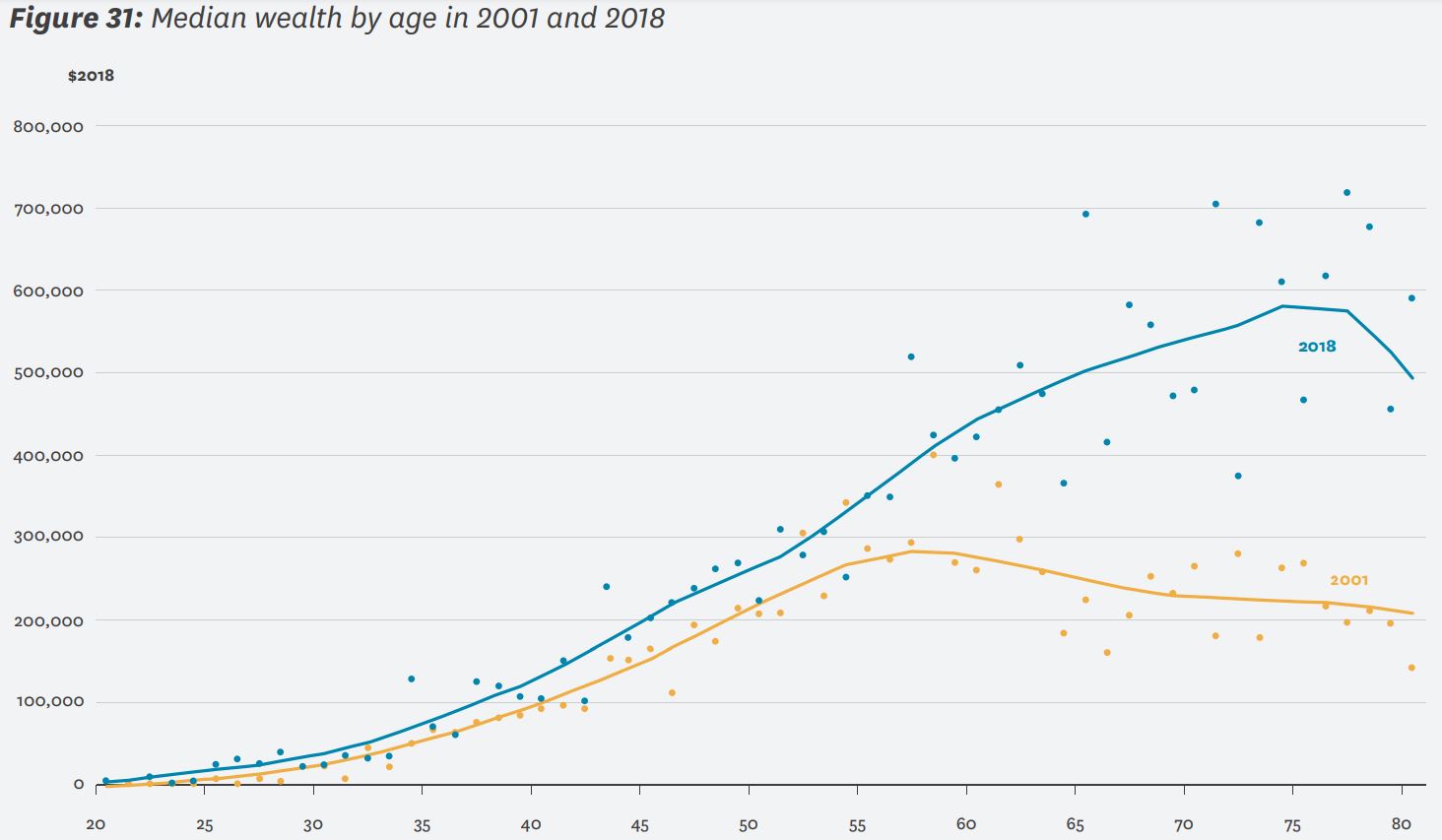
Looking at the issue from a financial stability perspective, Bascand was worried new entrants to the housing market (many of whom are part of that younger cohort tasked with repaying the debt) are mortgaged up to their eyeballs. Accordingly, higher interest rates will hit them relatively harder and they’ll be more exposed in the event of a housing market crash.
Bascand concluded: “Although we are not out of the woods yet and uncertainties surrounding the current outbreak remain, we are reassured by the resilience that strong balance sheets provide.”
We welcome your comments below. If you are not already registered, please register to comment
Remember we welcome robust, respectful and insightful debate. We don't welcome abusive or defamatory comments and will de-register those repeatedly making such comments. Our current comment policy is here.