


In the last two Monetary Policy Statements the Reserve Bank included alternative scenarios for the OCR in addition to the central scenario that involved roughly one OCR hike in 2020.
The first alternative scenario suggests that higher global inflation could warrant almost four 0.25% OCR hikes over 2018 and 2019 while the second alternative suggests that weaker domestic demand could warrant three OCR cuts next year. The question of whether weaker domestic demand could warrant OCR cuts is addressed in our pay-to-view reports. This Raving considers whether higher global inflation could warrant several OCR hikes.
The likelihood the future will turn out different from what the Reserve Bank is forecasting means including alternative scenarios in the Monetary Policy Statement is a good idea. However, as covered in this Raving, it is questionable whether there is a sufficient linkage between global and local inflation to warrant the four OCR hikes in the first alternative scenario.
Even if global inflation turns out higher than the Reserve Bank is predicting it is questionable whether this will have a sufficient impact on NZ medium-term inflation prospects to warrant several OCR hikes.
The Reserve Bank's alternative OCR scenarios
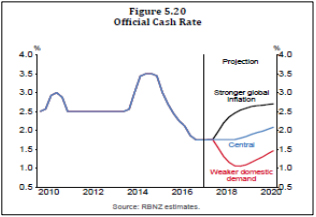
There are two parts to this issue: (1) whether global inflation increases; and (2) whether there is much linkage between global and NZ inflation. Higher global inflation should only warrant OCR hikes if it increases NZ medium-term inflation. I do not expect a significant increase in global inflation over the next year but at some stage higher global inflation is likely/possible. My focus here is on the question of the linkage between global and local inflation because even if or when global inflation increases it will only warrant several OCR hikes if it significantly increases NZ medium-term inflation prospects.
The direct link between global and local inflation
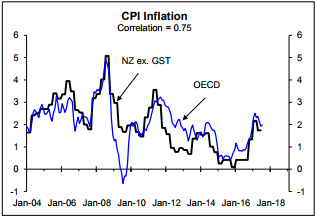
The adjacent chart suggests there is a reasonably close link between OECD and NZ inflation. I have excluded from NZ inflation the temporary boost in 2010/11 caused by the increase in GST from 12.5% to 15%. The peak correlation is coincidental at 0.75 compared to a maximum possible correlation of 1.0 (i.e. like a 75% pass mark in an exam). It appears that local and global CPI inflation largely move up and down together although there have been some exceptions. At face value this suggests that higher global inflation could justify OCR hikes based on concern about higher NZ inflation. With the two moving together rather than global inflation flowing through to NZ inflation with a lag there would be evidence of higher local inflation at around the same time there was evidence of higher global inflation (i.e. the second alternative scenario should just focus on the risk of higher local inflation). But it isn't as straightforward as the chart above suggests.
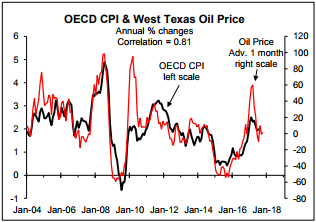
The reasonably high correlation between NZ and OECD CPI inflation is largely because upturns and downturns in the oil price flow through to both at the same time. OCR decisions aren't supposed to be driven by short-term spikes and tumbles in inflation driven by the oil price but rather by medium-term inflation prospects.
If there is an upturn in OECD/global inflation caused by a rising oil price it shouldn't justify OCR hikes even if it flowed through to a temporary increase in NZ inflation; especially if local developments imply different prospects for medium-term CPI inflation. This suggests we need to look beyond headline CPI inflation that is impacted significantly by the oil price.
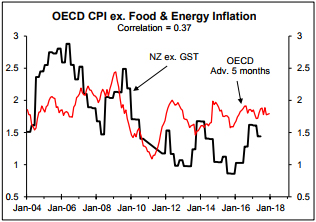
Indirect links between global and local inflation
There could be indirect linkages between global and local inflation that warrant "higher global inflation" being linked to several OCR hikes. A line of reasoning could run that higher global inflation will flow through to higher overseas interest rates that will weigh on the NZD if the Reserve Bank doesn't hike the OCR, with the lower exchange rate flowing through to higher local CPI inflation via it boosting export and import prices in NZD terms.
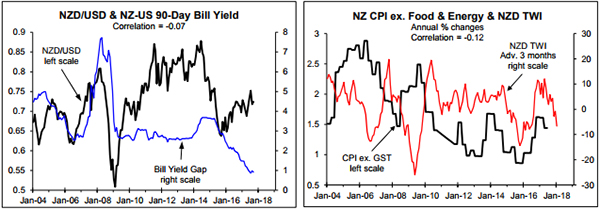
For this line of reasoning to be relevant there needs to be links between interest rate differentials and the exchange rate and between the exchange rate and local underlying CPI inflation. The left chart shows that since 2004 there is no link between the NZD/USD and the gap between NZ and US 90 day bill yields. It is a similar story no matter what interest rate differential is used. As covered in our monthly Forex Prospects reports, factors other than interest rates are generally more important drivers of the exchange rates (e.g. relative economic growth and NZ export prices). The right chart shows a very low negative correlation between the annual % change in the NZD trade-weighted exchange rate index (TWI) and NZ CPI inflation when the volatile food and energy components are excluded, with the peak correlation being with the TWI advanced or leading by three months. It is highly questionable whether there are any indirect links between global and NZ inflation that warrant linking stronger global inflation to a need for several OCR hikes.
*Rodney Dickens is the managing director and chief research officer of Strategic Risk Analysis Limited.
We welcome your comments below. If you are not already registered, please register to comment
Remember we welcome robust, respectful and insightful debate. We don't welcome abusive or defamatory comments and will de-register those repeatedly making such comments. Our current comment policy is here.