

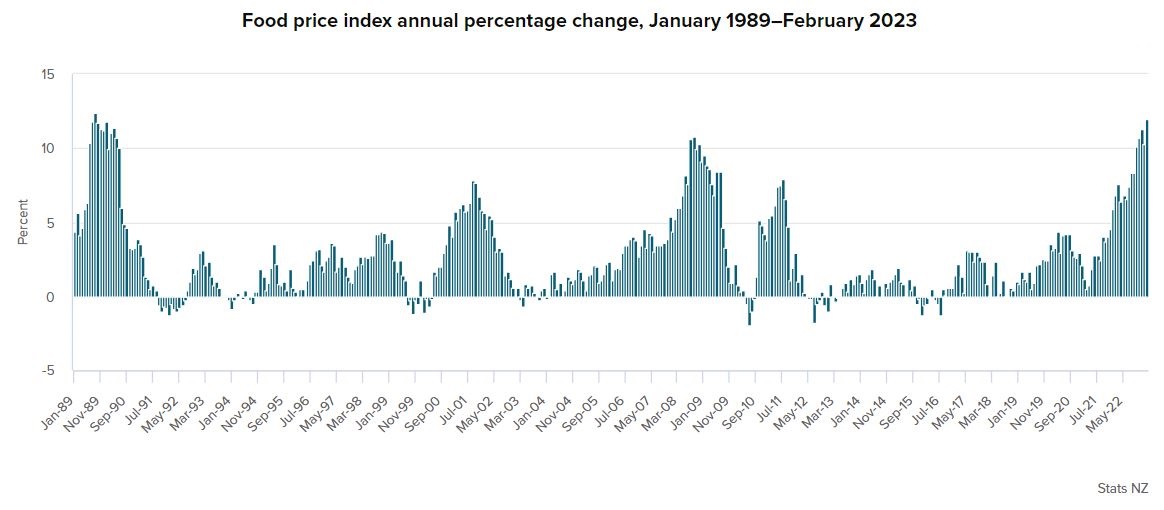
Food prices rose at an annual rate of 12% last month, the highest annual increase since September 1989.
Statistics NZ says the annual food price increase was due to rises across all the broad food categories it measures.
Compared with February 2022:
- grocery food prices increased by 12%
- fruit and vegetables prices increased by 23%
- restaurant meals and ready-to-eat food prices increased by 8.4%
- meat, poultry and fish prices increased by 9.8%
- non-alcoholic beverage prices increased by 9.1%.
“Increasing prices for barn or cage-raised eggs, potato chips, and cheddar cheese were the largest drivers within grocery food,” Statistics NZ consumer prices manager James Mitchell said.
The second-largest contributor to the annual movement was fruit and vegetables. The increases were seen in tomatoes, 117% increase, and in potatoes 48% increase."
At 12%, the annual food price index is well above the Consumers Price Index (CPI). Statistics NZ's latest annual CPI reading was 7.2% for the December quarter. And Infometrics says the Infometrics-Foodstuffs New Zealand Grocery Supplier Cost Index (GSCI), measuring cost increases from grocery suppliers to supermarkets, rose 10.4% in February. That's up from a 10.0% annual rate in January. The GSCI measures the change in the cost of grocery goods charged by suppliers to the Foodstuffs North Island and South Island cooperatives.
ASB Senor Economist Mark Smith says there appears to be a tangible impact from the summer's North Island storms on retail food prices, and he anticipates further increases over the coming months.
"We expect quarterly rises in food prices to push above 4% in Q1 and Q2 this year, contributing at least 0.7 percentage points to quarterly CPI readings in the first half of this year, with annual CPI inflation potentially hitting fresh 30-year highs in the first half of 2023. The Reserve Bank clearly have more work to do to convince wage and price setters that inflation is on track to settle below 3%," says Smith.
Statistics NZ says month-on-month food prices rose 1.5% in February from January. After adjusting for seasonal effects, they rose 2.1%.
"Fruit and vegetables was the largest contributor to the monthly movement. Within this group, the items having the greatest impact were broccoli, tomatoes, and lettuce," Statistics NZ says.
Meanwhile, Statistics NZ says the extreme weather events in January and February impacted its data collection for the Food Price Index during February.
"Data collection for prices of a small amount of fresh fruit and vegetables was not completed for some weeks in the Auckland and Napier/Hastings regions. A small amount of monthly data was also not collected. For any prices not collected, Stats NZ has imputed these using similar prices from within the same region, which is Stats NZ’s standard treatment for when prices are not available."
We welcome your comments below. If you are not already registered, please register to comment
Remember we welcome robust, respectful and insightful debate. We don't welcome abusive or defamatory comments and will de-register those repeatedly making such comments. Our current comment policy is here.