

They've got the cash and they are grabbing it.
The amount withdrawn from KiwiSaver accounts by the over-65s has comfortably more than doubled over the past two years at a time when bank term deposit rates have risen from interest rate levels that made them nearly defunct to much higher levels that are now seeing money pouring in.
The Financial Markets Authority (FMA) KiwiSaver 2023 annual report shows that in the year to March 2023 the over-65s collectively withdrew more than $2.8 billion, which made up the lion's share of the total $4.2 billion withdrawn by all KiwiSaver members during the year. (As previously reported, the report also showed a sharp rise in the amount of financial hardship withdrawals and savings suspension.)
The amount withdrawn by the over-65s was up some 46.3% on the $1.95 billion that was withdrawn by this age grouping in the year to March 2022. And the $1.95 billion withdrawn in that year was itself up some 59.5% on the $1.22 billion withdrawn by that grouping in 2021.
So, the withdrawals by the over-65s have gone from $1.22 billion to over $2.8 billion in the space of two years.
The FMA said in 2023 a total of 36,121 retirees fully exited KiwiSaver, "which is up 68.3% year-on-year, and the highest number ever".
"Typically, such exits have totalled around 20,000, with the previous highest being 23,458 in the year to March 2019. While this year’s number may be an anomaly, it is still only around one-fifth of all members aged 65-plus which indicates the four-fifths are comfortable leaving at least some savings in their KiwiSaver scheme."
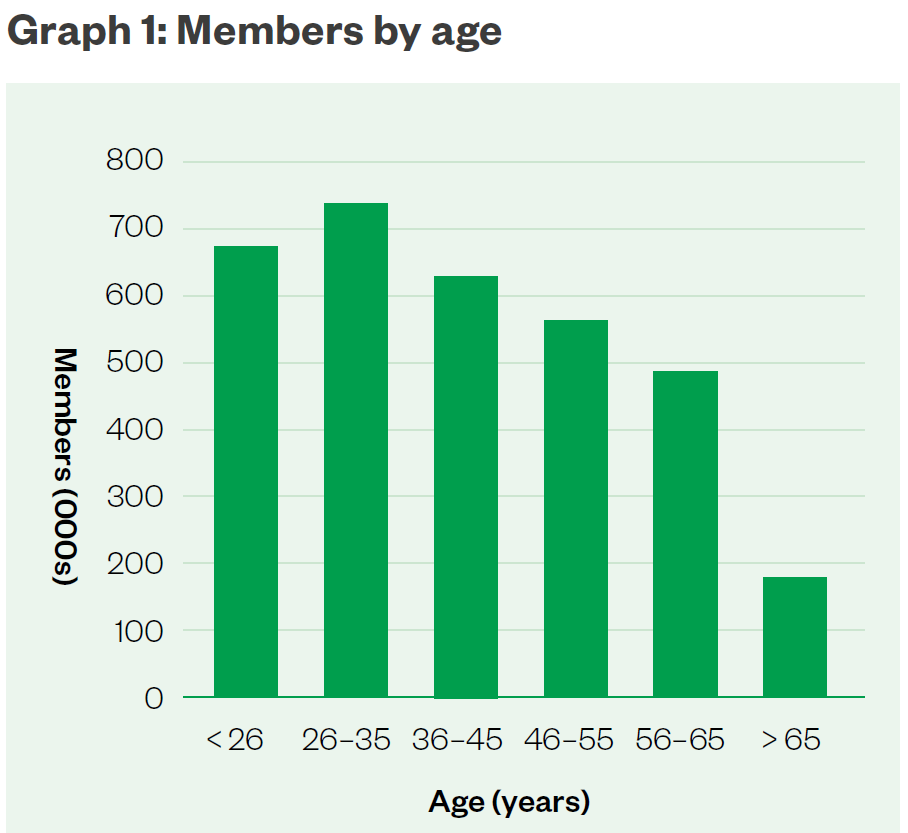
The FMA said it is important to note that over-65s are not required to withdraw their full balance and some providers now enable regular (e.g. fortnightly) drawdowns to supplement retirement incomes. It said that more than 170,000 over-65s remain KiwiSaver members and more are joining. The proportion of new KiwiSaver joiners in this age group has risen in the past three years – from 1.44% in 2020 to 3.71% in 2022 – according to Inland Revenue data.
The FMA said the large amount withdrawn by the over-65s this year "might be attributed in part to the higher term deposit rates banks now offer".
According to compiled Reserve Bank information on deposit rates, the average one-year bank term deposit rate as of March 2022 was just a little over 2.4%, while by March 2023 this had shot up to nearly 5.6%. So, this means during the year under review by the KiwiSaver annual report, the average interest rates available for one-year term deposits - to use but one example - more than doubled.
And it's worth noting that separate RBNZ data on deposits shows that as of March 2022 households held just $85.4 billion in term deposits - but this shot up by $25 billion during the course of the next 12 months to $110.4 billion. And the figure has continued to rise, reaching $118.6 billion as of the end of July - the latest month available - as interest rates have continued to edge up, to now over 6%.
When reporting on the withdrawals by the over-65s in its annual report a year ago, the FMA had referred to the then 59.5% increase as a "big surprise".
The FMA had then pointed to the move as "a sign of KiwiSaver’s maturity and that is working as designed", meeting its original purpose of providing income in retirement.
"We expect the amount withdrawn by over-65s will continue to increase in years to come," the FMA said then.
Clearly, the FMA was right, presumably with some help from bank term deposit rates.
We welcome your comments below. If you are not already registered, please register to comment
Remember we welcome robust, respectful and insightful debate. We don't welcome abusive or defamatory comments and will de-register those repeatedly making such comments. Our current comment policy is here.