

The country's banks are seeing early signs of "a rebound in activity" from housing investors following the recent interest rate cuts.
This is one of the observations the Reserve Bank (RBNZ) makes in its latest Credit Conditions Survey. The six-monthly survey seeks the views of 15 NZ-registered banks, including the big five, on both reported and expected credit availability and demand. The latest survey was completed in September 2024 and covered credit conditions observed between April 1, 2024 and September 30, 2024 and asked how banks expect conditions to evolve over the next six months.
Aggregate indicators are constructed by assigning each response a score between -100 and 100. A positive score indicates that banks observed (or expected) an increase in credit demand or availability, or tightened their lending standards, and a negative score indicates the opposite.
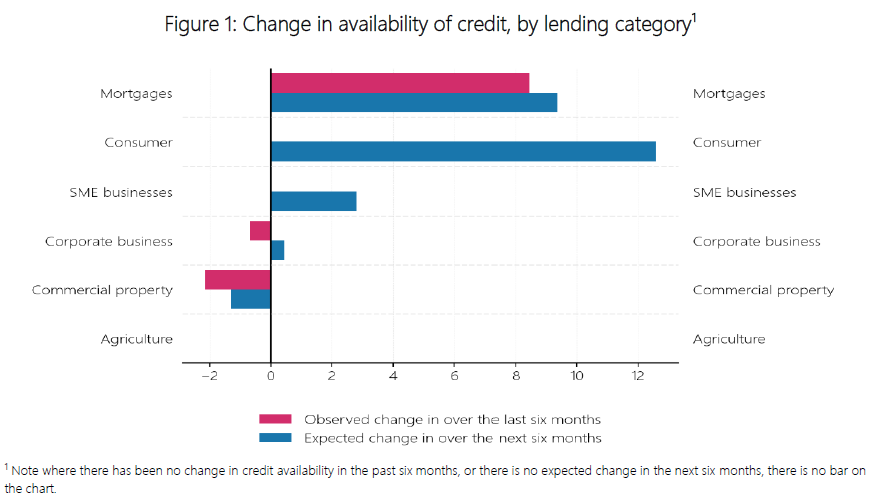
Banks reported increases in the availability of residential mortgage credit over the past six months, as banks reduced their mortgage serviceability test rates after the first cut in the Official Cash Rate (OCR) in August.
"Banks expect further increases in credit availability for households during the next six months as they expect further interest rate reductions," the RBNZ said in its summary of the results.
While overall residential mortgage demand had fallen over the past six months, some banks had noted an increase in credit demand following the recent reduction in lending rates.
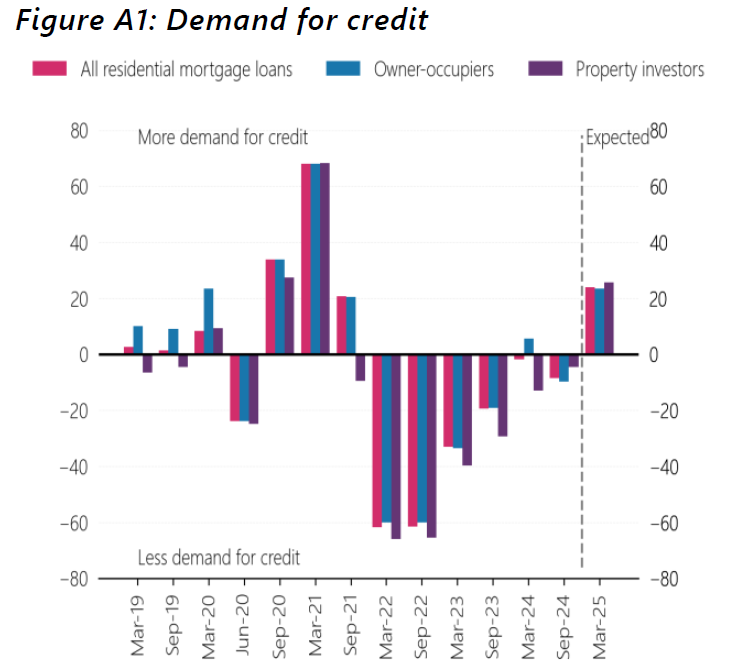
"This includes early signs of a rebound in activity from property investors," the RBNZ said.
"Demand for mortgage lending from both owner occupiers and investors is expected to continue to increase during the next six months due to further expected reductions in interest rates and the recent easing in restrictions in loan-to-value (LVR) ratios."
In terms of what's happened in the past six months, banks had reported a further increase in the availability of residential mortgage credit, with a further easing expected during the next six months. However, as mentioned above, demand for residential mortgage lending had actually decreased again during the period, continuing the trend seen since mid-2021.
The RBNZ said some banks had reported that the activation of restrictions on debt-to-income (DTI) ratios has required additional documentation from borrowers to ensure compliance with prudential requirements.
The relaxation of Credit Contracts and Consumer Finance Act (CCCFA) affordability requirements, which relaxed full expense verification when assessing applications, "has mostly sped up loan processing rather than eased credit availability".
Demand for new commercial property lending for investment purposes increased.
"Banks are seeing continued interest in investing in high quality offerings such as prime office space," RBNZ said.
Demand for property development remained subdued, with high borrowing costs and strong inflation in construction costs placing pressure on developers’ margins, limiting the number of feasible projects, the RBNZ said.
"Many housing developers are holding on to land until market conditions improve. Expectations of further reductions in interest rates and stabilising house prices are expected to support a recovery in development activity during the next six months," the RBNZ said.
We welcome your comments below. If you are not already registered, please register to comment
Remember we welcome robust, respectful and insightful debate. We don't welcome abusive or defamatory comments and will de-register those repeatedly making such comments. Our current comment policy is here.