
'Extreme' and a 'back to the future solution'.
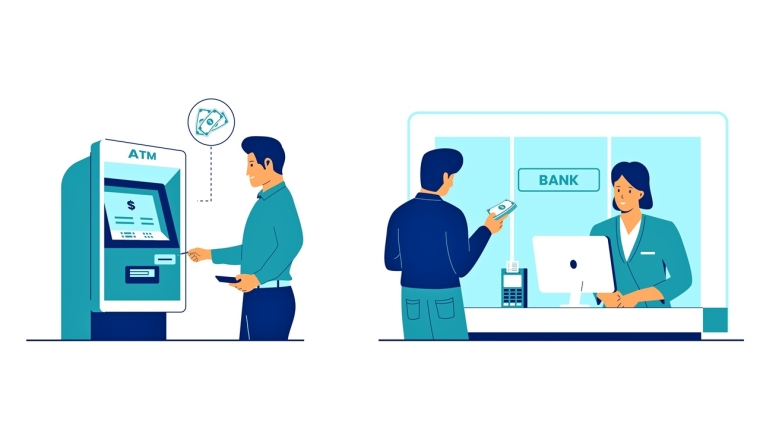
That's the banking industry's initial response to a Reserve Bank (RBNZ) proposal to apply a 'cash services standard' that would likely require banks to run about 1300 'multi-bank' facilities around the country offering cash withdrawals, deposits and exchanges. This would be free of charges. The RBNZ estimates the cost to banks collectively would be about $104 million a year. The RBNZ has opened up the proposal for public submissions.
And while the RBNZ has highlighted the likelihood that the banks would most likely opt for the multi-bank facilities, the industry body the New Zealand Banking Association has highlighted the suggestion by the RBNZ that if individual banks chose to respond to the proposal by offering their own individual, rather than joint, services, this could see a need for an extra 3000 branches.
NZBA chief executive Roger Beaumont said in 2026 the vast majority of transactions are digital, "with most New Zealanders unable to name the bird on the back of note or coin".
"Banks agree that cash use should be preserved for those customers who need it, but this proposal is extreme. This is a back to the future solution," he said.
"Demanding the provision of 3000 more branches and ATMs when there simply isn’t the need for them will ultimately increase the cost of banking for all New Zealanders."
"We and our member banks have been providing solutions for customers who continue to use cash through regional banking hub trials, mobile bank branches, and community bankers. We've also stopped regional branch closures for almost six years," Beaumont says.
"While we have supported the ongoing access to cash, more of our customers are moving away from cash to more efficient payment methods – in short, cash use continues to decline."
"We will discuss the consultation paper with our members with a view to forming an industry position."
Higher interest rates
Earlier on Wednesday, when releasing the consultation document, the Reserve Bank conceded the country's banks would look to charge higher interest rates if they have to provide nationwide cash services in the manner that the RBNZ is now proposing.
However, it believed any increase in interest rates will be negligible - but even if it wasn't the extra cost would be worth it.
RBNZ director of money and cash Ian Woolford confirmed on Wednesday the banks hadn't seen the RBNZ proposal prior to the public submissions being opened.
"The specific consultation no. We have been talking with the banks for a long time. We have the cash industry forum that meets two or three times a year and we have been talking about our policy work at a general level, but no, they’ll be seeing it today for the first time in terms of the scope and the scale of what we are talking about. So, no, they haven’t had an early glimpse."
Would banks be surprised by the proposal?
"I would imagine there will be a degree of surprise, yes, although the fact that we care about the cash system and we are being quite vocal that New Zealanders care about it as well, won’t come as a surprise to them. Because we’ve been talking to them about that for quite a long time."
In the extensive materials released to accompany the submission launch, the RBNZ says that putting the $104 million per annum cost increase in perspective, in 2025 the banking sector as whole earned in excess of $10 billion per annum in pre-tax profit. The $104 million in new costs represents 1% of this combined annual profit.
'A modest cost for New Zealand'
"Another way to consider the $104 million cost increase is to assess how it might impact interest rates. The banking sector currently has around $570 billion in net loans and advances. If banks were able to recover this cost in full by increasing the lending rate margin, the impact would be on average a 1.8 basis-point increase for each year relative to what it would otherwise have been (e.g. a lending rate would go from 4.5% to 4.518%).
"In our view this is a very modest cost for New Zealand. We do not envisage any material impact on the level of credit-funded investment from an average 1.8 basis-point increase in lending rate margins.
"Any competition among banks, or between banks and other institutions, would constrain the ability of individual banks to increase the lending rate margin. So, the margin increase would likely be even less than this.
"Even if the impact on lending rates was noticeable – i.e. much more than 1.8 basis points – we would say that is an acceptable outcome," the RBNZ says.
"Our rationale is that banks are currently avoiding costs they should, in fact, bear. That means the prices they charge customers for non-cash services – for example, lending rates – are currently mispriced as they do not reflect all the costs banks should bear in providing those non-cash services."
Asked whether the RBNZ was confident on its interest rate cost assessment and its sums, RBNZ principal adviser for money and cash Susan Guthrie said: “We are looking for an efficient system and we’ve done our costing on the assumption that that is a common interest with the banks so, to the extent that everybody wants to keep the cost as low as possible, I think our costs are reasonable as an estimate."
“...I don’t think this is an expensive policy given the benefits that it generates."
'Significant decline in local banking services'
The RBNZ has released research it commissioned and which involved both surveys and interviews with residents in 10 rural towns - Pirongia, Te Araroa, Ruatoria, Wairoa, Waipukurau and Waipawa in the North Island and Methven, Rakaia, Milton and Balclutha in the South Island.
The research report from Litmus says over the past decade, the 10 towns have experienced "a significant decline" in local banking services.
"Branch closures, reduced opening hours, and the removal of over-the-counter services have made it difficult for residents to access cash withdrawal and deposit services. Some towns lack banks and ATMs. Where ATMs exist, they are often unreliable, run out of cash, or only dispense large denominations, and may charge high fees. Consequently, rural residents often undertake substantial journeys to access cash withdrawal or deposit services, resulting in increased travel expenses and significant time commitments."
The report features a number of quotes that highlight the situation, including these two:
Without a local bank, our school has effectively become cashless—not by choice, but out of necessity. Cash sits too long before it can be banked, which creates even more risk and hassle. What used to be a simple fundraising sausage sizzle or bake sale now feels like a logistical nightmare. The closure of our local bank has had a real and damaging impact on our ability to support our school.
Taking away banks/minimising their opening times has disadvantaged many sectors of the community: low-income, young, older, businesses, and charity groups. Do you know how hard it is to get cash for a cake stall float or similar now? Let alone trying to bank any cash you make. Pushing older citizens to use ATMs is cruel and stupid. These are banks’ most loyal, long-term customers, and they’re being treated like they’re worth nothing. Who helps them use this new tech if they can’t use or access it themselves? Not the banks, that’s for sure. We need cash, it is legal tender, and it should be accepted everywhere and made easier to get and deposit.
The RBNZ says it believes the responsibility for providing cash services "sits squarely" with banks.
"Providing cash services to their customers is part of a bank’s ‘social licence’ to operate in New Zealand."
'Banks benefit from providing cash services'
"Providing cash services is an essential element of the relationship banks have with their customers because people expect to be able to convert easily, quickly and without cost, digital money (i.e. their positive balances in their bank transaction accounts) into cash and vice versa. This exchange is known as ‘convertibility’. ‘Convertibility’ is a long-established convention in banking, and in many ways the foundation of what it means to be a bank."
"Banks also benefit financially from providing cash services to customers. Banks’ profits are enhanced when a sizeable portion of bank funding is provided at zero (or very low) interest. This funding is provided by the balances held in bank transaction accounts and the amount is substantial (we estimate the retail banking sector to have around $110 billion of this type of funding). Customers’ willingness to hold balances in these accounts reflects their expectation that convertibility exists and their high level of trust in cash (the most trusted form of money)," the RBNZ says.
The RBNZ says there is a risk-related benefit for banks from providing cash services to customers too.
"When banks remove cash service sites from communities, they risk undermining the public’s confidence they can access their money in a non-digital form easily and quickly. Such a loss of confidence could lead to behavioural change such as more frequent emptying of bank accounts, which risks increasing the volatility of bank funding. At the extreme this could result in an entity experiencing a crisis."
We welcome your comments below. If you are not already registered, please register to comment
Remember we welcome robust, respectful and insightful debate. We don't welcome abusive or defamatory comments and will de-register those repeatedly making such comments. Our current comment policy is here.