
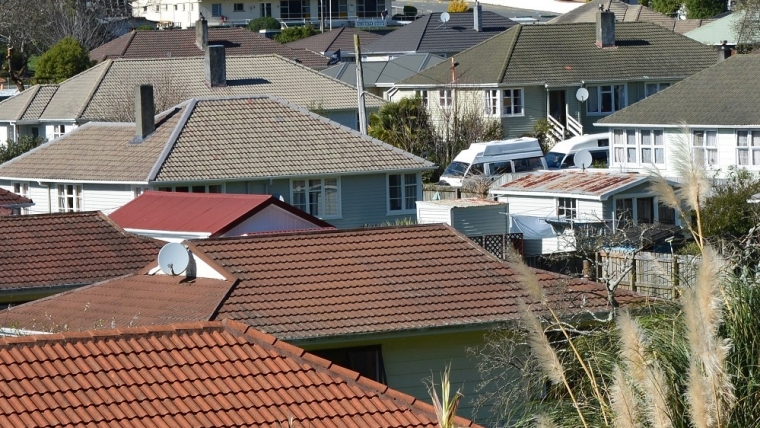
New Zealanders moving within New Zealand have a bigger impact on house prices than the same numbers of migrants, according to new research.
Researchers at Motu Economic and Public Policy Research have crunched the numbers between 1986 and 2013. They found that increasing population does indeed have an impact on house prices, but they also found that moving New Zealanders actually put more pressure on house prices than the same number of migrants would. The research was funded by the Ministry for Business, Innovation and Employment.
Motu research fellow Trinh Le, one of the authors of the research, said that between 1986 and 2013, the number of foreign-born New Zealand residents more than doubled, whereas the New Zealand-born population rose by only 8%. Over the same period, the average real (inflation adjusted) house price increased by about 140 percent%.
"What we didn’t know was the impact that different migrants were having on the housing market."
The research found that a 10% increase in local area population is associated with 4–6.5% higher house prices.
"Good years bring more net migration into New Zealand, and this leads to higher house prices. We designed our research to control for this and to try and discover how the size and mix of local population growth affects local housing markets," Le said.
The research categorised people by whether they are foreign-born or New Zealand-born, and whether they live in the same local area as in the previous census. In particular, it split the population into six groups: new immigrants, returning New Zealanders, immigrants who move within New Zealand, New Zealanders who move within New Zealand, staying immigrants, and staying New Zealanders.
She said that after controlling for socio-demographic differences, the researchers found that moving New Zealanders put more pressure on house prices than the same number of immigrants would.
“We found no evidence that a higher share of new international immigrants is associated with higher house prices and there is little evidence of a relationship between who lives in a particular area and housing market prices."
The research found that in areas with a 1% higher share of returning New Zealanders (and 1% fewer staying New Zealanders), house prices are up to 9% higher on average. Similarly, a 1% redistribution of population from staying New Zealanders to moving New Zealanders is associated with up to 2% higher house prices. In contrast, having a relatively higher number of new or moving immigrants in an area has no effect on house prices, after controlling for the population size.
The research found that New Zealanders tend to migrate to areas with more slowly growing housing supply. Areas that have 1% more moving New Zealanders (and 1% fewer staying New Zealanders) have, on average, about 0.4 percent less housing growth. "This suggests a possible reason why returning New Zealanders have more of an impact on house prices."
The researchers also looked at the cost of rent.
“Housing provides shelter and is also an asset. House prices capture both aspects, while rent prices only capture the first,” Le said.
The researchers found that rents do not respond much to population growth, although they are positively related to higher shares of recent movers, whether these are from inside or outside New Zealand.
“We find that migrating people manage to find places to live, with a large effect on the number of occupied dwellings. We are unable to identify whether this is a result of house building or higher occupancy rates."
Le said overall, there is little evidence of increased crowding, with household size changing little over time. However, immigrants tend to live in larger households, suggesting a possible explanation for why immigrants put less pressure on housing demand.
Due to data availability, this research only looks at figures to 2013. Since 2013, the population has grown at an historically high rate, with migration accounting for a large share of the change.
“Both population and house prices have increased substantially since 2013, but we have no reason to expect different results. Our study covers similar strong-growth periods, e.g. 2001-2006, when average real house price increased by over 50%,” said Le.
We welcome your comments below. If you are not already registered, please register to comment
Remember we welcome robust, respectful and insightful debate. We don't welcome abusive or defamatory comments and will de-register those repeatedly making such comments. Our current comment policy is here.