

Some "late winter confidence" came into the housing market last month, with sales numbers increasing and days to sell reducing, according to the Real Estate Institute of New Zealand (REINZ) in its August report.
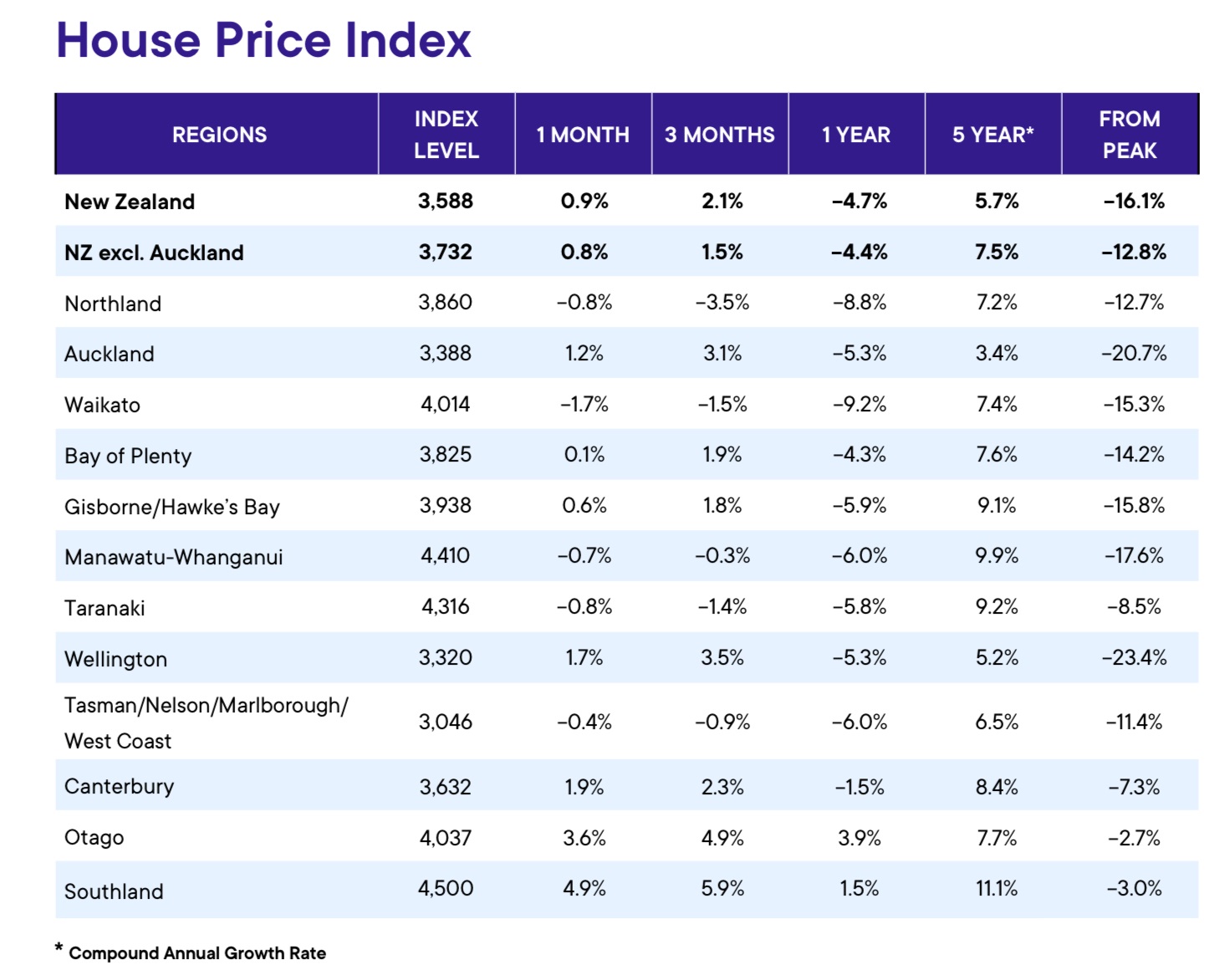
As well, the REINZ House Price Index, which adjusts for differences in the mix of properties sold each month, showed a national increase of 0.9% in the month, following on from a 0.7% increase in July. And it is now up 2.1% in the past three months - though still down 4.7% year-on-year.
ANZ economist Andre Castaing and senior economist Miles Workman said the housing market "has now convincingly turned a corner and has returned to its usual upwards trend".
"The big question now is how long will that last?
"We’re still forecasting house prices to rise 3% over the second half of this year, before growth moderates in 2024 due to deteriorating job security and high-for-longer mortgage rates. However, upside risks to our forecast are becoming harder to downplay, particularly in the near term. Yesterday’s migration data showed an annual net gain in migration of 96,200, all of whom need somewhere to live, increasing pressure on housing demand and therefore rents and house prices," the ANZ economists said.
Westpac senior economist Satish Ranchhod said the housing market has "clearly found a base" and, if anything, "it is looking a bit perkier than we’ve been expecting".
"With interest rates at relatively high levels, we’ve been expecting that house price growth will remain modest over the next few months, before taking a step higher next year. However, the gains seen over the past few months suggest that the market may be heating up even sooner than we had expected," Ranchhod said.
"We’re forecasting that house prices will rise by close to 8% next year. Today’s firm housing market report, along with yesterday’s stronger than expected migration figures gives us confidence in forecasting that acceleration."
The national median price dipped down to $767,000 in August from $770,000 in July and it is down 4.1% on the $800,000 it stood at a year ago.
However, Auckland saw its median price lift back above the million dollar mark to $1,010,000, up from $990,000 in July - a 2% month-on-month gain. It's still down 8.2% year-on-year though.
The stand-out in Auckland was Auckland city, which (on 481 sales compared with 443 in August 2022) saw its median climb $173,000 or 18.4% from $942,000 in July 2023 to $1,115,000 in August. (It is very much worth noting, however, that the Auckland city median had dropped $140,000 between June 2023 and July 2023 - so, volatility is a thing here.) The August $1,115,000 median compares with $1,121,000 in August 2022. In the whole Auckland region there were 1819 sales in August, up from 1,695 in July and 1,539 in August 2022.
In Wellington, its median rose 2.3% from $733,000 in July to $750,000, though it's still down 3.2% on a year ago. The region saw a month-on-month 16.9% increase in the number of properties sold from 438 in July to 512 in August, though that's still down on the 525 sold in the same month a year ago. Days to sell dropped by 14 days from the 52 average in July 2023 to 38 and were down some 21 days on the figure in August 2022.
In August there were 5,509 properties sold nationally, which was up from 5,047 in August last year and up 9.2% compared with July 2023.
Nationally there were 7,444 new listings in August. That was up 20.9% on the listings in July 2023, but still down by 0.6% from 7,492 in August 2022.
At the end of August, the total number of properties for sale across New Zealand was 22,750, down 10.6% (2,691 properties) from 25,441 year-on-year, and down 1.5% month-on-month.
The national median days to sell number fell to 43, which was down from 48 in July 2023 and 49 in August 2022. In Auckland the number of days to sell dropped to 41 in August 2023 from 44 in July and from 48 in August 2022.
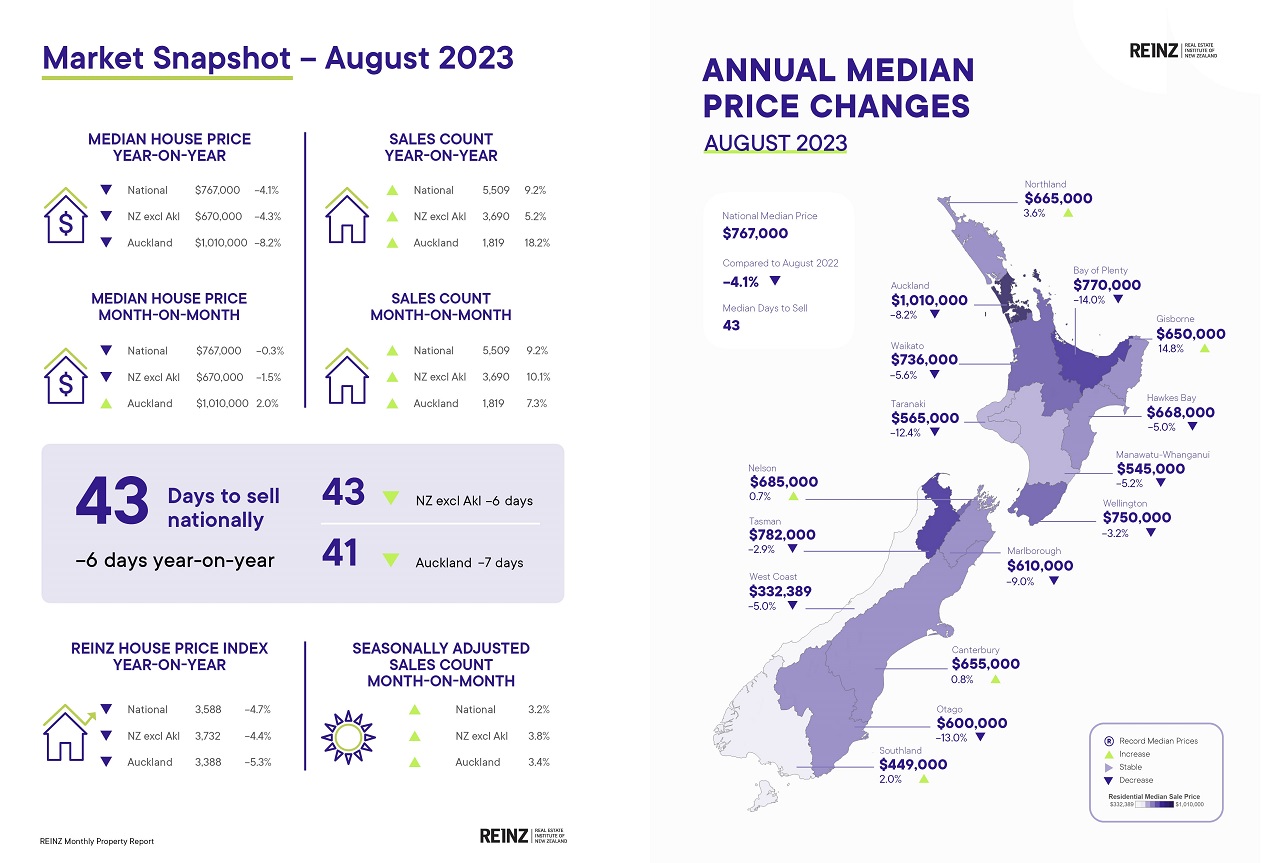
REINZ said 11 regions saw a decrease in the median days to sell compared with July 2023, with the biggest decrease occurring in Nelson, which dropped 18 days from 60 days to 42 days.
REINZ chief executive Jen Baird said local agents are reporting that, as new listing numbers continue to decrease, the demand for entry-level property is holding and fairly strong, and properties are starting to move quicker.
"The number of properties available for sale over the last three months continues to fall. Listings are still at lower levels compared to August 2022, but only slightly. Month-on-month we have seen a 20.9% increase of stock coming to market, suggesting seller confidence is returning and we can expect a more normal spring ahead for the property market," Baird said.
“Higher interest rates and ongoing cost of living pressures continue to impact the market ahead of the looming election. There is a sense across the country that the market has seen the bottom both in terms of prices and sales volumes, but we are all waiting to see how long it will take to see growth re-emerge."
We welcome your comments below. If you are not already registered, please register to comment
Remember we welcome robust, respectful and insightful debate. We don't welcome abusive or defamatory comments and will de-register those repeatedly making such comments. Our current comment policy is here.