

By David Hargreaves
Housing and Urban Development Ministry officials have conceded that the Government's new 'Healthy Homes' initiative will likely drive up rents, see rental stock taken off the market and may increase demand for public and emergency housing.
Additionally, Housing New Zealand says the new measures launched by Housing and Urban Development Minister Phil Twyford on Sunday may cost it somewhere in the region of $200 million. Some other government agencies that own housing - notably Defence - may also face cost ramifications.
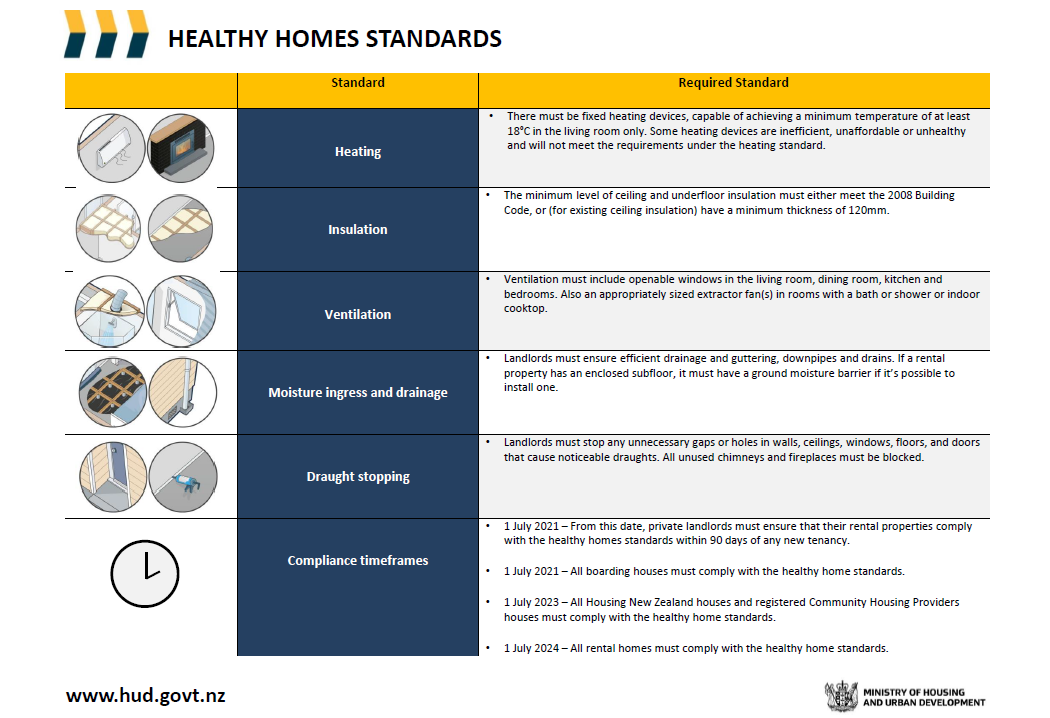
The new measures, targeting around 600,000 rental properties, are set to be made law by the middle of this year and will take effect on a sliding scale up to July 2024 by which point all rentals must be compliant.
The full details are included in the graphic underneath this paragraph, but the big parts of the new measures include the compulsory provision of fixed heating in the living rooms of rentals that must be able to heat the room to 18C and the need for ceiling and underfloor insulation of 120mm minimum thickness. The moves follow an earlier consultation process conducted by the Government.
Twyford's paper that was put to Cabinet with the proposals said that Housing NZ estimates additional costs of $113 million to $144 million for "known interventions" required by the new measures, over and above existing planned programmes. In addition there's a potential additional sum of $77-$99 million for interventions that may or may not be required to meet the proposed temperature standard.
"HNZC considers it can fund the required upgrades from its baseline, although the effects of this work on other existing planned programmes of work has yet to be assessed from a financial and market capacity perspective. Actual costs incurred are likely to be higher because HNZC may need to bring forward long term decisions to retrofit or redevelop properties, rather than incur additional short term cost for an older or unsuitable asset," the paper says.
Looking generally at the overall costs of the new measures, the NZ Institute of Economic Research has calculated that in the case of properties that are not currently compliant with any of the new requirements, the cost for private landlords, including GST, of getting them up to requirement would be in the region of $8,625 to $11,500
Sale and withdrawal from supply
In a regulatory impact statement prepared for the Minister, Housing and Urban Development Ministry officials concede that some private landlords will choose to sell their "unimproved" rental properties, while some properties that need improving will be "completely withdrawn" from the housing supply.
"Where these properties are at the very low end of the quality spectrum and are unable to be improved, then the quality of the housing stock will have been improved and the supply of houses reduced," the statement says.
"If these properties are in concentrated locations, then the effects on (rental) housing supply in those areas may be visible."
The officials go on to say that in such an instance local or central government "may become involved to address emergency, temporary or longer term housing supply issues".
The officials say the costs of upgrading properties will be borne by landlords, "who may accrue limited direct benefits".
'Landlords may recover costs from tenants'
"Landlords may recover these costs from tenants through rents where supply and demand conditions allow them to do so."
In some supply constrained markets, low income tenants may be paying close to as much as they can for housing and therefore limit potential rent increases, the officials say, and in these cases landlords will have to accept a reduced return on investment, or sell.
"Where a significant portion of landlords sell their properties this could create a short term supply shock as the market adjusts, potentially increasing short term demand on emergency or public housing."
The officials note that there have been recent increases in national median rent, "this could be in part due to landlords anticipating the introduction of changes when considering how to set rents".
In talking about "distributional effects" of the new measures, the officials say some rental properties will be sold to owner-occupiers including both first home buyers and other owner-occupiers moving into a new property.
Fewer rental properties
The net effect will be a decrease in the number of rental properties.
"Alternatively, some rental properties may be removed from use in long term accommodation altogether, and switched into short term accommodation (e.g. AirBnB)."
The officials say where housing is transferred from rental to owner-occupied status, this may lead to a demand for more houses to accommodate the same number of people "because the average, owner occupied housing has fewer people per property than rental housing".
"A reduction in rental housing particularly low quality homes are likely to disproportionally effect low income households, potentially increasing demand for public and emergency housing.
'Increased household crowding'
"This pressure is also likely to increase household crowding at the margins until supply constraints can be reduced."
But curiously, the officials then go on to say that these effects on the rental market might be "mitigated" by the context of the pressures in the broader housing market
"The effects of strong demand from immigration and higher incomes for renters will be an increase in rents, especially in areas with unresponsive supply.
"This should encourage more landlords to stay in, or enter the housing market as rents increase.
"This effect is significant, because it could totally offset some of the negative effects of the healthy homes standards and other regulatory changes that affect landlords."
'Impossible to isolate causes of rent increases'
The officials say that in practice, it is "impossible to isolate, after the fact", the different causes of rent increases.
"If rents do increase, as we expect, landlords may attribute these increases to the Government’s policies.
"However, in reality other factors will be strong demand from population growth coupled with constrained supply that will enable landlords to increase rents."
The officials say they propose to monitor the situation but don’t have any mitigating actions proposed.
We welcome your comments below. If you are not already registered, please register to comment
Remember we welcome robust, respectful and insightful debate. We don't welcome abusive or defamatory comments and will de-register those repeatedly making such comments. Our current comment policy is here.