
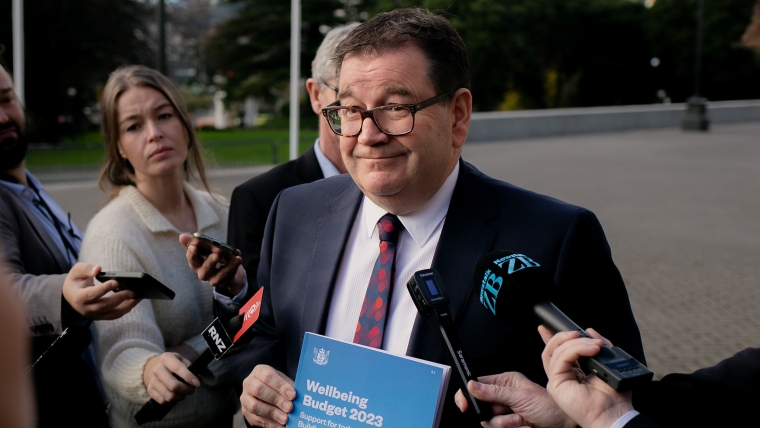
The Government will cut $3.4 billion from its four year operating budget, as it works to keep debt under 30% of gross domestic product and return the Crown accounts to surplus.
Budget 2023 expanded annual spending and increased future operating allowances, based on Treasury’s optimistic forecasts, which have already proved wrong.
When the Crown accounts were released in July, tax revenue had already fallen more than $2 billion behind what Treasury had forecast just a few months earlier.
This month, economists at Westpac NZ estimated the tax shortfall would continue and deficits would almost double across the forecast period.
This would put Labour at risk of failing to achieve its self-imposed fiscal rules, which are to keep net debt below 30% of GDP and return the operating balance to surplus.
Finance Minister Grant Robertson reportedly summoned public sector bosses into meetings to discuss possible budget cuts at the start of this month.
On Monday, he announced some agencies had been asked to find permanent cost savings including cutting back on hiring contractors — which has been a hot button issue.
“Since May we have seen further deterioration in the global economy, particularly in China,” Robertson said in a press release.
“This will continue to have a direct impact on the New Zealand economy, and it is important that the Government responds to meet our balanced and responsible fiscal goals.”
Cut the cloth
A total of $4 billion of savings had been found and would be banked to offset deficits. This money would not be available to be reallocated into new initiatives.
Public sector agencies were required to trim 1% or 2% from their existing baselines, while protecting front-line services. Some agencies, such as police, have been excluded entirely.
The cost cuts will come from about 19% of the Government’s expenditure, Robertson said. Benefits such as superannuation, the largest single line item, were not touched.
Budgets 2025 and 2026 will have their operating allowances cut by $250 million and $500 million, respectively.
“We can do this as inflation falls and still be able to meet the cost pressures we face as inflation declines and solid economic growth is forecast”.
“All these measures taken together will help ensure we meet our fiscal goals to keep debt under 30 percent of GDP and get the books back into surplus in the forecast period.”
The Ministry of Business, Innovation, and Employment took the biggest nominal hit, with more than $110 million cut from its $5.5 billion budget.
Even the very small agencies took cuts, for example the Ministry of Women shaved about $100,000 from its annual budget of $14 million.
Frontline staff in education, health, and defence were excluded from the cost cutting exercise, but back office costs were cut by 1% or 2% to save $71 million — mostly from education.
Contracted out
The Government has asked for contractor and consultant spending to be cut to below 11% of total workforce spending, which would save about $165 million per year.
This figure was 14.6% in 2021, which was up from 10.4% 2020 prior to the pandemic and above the 13.4% level it was at when National left office in 2017.
Robertson warned there was no room in the budget to make any big election promises.
“We have been clear that this cannot be a big-spending election. Uncosted, untargeted tax cuts like those promised by the opposition are simply not affordable.”
“We need a balanced approach that protects the public services that New Zealanders rely upon, while making sure we cut our cloth and have a sustainable financial base to take forward”.
The $4 billion in total savings includes $500 million of capital expenditure that had been planned in the next four years, in addition to the $3.4 billion in operating expenses.
We welcome your comments below. If you are not already registered, please register to comment
Remember we welcome robust, respectful and insightful debate. We don't welcome abusive or defamatory comments and will de-register those repeatedly making such comments. Our current comment policy is here.