
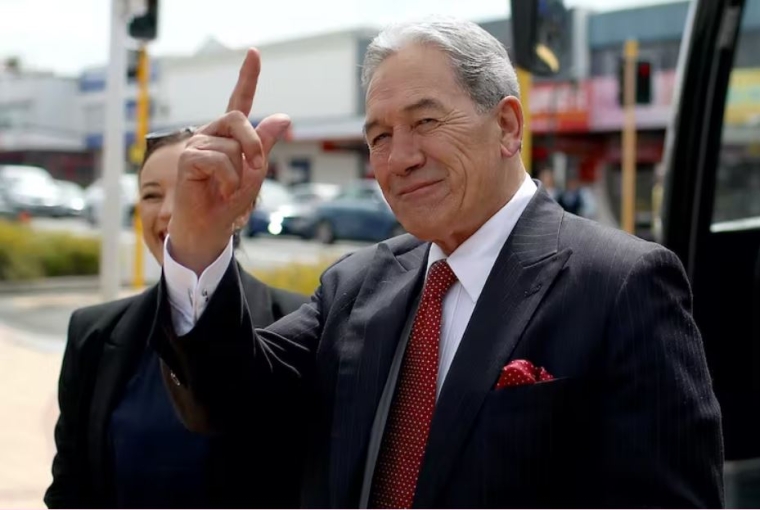
Deputy Prime Minister Winston Peters says he may be willing to allow overseas buyers to purchase some property in New Zealand, but only above a high threshold.
In 2023, National campaigned on overturning a Labour–NZ First Government regulation which blocked most non-residents from buying residential property
The party proposed allowing overseas people to purchase houses selling for more than $2 million and taxing the transaction at a 15% rate.
This may have helped to facilitate foreign investment in productive assets and would have raised some revenue to help fund the income tax cuts promised in Budget 2024.
However, it was eventually ruled out in the National–NZ First coalition agreement which said the tax plan would “not include a repeal of the foreign buyer's residential property ban”.
While that phrasing seemingly rules out lifting the ban, Winston Peters seemed open to some changes in a recent interview with Bloomberg.
He told the financial news organization that he would consider relaxing the rules for ultra-high net worth foreigners that were looking to invest more broadly.
Someone who was interested in investing closer to $50 million could be permitted to buy a home, despite the coalition agreement, as it would be in the nation’s economic interest.
Already there has been at least one deviation from the twin coalition agreements National struck with the Act and NZ First parties.
Restoring interest deductibility for commercial landlords was supposed to be phased in faster than it eventually was, according to the National–ACT coalition agreement.
ACT Party leader David Seymour said the slightly faster track ultimately wasn’t worth the complication of applying the policy retroactively.
This may imply there is room for some movement in those coalition agreements, where the three parties can be convinced.
Unbanning ultra-high net worth home buyers may help with plans to attract more foreign investment, but it is unlikely to be a reliable replacement for income tax revenue.
In the interview with Bloomberg, Peters said lifting the ban for purchases at some threshold set meaningfully higher than $2 million “might be an inevitable conclusion”.
Budget 2024 will be released on May 30 and is expected to include income tax cuts, as well as spending cuts and revenue measures to fund them without taking on any extra debt.
Crown accounts are already expected to remain in deficit until 2028, which means the Government will be borrowing to cover the cost of ongoing expenses.
Finance Minister Nicola Willis has promised the tax package will not make the deficit any worse than it would have been without it.
We welcome your comments below. If you are not already registered, please register to comment
Remember we welcome robust, respectful and insightful debate. We don't welcome abusive or defamatory comments and will de-register those repeatedly making such comments. Our current comment policy is here.