
By Chris Trotter*
When the Soviet Union was at the height of its powers there was hair salon in Moscow with 150 chairs. At least, that’s the story we were told in the West. Its accuracy is less important today than the point it was intended to illustrate.
Big is not necessarily beautiful. The sort of styling to be expected from what was basically a hair-cutting factory is unlikely to have been characterised by imagination and flair. Factories tend towards standardisation and rapid throughput. In the workers’ paradise it was a fairly safe bet that one proletarian hero was going to end up looking much like another.
The politics behind a 150-chair hair salon are even worse than the professional output of its employees. In effect the Soviet planners were telling their fellow citizens that it is not the least bit rational, efficient, or socialist to construct a beauty industry on the principle of individual preference. To do so would be to elevate personal vanity over the collective well-being of the community – a clear repudiation of both the ethos and administrative imperatives of the workers’ state.
But a state that refuses to accommodate even the hair-styling preferences of its citizens is unlikely to pay heed to their wishes when it comes to more critical decision-making. In a totalitarian regime the provision of key services, be it at the local or national level, will always be a state responsibility: the work of planners, administrators, and party apparatchiks. Any input from below can only be cosmetic. As the old Soviet era joke put it: “Last night thieves broke into party headquarters and stole the results of next year’s elections.”
Want a pretty good test of whether or not you are living in a totalitarian state? Just ask yourself: “Are political and administrative decisions made independently and separately, or is decision-making power in both these spheres combined in single individuals?” If it’s combined: if all critical political and administrative decisions are ultimately the responsibility of a senior party official, against whose judgements there is no appeal, then you are either living under a totalitarian regime, or something very similar is in the process of taking shape.
With all these factors firmly in mind, it is probably not a good idea to ask Chris Bishop to style your hair.
The concentration of administrative and political power under this National-Act-NZ First coalition government should be a matter of serious concern to all New Zealanders. The downward dispersal of political authority, to ordinary citizens wielding determinative powers, is the essence of democracy. The polar opposite of a democratic state is an autocracy – a state in which the will of the many is replaced by the will of a single individual. Confronted with Chris Bishop’s “Fast-track Authority”, the first reaction of the ancient Athenians would not be – “This is democracy in action!”
Under this Coalition Government, the trajectory of political and administrative power has all been upwards and inwards, towards the key institutional power-structures of the state. Given the option of devolving important decisions to the individuals and communities most directly affected by them, or concentrating decision-making power in fewer and fewer hands, Coalition ministers have demonstrated a disturbing preference for the latter. The “localism” promised by National while in opposition is no longer referenced, in its place we seem to hear the grim totalitarian mantra: “The state, and those who control it, knows best.”
By the end of this week we will know just how determined this government is to give its key ministers the final say. Whatever replaces the much maligned and much amended Resource Management Act will indicate the Coalition’s direction of travel. Those who favour a bottom-up approach to local and regional development are likely to be bitterly disappointed. Most of the smart money is on a legislative instrument that leaves environmentalists, iwi, and localist democrats gnashing their teeth.
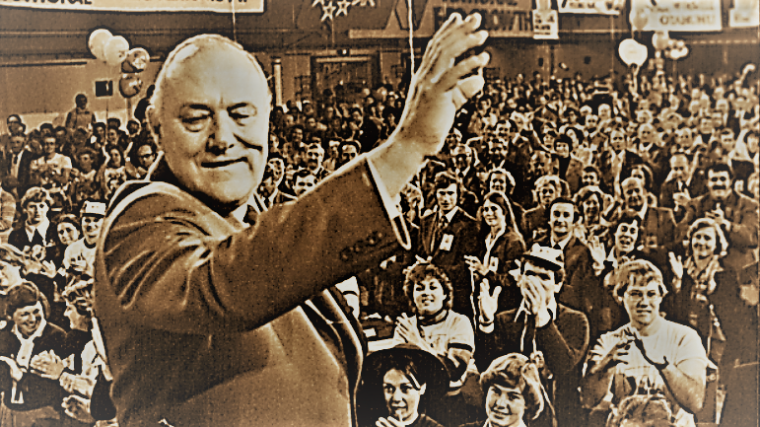
The Parliamentary Commissioner for the Environment, Simon Upton, is by no means the only one hearing the ghostly chuckles of Robert Muldoon echoing down the parliamentary corridors. Commenting on Bishop’s fast-track legislation before its parliamentary select committee Upton declared:
“This is executive overreach for which no case has been made. It is as open-ended as the infamous Economic Stabilisation Act that allowed governments to regulate absolutely anything if they thought it threatened economic stability. I’m really taken aback that the Government should be asking Parliament to licence ministers to issue what the New Zealand Initiative, charitably I think, described as opaque ministerial directions. There are no guardrails if you enact this legislation. Ministers will be able to design bespoke policy statements for particular types of projects in an attempt to provide certainty for specific applications.”
Upton’s trenchant observations recall the temper and tone of the criticisms directed at Muldoon in the final years of his prime-ministership. As political journalist Richard Harman recalls on his Politik website, it was during the 1982-84 period that Muldoon used the 1948 Economic Stabilisation Act to:
“[I]mplement extensive, direct government control over the New Zealand economy, most notably a comprehensive nationwide wage and price freeze. Muldoon also used the Act to fix interest rates, extending the government’s control over the financial sector without specific parliamentary approval.”
One of the key reasons the radical economic reforms introduced by the Fourth Labour Government were received with very little in the way of serious resistance was because in the last years of Muldoon’s “unbridled power” New Zealanders had, however grudgingly, come to accept that, in Labour leader David Lange’s telling observation: “You can’t run a country like a Polish shipyard!”
In referencing Poland, Lange was also and very cleverly referencing “Solidarność” (Solidarity) the democratic trade union movement that humbled the totalitarian Polish government, setting in motion the process that would, a decade later, collapse the entire Soviet empire and, ultimately, bring down the Soviet Union itself.
That the Coalition Government has embarked upon a course of action so certain to stir up disturbing memories in the likes of Upton and Harman is little short of fantastic. It is as though the National Party and NZ First can think of nothing better than to resurrect the top-down, centralising, hyper-regulatory economic ideas of the 1970s and 80s.
That Bishop’s and Shane Jones’s bid for the “unbridled power” of Keynesianism in extremis amounts to a barely concealed admission that the forty-year neoliberal experiment has failed must be causing considerable alarm in the ranks of Act, whose founders were among Muldoonism’s bitterest foes.
The Soviets never fully grasped the enormous political utility of cultivating the surrogate democracy of consumer choice. Instead, good Marxists that they were, it was Capitalism’s relentless momentum towards monopoly, with all its attendant drives towards centralisation and absolute market control, that they emulated. Had the communists settled for controlling the “commanding heights” of the Soviet economy and let their citizens style their hair any way they damn well pleased, then, who knows, the USSR might still be with us.
*Chris Trotter has been writing and commenting professionally about New Zealand politics for more than 30 years. He writes a weekly column for interest.co.nz. His work may also be found at http://bowalleyroad.blogspot.com.
We welcome your comments below. If you are not already registered, please register to comment
Remember we welcome robust, respectful and insightful debate. We don't welcome abusive or defamatory comments and will de-register those repeatedly making such comments. Our current comment policy is here.