
Interest.co.nz is talking money, tax and delving into political parties' financial and economic policies ahead of the November 7 election. In this installment, NZ First candidate and former Financial Markets Authority chairman Craig Stobo was interviewed by Anna Whyte earlier this month about house prices, debt and tax cuts for small businesses.
This interview has been edited for length and clarity. To see the full interview, watch the video.
Anna Whyte: New Zealand First is promising to lower the company tax rate to 20% from 28% for companies with turnover under $30 million. Can you just tell me the costings of that, and what the aim... is?
Craig Stobo: New Zealand First has pretty much a single... overarching economic policy, which is to double New Zealand's economy by 2050. What does that mean? It goes from a $450 billion economy to a $900 billion economy in that period of time, and to do that, we need to raise our productivity and our business performance. That's where wealth creation happens.
It doesn't happen with government. It comes from exporting more goods and services, providing goods and services to Kiwis in New Zealand. So, this is absolutely a pro-growth policy for SMEs - less than $30 million of active income, not passive income from rents or dividends. You've got to be an operating business up to $30 million turnover, and drop the tax rate from 28 cents to 20 cents.
If you can have different tax rates for personal income… why don't you have similar tax rate differences for businesses? So that's the concept. Now, if you've got an extra eight cents in your hand, from 28 cents to 20 cents, you've got choices to be able to afford to pay the costs, the costs of goods that you have to use in your business. You might employ more staff, you might then think, okay, I've got enough visibility of the future. I'm going to invest in plant and equipment. So there's a whole lot of drivers there that we think will help businesses get a leg up and increase their productivity and their and their growth prospects, which ultimately feeds through into tax revenues and growth for the economy.
Anna Whyte: House prices - your view on whether they should go up or down?
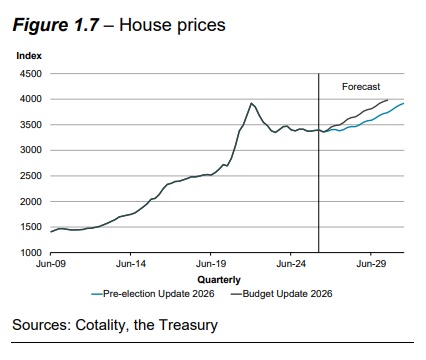
Craig Stobo: The change in house prices has been horrific for some people from its peak, and Wellington in particular of the centres identified in the last round of market updates on prices, Auckland and Gisborne are another couple of good examples, but Wellington in particular, has been badly hit by house prices falling.
That has happened, of course, after, as a sort of a correction, to the massive run up in house prices in the lockdown period [20]21, 22, and so from a peak, then some prices will be coming off 30% in Wellington, and real house prices, which is what your money would have bought four years ago, is nowhere near what you would get with the same amount of money today.

So if you adjust for inflation, it's actually worse. If you feel wealthy because your house prices have changed, you've got to be spending less on goods and services and travel. The consumer wallet sort of tightens, and of course Wellington has different drivers of growth with the size of the government sector sitting in Wellington.
But in general terms, I don't have a view on what house prices should do. I do know that for many people, when you talk to them in the electorate, they are really concerned about the cost of living, and that includes servicing interest on the debt that they might have for a house. And sometimes may well be the case, in some cases, their house prices are worth less than they were when they bought them, but they've still got the debt, and they've still got to pay interest on that debt, which is really challenging.
And that environment, where we have much less immigration, we've got higher interest rates, and the cost of construction is relatively high… very difficult to see house prices moving up from here in the next period of time, particularly when you think about the peak in immigration, 230,000 people came here [net 133,000], coming in the September/October 2023 year, now we're well down to you know 20,000 to 30,000 or so net immigration.
So we don't have the immigration drivers. We still have cost of living pressures, and fear of missing out that was around in 2022, etc, has just disappeared, and in Auckland we've got a bit more supply coming on board with more apartments being built, townhouses…. there's a supply response adding to that downward pressure, or at least levelling out of prices at the very least.
Anna Whyte: Is there anything else that needs to happen in your view with the housing market to correct [housing] problems?
Craig Stobo: [The] Reserve Bank's got a really important role to keep inflation under control. I mean, that's the really first principle, and they've got to get that CPI back down between 1% and 3%, that has to happen. So it's going to be short-term pain for a while from interest rates. That's just unavoidable, in my view, as a reaction to the 7.1, 7.2 percent inflation we had under the Labour government. That has to change. There'll be a supply response happening. people will provide more housing from the private sector of of its own accord. Will that be enough to satisfy demand at current prices when people's incomes and jobs are challenged? I'm not sure.
Don't forget that if you want to tax people's wealth with a capital gains tax, albeit… on disposal, at some point that flows through to rents. I think the housing response is one of trying to get, from our perspective, is trying to get growth going so we can grow incomes, so we can afford more, rather than focusing on a particular sector like housing.
Anna Whyte: On the capital market reforms, that started from late 2024, can I get your view on that? Do you think it's a move in the right direction?
Craig Stobo: I think there were seven or eight recommendations made from capital markets stage two that were put to the minister... and they had a number of a number of activities trying to improve financial statement reporting disclosures, etc.
They're kind of helping... but at the end of all of that, how many new stocks have there been on the stock exchange?
Debt market seems to be relatively healthy, but it's challenged by the size of the government borrowing programme now. It has an impact on people's perceptions of opportunity cost. I'd rather buy government debt AAA-rated at 5.1% [for] 10 years rather than buy a corporate debt because interest rates are so much higher for the return.
So it has an impact on the private sector.
You think about all the things that are happening; they're kind of micro, but there's not really any big game changes in there.
Anna Whyte: Are there any policies or changes that you would want to be able to use to shift the dial, or do you think it's more of a hands-off approach?
Craig Stobo: Oh no, I think we're very interested in how to help drive capital markets. Where we can, when we can, and when the thinking's completed, we'll be able to get back to you on some ideas that we have.
Debt
Anna Whyte: With net core Crown just over 40% of GDP and forecast in the last Budget to peak at 46% in 2028 [now forecast at 43.9%], what's your view on where New Zealand's going and what [level of debt] would you be comfortable with?
Craig Stobo: The assumptions in the pre-election economic and fiscal update are quite carefully calibrated as short-term risks, and those short-term risks are Strait of Hormuz - can't see that getting any better just right now, oil prices as a consequence of that, and secondly, flowing from that inflation, and then lastly because of inflation, interest rates.
So the risk to the growth forecast are those four near term risks, and they're all arrived today. The US is steaming towards Iran again. Oil prices are back over 100 bucks [a barrel]. Inflation number 4.1%. The next number is going to be printed out next week. I'll be surprised if it's substantially lower, for example [It was 3.7%].
And interest rates, they assumed 4.7% as a government bond yield. Well, they are now well over 5%. So all those risks have arrived today, which puts pressure on the tax assumptions that underlie those forecasts, which are used to repay and get to a surplus, so it's actually quite precarious.
I think the risks have arrived early, and therefore the debt profile is going to be very difficult to achieve. And don't forget, we're supposed to be in surplus this year, three years ago.
Anna Whyte: Do you think we're dreaming to think we're going to be in surplus in 2028 with all of those risks?
Yes, and then the long-term issues, which have always been in the background, is around our terms of trade and our productivity. We're fortunate with our export mix at the moment, travel and agriculture, but it doesn't take much for that to be disrupted. So we're again not diversified enough, and we're not involved in manufacturing or businesses that are less commodity-like. We've got to do more added value work. So, yeah, pretty precarious…
Anna Whyte: In Wellington.. I saw 91 [octane] petrol at $3.70…we've been seeing those six monthly flow and effects from increases in fuel prices… Is there any way to mitigate the flow and effects from this because it's going to take a massive hit on business, on consumer confidence here?
Craig Stobo: For the September quarter CPI, it won't capture that lift because most of that lifts occurred in the last two or three weeks. [This was released last week at 3.7%]. An important component of that oil price shift is not just the cost of the Brent or WTI crude oil price. It's also the exchange rate...
What are the implications of all of that? Well, you think about our truckies, our transport industry... 95% of that runs on diesel, and someone's got to pay for the costs of transport, and it generally ends up being the consumer at the end of the chain. So that'll put quite a lot of pressure this quarter on goods and goods prices and shops.
All of that flows through to pressures on the CPI, and therefore the Reserve Bank stance on interest rates, and the market's already expecting a couple more increases in the OCR, which will mean the Reserve Bank's taking its foot off the accelerator. It's not got its foot on the brake just yet, but they will want to see that CPI come down. And when you're a business person looking to invest, higher costs of debt makes it more difficult to invest in plant and equipment, and to hire people because you're paying out more in interest. So it's a more challenging environment going forward.
Income tax
Anna Whyte: Are you happy with the way income tax is working?
Craig Stobo: We've made a policy announcement on company tax, obviously to drop company tax from 28 to 20 cents. Personal income taxes, no. Capital gains taxes, no.
We are slightly different to our current coalition partners, who are no tax increases. We actually are advocating, obviously, a tax decrease for New Zealand companies with up to $30 million turnover. So we're a little bit different.
We definitely want to see, yeah, surpluses. Where we're a conservative party, and part of our conservatism relates to how we look after our books, and we do want to see surpluses. But we think a way to get there is to get growth underway to drive GDP and tax revenues, rather than change the tax thresholds for personal and trusts, for example.
Anna Whyte: What do you think of New Zealand's banking sector aside from your large policy to buy back BNZ?
Craig Stobo: I think we are now well behind global trends. Stable coins, tokens coming into play very quickly overseas. The way that we think about crypto is really important, and I realise the RBNZ and the FMA have come out in the last few days around some ideas around governance and oversight of crypto and these new currency ideas, and I think that's encouraging. But the speed of adoption is slow. We would like to see more challenger entities in the private sector, providing goods and services to Kiwis, and I think innovation is relatively weak in our marketplace, and that does concern me.
Dual class shares and review of debt issuance guidelines
Stobo also wants to back dual-class shares on the NZX and look at how Treasury borrows in what he describes as "a pretty good cocktail" for private businesses, sitting alongside NZ First’s pledge to cut company tax for smaller firms.
Stobo told interest.co.nz, should he get into Parliament and be in a position to implement changes, one would be to support the NZX to be able to accommodate dual class shares for listings.
The NZX earlier this year consulted on dual class share structures. "These structures arise where an issuer has two classes of shares, superior shares with multiple voting rights, and ordinary shares which carry 1:1 voting rights," it said on its website.
Stobo said there were a lot of founders and owners of businesses in New Zealand "who like to raise capital but don't want to lose control of their companies."
"By having a dual class share structure, an A class share will be one that is owned by the owner, and he retains or she retains control of the company, and in a majority sense."
"And the other, the B class shares are available to everyone who wants exposure to that particular firm or industry, and they want the yield or the earnings or the growth uplift."
He thought it would go down well, adding it was common overseas, "particularly in the US, I want to bring that here to reinvigorate the exchange, NZX."
Cost of borrowing focus
The other was "this rising debt profile and $10 billion of interest costs."
"No one's focused on the way that we raise debt globally by the NZ Treasury," he said.
"I want to review the 2024 guidelines for debt issuance by the New Zealand Debt Management section of the New Zealand Treasury, and to spend some time reviewing and seeing if there's ways that we can change the way we raise debt to cut the costs of interest," Stobo said.
"Also because by raising a lot of public debt in the marketplace… It crowds out. It affects the costs and access for issuers of private debt by New Zealand companies."
Stobo said no one was focused on how the cost of debt is managed, "and how do we stop the borrowing programme of the government impacting upon private borrowers who also want to raise debt."
That would go on top of NZ First's pledge to lower the company tax rate to 20% from 28% for companies with turnover under $30 million.
"By cutting the company tax rate, looking at access to capital on the NZX differently by dual class shares, and thirdly, looking at the costs of borrowing of the New Zealand government, we help private businesses with their cash flow, with their equity capital needs, and also their debt capital needs."
"I think that's a pretty good cocktail," Stobo said.
Up against Luxon
Stobo is running for NZ First in Botany, a seat currently held by prime minister Christopher Luxon,.
Stobo resigned as FMA chairman in May after an independent review found "just cause" for him to be removed from the FMA board based on public comments. In its announcement about Stobo, NZ First says he was found to have; "allegedly breached standards of ‘political neutrality’ when he made a personal submission to the select committee on the Treaty Principles Bill where he outlined his views on the principles of the Treaty of Waitangi, and when he queried mandatory climate reporting disclosures."
The statement describes him as "outspoken on issues that matter, he is not afraid to challenge the status quo, and he has the ability to get things done."
Stobo's experience includes working for the Ministry of Foreign Affairs, helping establish BT Funds Management, chairing a review of the taxation of investment income for the then-finance minister Michael Cullen in 2004, and chairing an International Fund Services Development Group under the John Key government in 2010. Stobo is a founding director of the Auckland Council's Future Fund.
We welcome your comments below. If you are not already registered, please register to comment
Remember we welcome robust, respectful and insightful debate. We don't welcome abusive or defamatory comments and will de-register those repeatedly making such comments. Our current comment policy is here.