
This week’s Global Dairy Trade auction continued the run of more positive news for markets and agriculture with a modest -0.8% fall in the headline average.
The powders (WMP and SMP) were both up slightly by +0.1%. However, cheddar and butter which had been holding at previous auctions were back considerably at -6.8% and -5.8% respectively.
Another surprise was the strength of the Middle East purchasing, presumably on the back of the lifts in oil prices. With quieter purchases in previous auctions they may have had more pressing orders to fill also.
China was quieter this time round. This is despite the news that for April, China exports were up +3.5% on the same month last year and well ahead of the expected -11% fall that many commentators were expecting. Conversely their imports were down -14%.
Rabobank highlighted that premiums for dairy products that Oceania (NZ and Australia) normally achieve over the Northern Hemisphere counterparts were higher than usual; “The premiums Oceania is maintaining over the international market are somewhat alarming. Today’s prices settled at an average premium of 36% compared to international markets. Specifically, Oceania butter, SMP, WMP, and Cheddar prices are at 56%, 27%, 13%, and 46%, respectively, above the combined average EU and US prices reported by the USDA. These premiums are well above their 2019 comparisons, -3%, 12%, -5%, and 7% respectively.”
Why “alarming” is unclear, perhaps it is because it may be seen as unsustainable and Oceania will come ‘back to the pack’ at future auctions. The premium is based upon a view that quality is better from this part of the world. However, it is also viewed that other processors are catching up in the quality stakes.
Wage subsidy updates
Some red meat processors (namely SFF and Alliance) have been criticised recently for accepting the wage subsidies the Government has been offering. If they can justify the -30% drop in profits then there is no reason why they shouldn’t pick up the support. However, some of the numbers coming out this week may make this drop in profits questionable.
March meat sales achieved record returns at NZ$1.1 bln. It is possible that April may not look so rosy as this is when works would have been more heavily affected by staff spacing rules and the resulting slowdown in through-put. It appears that the March returns were the result of some seemingly light-footed diversifying away from traditional market into new(ish) territories.
Sheep meat sales to China were (perhaps surprisingly) down by -11% and the USA was also down.
These drops however, were offset by increases from Britain, up +25% to $184 mln, Germany, up +15% to $102 mln, and Malaysia up +171% to $61 mln. In summary almost all other markets rose for the month.
So, back to the wage subsidy; it is for the period from January 2020 to 9th of June 2020. It can be claimed on a month by month basis with most affected businesses applying for the maximum 12 week block. Given the strength of March and presumably May, with works back into ‘normal’ operating mode, those claiming subsidies may struggle to justify them for any period other than April. Some businesses (not meat companies) as a result of Work and Income auditing have opted to pay subsidies back presumably with no penalties at this stage.
In light of profits to date supplemented with subsidies, plus the lower dollar, makes the heavy pruning of the meat schedules through the autumn also look rather harsh.
More export strength
The March month was also very positive for dairy and fruit exports as well. Fruit exports were up +11% on the same period last year and dairy products +7.6%. Subsidies aside, this augers well for the future of agriculture.
Rural lockdown update
The biggest news of the week has been the releasing of what Alert Level 2 will look like. With just a few days to go until decision day (Monday) it is with fingers-crossed that the number of Covid-19 infections don’t suddenly have a flare-up with the resulting continuation of Level 3.
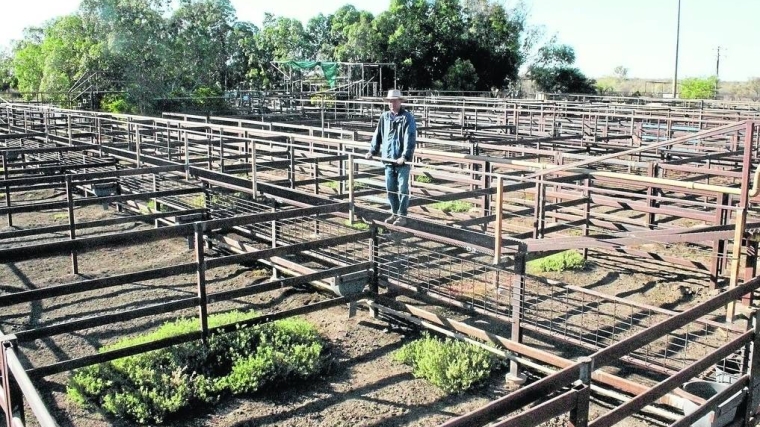
For livestock farmers the best news is that the majority of livestock companies have indicated they will open saleyards as soon as possible when we are under Alert Level 2. Overdue, but better later than never.
Vegetable growers and farmers market suppliers etc will also be breathing a sigh of relief that they can finally start trading again.
It has to be hoped that when the inevitable lock-down review takes place over what worked and what didn’t or could be improved upon, some of the Government decisions around agriculture need to be looked at. It is understood that governments in general are not good at fine detail work and under Alert Level 4 a broad brush approach had merit given the limited time and urgency of the decision.
However, the impact on growers of both plants and livestock needs to be better understood. Ploughing in of vegetables that couldn’t be sold when people were queuing for food parcels, with vege shops and butchers were closed while supermarkets appear to be reaping huge margins, defied common sense.
Likewise, the impact on livestock systems when farms couldn’t easily sell store stock and with most parts of the country impacted by drought (or floods) again defied common sense, and the Minister for Primary Industries at least needed to try and advocate better. Despite this we have survived to this stage and next week life will (hopefully) seem better under control.
Dairy prices
Select chart tabs
15 Comments
Commentators - Can we PLEASE get this right.
The wage subsidy is for an "actual or predicted' drop in REVENUE not profit. Revenue means total amount of money a business has earned from its normal business activities BEFORE expenses are deducted.
I am not defending big business but if re configuring their plants to maintain staff physical distancing meant plant speed was much slower they had a right to therefore assume lower revenue.
And the rulles are clear - if you have one month revenue impacted by 30% or more you can claim the full subsidy. Whether they should keep it is a moral or ethical question but it is not a legal one.
And yes of course the processors are using the drought and the backlog of stock to screw our schedule down. Nothing changes which makes me chuckle when naive commentators query why farmers and processors relationship is confrontational rather than collaborative. And pigs may fly.
Details do matter f you want to get things right.
The following comment is not legal advice.
Have the farmers who follow interest.co considered applying for the wage subsidy?
I had a really nice phone call from Work and Income with an equally supportive follow up email which included the information that there is an increasing number of farmers successfully applying.
If you couldn't get livestock to the works because they had reduced throughput or to a saleyard because they were closed maybe you and your staff qualify? And it is not pro rata - they are still paying the full 12 weeks.
A farm is a business , so fair enough . Should be able to apply for the interest free loan as well.
We took it, Down 70% for April on last year. Spent a heap more on Nitrogen and Gib to get grass cranking. Ewes would be 10% lower in condition to normal so scanning will be back I would say. Fortunately the south has had good growth to off set things a bit.
Agree with Wilco comments - ask, don't be shy or to proud. Its really tough on everyone this lockdown (Town and Country) plus drought everywhere, feed costs through the roof and reduced prices with overseas markets in lockdown or transport links in chaos. Even if sale yards were open who's going to buy? Talking with an agent friend he said "Ive got no orders so no point taking the stock for a drive and back home"
Its no ones fault in reality. What we do need to recognize is drought and heat intensity (this is the one I have really noticed) is increasing - climate change or whatever else if you don't believe in that, its happening and we are going to have some real hard discussions and changes or else it will be forced on people through financial reality.
You nailed it Jack, drought and heat intensity. Pastures cant withstand 30° plus days for 3 months and little rain. I am scratching my head wondering if the changes I have made will work. For a couple of years in a row we had very wet, hot summers. The constant is the heat. I now spend a fair bit of time moving cattle to shade on the bad days.
I would like to hear the weather presenters call a hot day a hot day, not a lovely day, or good weather, its not good, it bloody awful.
Oddly I couldn't agree with you based on our last three years.
Three seasons ago we were dry early but not hot and late January onwards was awesome. Last season wasn't as bad a summer as this but the four or five weeks around February were incredibly intensely hot.
This season was just long dry. Worse production/grass growth but the plants have survived much better.
Climate and weather are just so damn complicated and variable.
I am in the central plateau, not that far from Taumaranui. Check out the summer temps for Taumaranui. When the north island has heat, and little wind, it will sit like a blob in the middle of the island.
Like you say oddly, the nights have been cool from mid feb onwards. So thankfully excema wasnt a problem. But no frost yet, and its may. We are 500masl. 20 years ago we were getting hore frosts in may.
Feed conditions in central coastal Canterbury are very tight, but not because of heat, but rather the opposite. After a good rain (2") at the end of March things looked good, but April was windy from the NE, overcast and cold, with several frosts. Even repeated irrigation was unable to move growth. May has so far been good, more like what we expect April to be. It is dangerous to assume that "climate change" is a reality just because an area experiences a prolonged spell of unfavourable weather. Such judgements require recourse to long term records. It is my contention that seasons often follow more or less recognisable patterns. On that basis, my pick for this season is that the present mild and dry conditions will continue until well into June or later, followed by an abrupt descent into much colder and wetter conditions by mid July.
That would certainly fit in with previous years for CNI. Queens Birthday used to mark a real turning point for cooler weather, like the depths of a proper winter, but that has fallen back further and further with conditions getting milder, maybe three weeks over the last five or six years. I'm worried this means we won't see meaningful rainfall in the North until then.
I certainly agree on seasons moving. As a trend Ive noticed winter comes later and stays a bit later - or if unlucky goes away earlier, along with the rain. I talk to family in Switzerland and the same there - trending to less snow every winter and hotter in summer. Grazing in the mountains is becoming harder as the heat/dry means the mountain meadows don't grow as well in summer. In many areas they are giving up grazing as its doesn't work, even with all the subsidies. Theres large regeneration of some areas back to natural forest, as it was once, and they are having to decide what to do - do they let it revert back to what it was centuries ago or try and keep it open?
I'm not sure if you are denying climate change www, but i"ve never been convinced by an argument that refutes the impact of introducing hydrocarbon into the atmosphere, not significantly affecting climate and the longevity of human and other animal species. I think I would prefer to trust long term records such as ice core data, than gut feelings. Being a farmer, I realise media obsession with livestock emission pales into insignificance relative to general consumption of fossil fuel and the resulting climatic impact.
reply to www - NIWA seems to agree with your mild and dry will continue 'Air temperatures are about equally likely to be near average or above average in north and east of both islands.' https://niwa.co.nz/climate/seasonal-climate-outlook/seasonal-climate-ou…
Interesting article,however one should be wary of numbers provided by chinese sources like china exports up 3.5 % on same month last year well ahead of expected -11%,as was some of their recent shiney PMI results,some commentators look at power use,traffic to get a gauge on what really happening in Chinese economy. Were as Indias , data is more believable as shown with a service PMI move from 49.3 to just 5.4 ,as an example.Simon Bridges got into big nz lawfirms for taking millions wage subsidies,with many doing a u-turn this week and paying it back funny that.
We welcome your comments below. If you are not already registered, please register to comment
Remember we welcome robust, respectful and insightful debate. We don't welcome abusive or defamatory comments and will de-register those repeatedly making such comments. Our current comment policy is here.