

This year’s edition of the COP meetings, COP27, has been distinctly underwhelming. (For the uninitiated the COP’s series are of conferences held annually, covid allowing, to review progress of commitments to pledges made at earlier UNFCCC meetings.)
Many countries, perhaps most, have failed to meet their reduction targets and it appears the only progress that has been made at the latest one is getting a framework for a fund to be set up for developing countries to help meet the effects of climate change. Ironically this wasn’t even on the agenda shortly prior to the beginning of the conference.
Despite the hoop-la around the agreement, so far only an empty shell has been agreed to with monies to fill it coming at some time in the future.
This seems to be the ongoing trend with these agreements, attending countries pledge or agree to anything to meet current political expediencies and fail to front up with anything of real consequence when the day(s) of reckoning arrive. If anyone believes any meaningful progress has been made the graphs below should make them think twice.
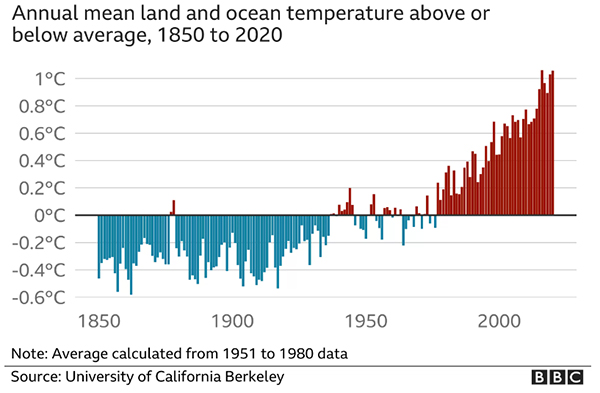
The dip in the recent years’ emissions shown below are likely to be due to the covid pandemic effect and also likely under reporting in the short term.
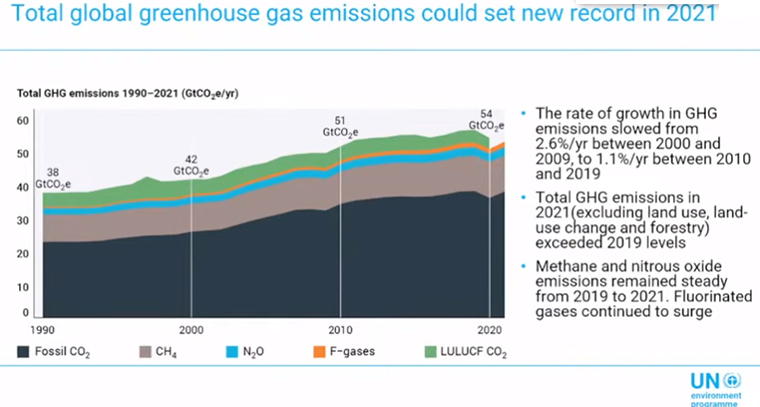
The state of play globally does provide a reason to have some sympathy with the farming sector in New Zealand. Under current and past policies farming systems are being asked to hugely modify the way they are conducted in the meantime globally things continue to get worse. While some sectors, especially in Europe have made considerable improvements in their emissions when the global picture is looked at, even they seem to be making very little progress against the tide of rising emissions. A caveat here is that at the moment farmers are having to pay very little in addition to what the average person is required to i.e. additional costs on fuel and energy. If other countries do make greater efforts, as pledged, then the farming efforts may come into more context, but in the meantime we wait.
A look at the New Zealand situation shows a very similar trend to the global view. A slight drop in most energy sectors and waste due largely to Covid impacts and agriculture trending along as before.
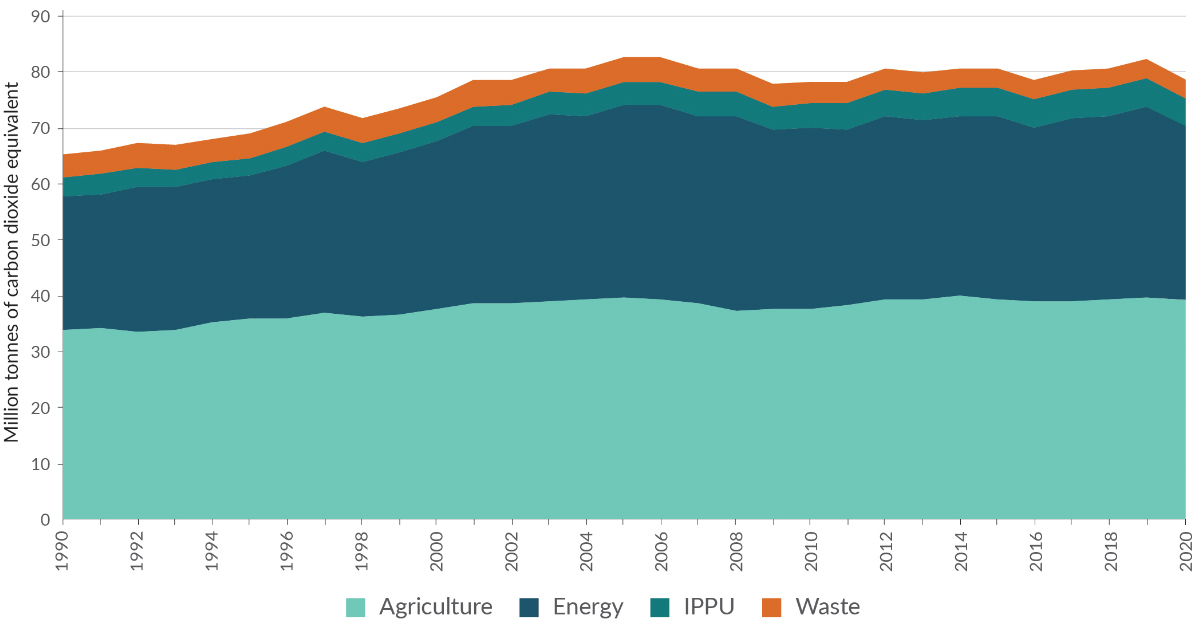
Source: Environment NZ.
An update of the fundraising of public money for the purchase of Mangaohane Station has been released. Forever Farming NZ has been forced to withdraw from its bid to buy Mangaohane Station, the 4800ha central North Island property for sale by international tender.
Forever Farming NZ spokesman Mike Barham says the decision followed the revelation late last week that the Information Memorandum prepared for the sale of the Station did not include full disclosure of two important issues. It has been revealed that a claim on Mangaohane Station was lodged with the Waitangi Tribunal in late 2019 by a local Maori Trust. The same Trust also wants to register an easement to formalise passage through Mangaohane Station to land it owns at the rear of the property which is not accessible directly by road.
“To say I’m incredibly disappointed is an understatement, but we can’t proceed any further with our bid. These two developments, particularly the Waitangi Tribunal claim, add too much risk and uncertainty for a syndicate investment like we had planned and sadly, we’ll have to back away,” Barham says. He is confident Forever Farming NZ would have raised sufficient cash to buy Mangaohane Station. “I’ve been stunned by the level of support from people from cities and towns right across the country and from within the farming community.”
“We’ve got commitments for tens of millions of dollars from hundreds of people who believed in what we were doing. They will be gutted because they wanted to join with us in making a stand at Mangaohane to stop the slide of so much of our hill country into permanent forest for carbon.”
I can recall the Māori land area, it is/was a large swampy area between the main ranges and Mangaohane and also at the southern end a ‘mountain’ was situated - which even back in the 1970’s ‘we’ were aware had some importance to Māori so it shouldn’t have come as a great surprise. Hopefully, there can be a way worked through this as a healthy head of steam appears to have built up supporting the purchase.
Hopefully the January regulation changes may come in before any larger scale and inappropriate land conversions take place. However, those who can recall the approaching to deadlines of clearing forest and not being liable to have to pay for the CO2e emissions back in 2014 will remember that clearing went right up until the very last minute. Also, the new regs’ may slow down the rate of conversions but will not bring them to a halt.
We welcome your comments below. If you are not already registered, please register to comment
Remember we welcome robust, respectful and insightful debate. We don't welcome abusive or defamatory comments and will de-register those repeatedly making such comments. Our current comment policy is here.