
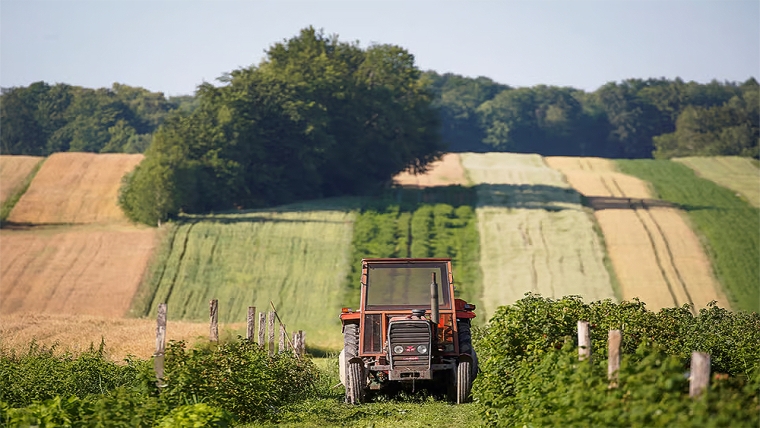
There is something grounding about stepping outside New Zealand and looking at another farming system in detail, not through a headline or a policy summary but through the voices of the people who live and work within it, because it reminds us that while geography and governance differ the underlying pressures shaping agriculture are remarkably similar.
Poland may sit on the other side of the world, operating within the machinery of the European Union and the Common Agricultural Policy, but as this episode makes clear its farmers are grappling with many of the same tensions that define rural New Zealand today.
Poland is often overlooked in global agricultural conversations, yet it is a significant food producer by any measure. Since joining the European Union in 2004 the Polish economy has doubled in size and agriculture, forestry and fishing now account for around 2.9 percent of national GDP, twice the European average. Poland is the fifth largest contributor to Europe’s agricultural sector and one of the continent’s major producers of cereals, milk, poultry and beef, while also leading the EU in raspberries and blackcurrants and competing with Spain for blueberries. That scale matters, but so does the structure sitting beneath it.
As Arkadiusz Mazur from the European Commission’s Directorate General for Agriculture and Rural Development explains, “the agri food sector in Poland is of great economic, social and environmental importance.” Nearly 60 percent of the country’s land area is agricultural and the sector employs around nine percent of the workforce, a figure that has fallen sharply from nearly 17 percent in 2005 but remains high by European standards. By comparison, France sits closer to two percent. For New Zealand listeners, where agriculture’s direct employment footprint is smaller but its economic reach is vast, that contrast alone is worth pausing on.
Dig a little deeper and the Polish farm structure begins to look both familiar and foreign. More than half of all farms are under five hectares in size, around 600,000 holdings that Mazur openly acknowledges “may be insufficient to maintain itself solely from agricultural production.” The average farm size has been gradually increasing and now sits just above 11 hectares, with much larger operations concentrated in the west of the country, yet the long tail of small farms remains central to the rural landscape. In New Zealand we do not have that same scale of micro holdings, but we do understand the challenge of viability at the margins and the growing divide between farms that can generate sustainable income and those that rely on off farm work or supplementary revenue to survive.
That divide becomes even clearer when Professor Marek Wiger from the Warsaw based Institute of Agricultural and Food Economics puts numbers around it. “We have 300,000 farms that make their living from agricultural production,” he says, “and the remaining 900,000 farms are where farming is an additional activity.” Around 20 percent of Polish farms produce roughly 60 percent of total output, leaving the remaining 80 percent contributing just 40 percent. It is a stark reminder that productivity and scale are increasingly concentrated, a trend that mirrors what we see across much of the developed farming world, including here.
Livestock production sits at the heart of that conversation and nowhere is the pressure more visible than in beef. Poland is one of Europe’s largest beef producers and exporters, shipping product primarily into Germany, France, Italy and Spain. Jacek Zajetski, a beef farmer and vice president of the Polish Sustainable Beef Platform, is blunt about both the opportunity and the strain. “The Polish beef sector has powerful development opportunities,” he says, noting that EU membership transformed the industry from exporting live animals to exporting finished products. At the same time, he does not shy away from the frustration many farmers feel with regulation. “Today, farmers often spend more time filling in paperwork than working with their animals,” he says, describing bureaucracy as “the main drawback of the Common Agricultural Policy.”
That line will resonate deeply with New Zealand farmers who have watched compliance obligations multiply over the past decade, often with the same sense that paperwork is crowding out time on farm. Zajetski also points to the growing gap between urban and rural understanding. “Almost 40 percent of Poles live in the countryside, but most of them are no longer farmers,” he says. “People from the city who move to the countryside often don’t understand the specificities of farming.” Replace Poland with New Zealand and the sentence still holds.
The generational challenge is another shared fault line. In Poland, 21 percent of farmers are under 40, a better age profile than some European neighbours, yet the trend is unmistakable. “The ageing of the farming population in Poland is becoming apparent,” Mazur says. Zajetski goes further, describing villages where farmer numbers have collapsed. “In my village ten years ago there were fifteen farmers. Today there are four.” The numbers may differ in New Zealand, but the story of consolidation and succession pressure is one we know intimately.
Policy sits uncomfortably at the centre of all this. Polish officials openly acknowledge the tension between simplification, effectiveness and accountability within the CAP. Magdalena Nowicka from Poland’s Ministry of Agriculture describes it as “moving in a triangle” between those competing demands. Tools like small farm payments and targeted environmental schemes are designed to keep smaller holdings engaged, recognising their role in biodiversity and landscape management even if their commercial output is limited. It is a model that raises uncomfortable questions for New Zealand, where debates around land use, environmental services and who should be paid for what are far from settled.
The episode also touches on geopolitics, particularly the fallout from Ukraine’s grain exports into the EU. Professor Wiger does not mince words about the impact. “This has destabilised the agricultural market in Poland,” he says, pointing to sharp price falls that triggered farmer protests. At the same time, he argues Europe must think long term. “By 2050 there will be around 10 billion human beings,” he says. “We need to think in the long term about how we can meet this demand, produce the raw material, process it and sell it with added value.” That long view is one New Zealand agriculture cannot afford to lose sight of as global trade patterns shift and political decisions ripple through markets.
As Poland sets out its priorities while holding the EU presidency, Mazur distils them into three clear messages: “food security, simplification of the CAP and stabilisation of farmers’ income.” Strip away the acronyms and institutions and those priorities would not look out of place in a New Zealand policy speech. Food security, workable regulation and income stability are universal concerns in agriculture, regardless of system or scale.
Listening to these conversations from Europe is not about drawing direct comparisons or importing policy solutions wholesale. It is about recognising that the pressures facing New Zealand farmers are not isolated or unique, and that many of the debates we are having locally are playing out in different forms elsewhere. The details matter, but so does the shared experience of farming under scrutiny, under regulation and under constant pressure to do more with less.
In that sense, this journey through Polish agriculture is less a detour and more a mirror. Different landscapes, different histories, but the same fundamental question sitting underneath it all. How do we build farming systems that remain productive, profitable and socially supported while navigating the political and environmental expectations of the decades ahead.
Have a listen to the podcast to hear the full story.
Angus Kebbell is a producer at The Weekly Hotwire. You can contact him here.
We welcome your comments below. If you are not already registered, please register to comment
Remember we welcome robust, respectful and insightful debate. We don't welcome abusive or defamatory comments and will de-register those repeatedly making such comments. Our current comment policy is here.