

The Reserve Bank (RBNZ) expects new requirements for banks to hold a “material” amount of additional capital will have a net impact of increasing economic growth in the long-term.
On average, it sees the changes increasing interest rates for borrowers by 20.5 basis points.
RBNZ Governor Adrian Orr says this could easily get "lost in the wash" when combined with all the other economic factors that affect interest rates.
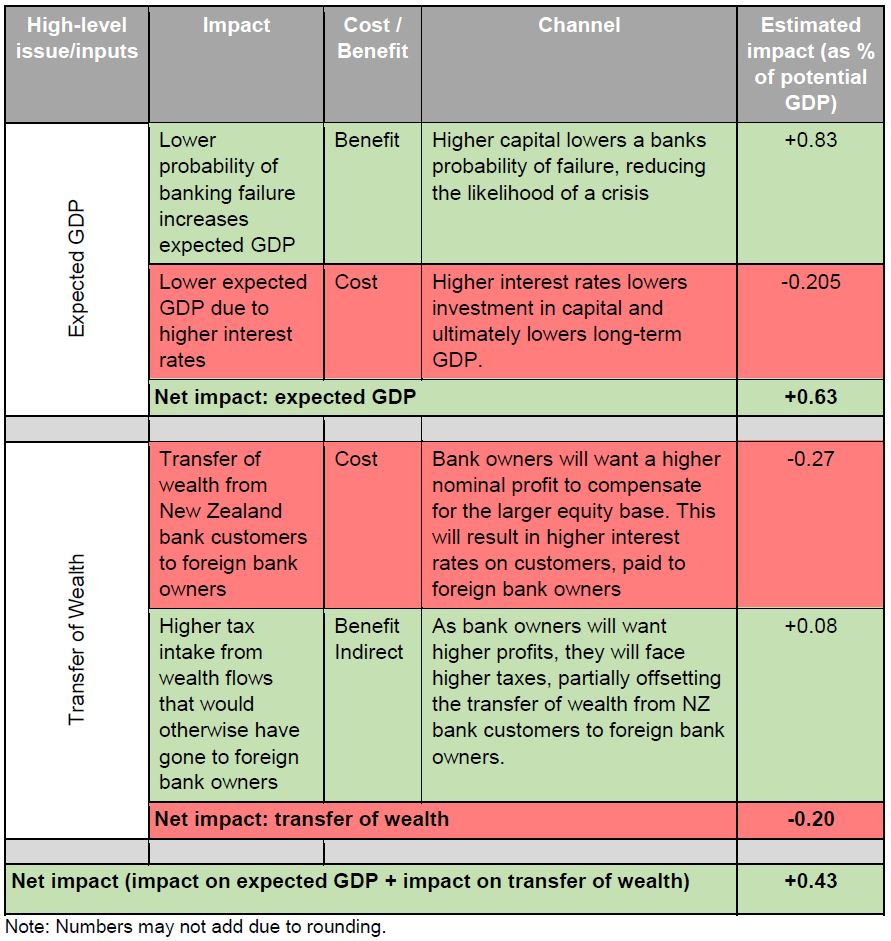
Weighing up the costs and benefits of the changes, the RBNZ expects gross domestic product (GDP) to increase by 43 basis points or 0.43% on average over the long-term.
Impact during transition
The RBNZ recognises that during the seven-year transition period it has given banks to implement the changes, they are likely to restrict their lending by 2.2 basis points.
It has assumed that without the changes, banks would have had annual credit growth of 5.10%. However with the changes, this will fall to 5.08% during the transition period.
It expects the impact to be much lower with a seven-year transition period, versus a five-year one as initially proposed.
The RBNZ says: “Increasing capital requirements can creates costs in the transition period that are independent of the steady-state costs. This is driven by banks restricting credit growth, rather than by restricting dividend payouts to investors, in order to meet capital requirements.”
Long-term impact
Coming back to the long-term impacts, the RBNZ recognises this will vary across banks.
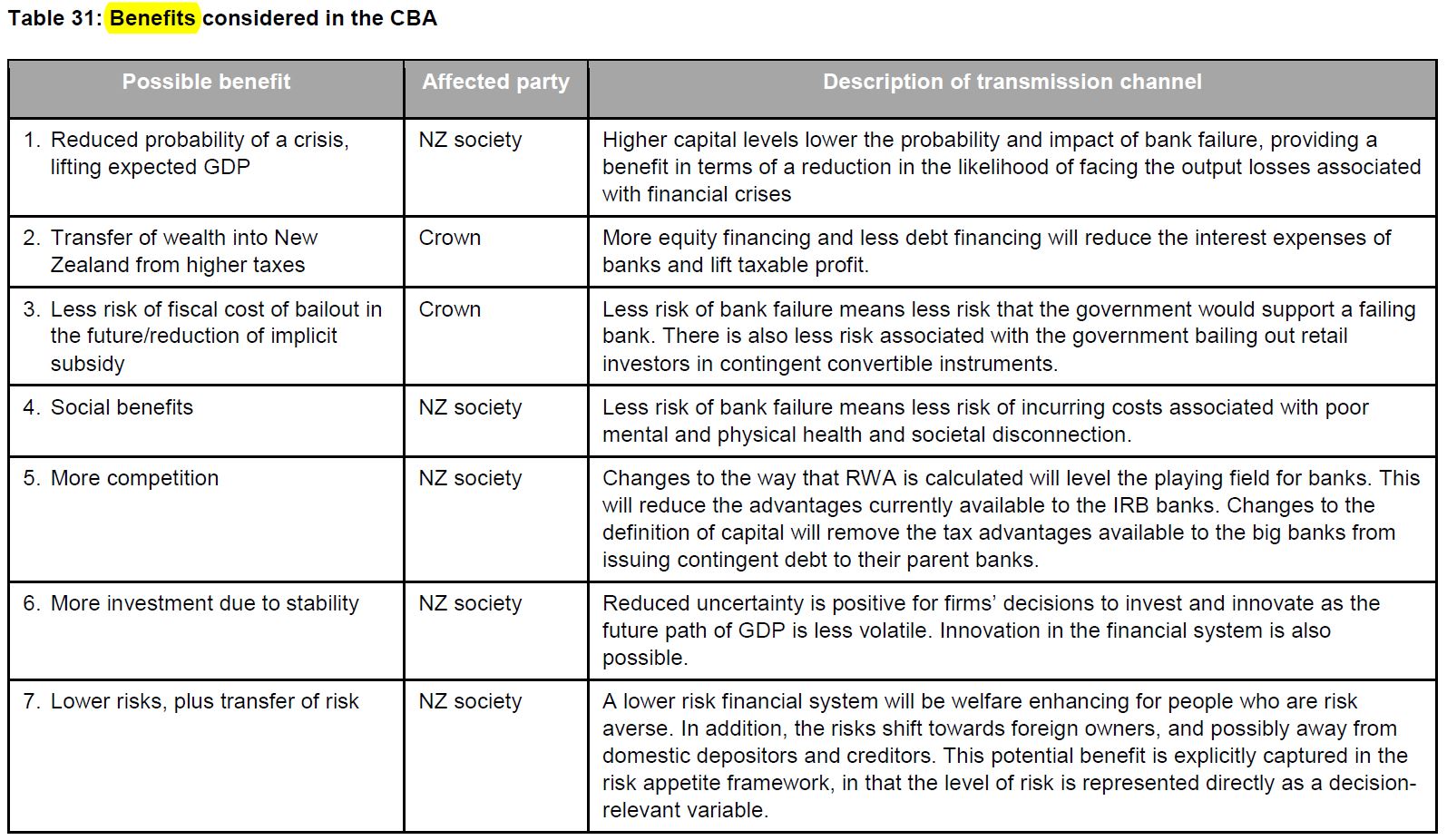
But it’s of the view that the changes, which will reduce the probability of a crisis in any given year from 1.8% to 0.5% (or deliver 1-in-200-year soundness), will be beneficial on balance.
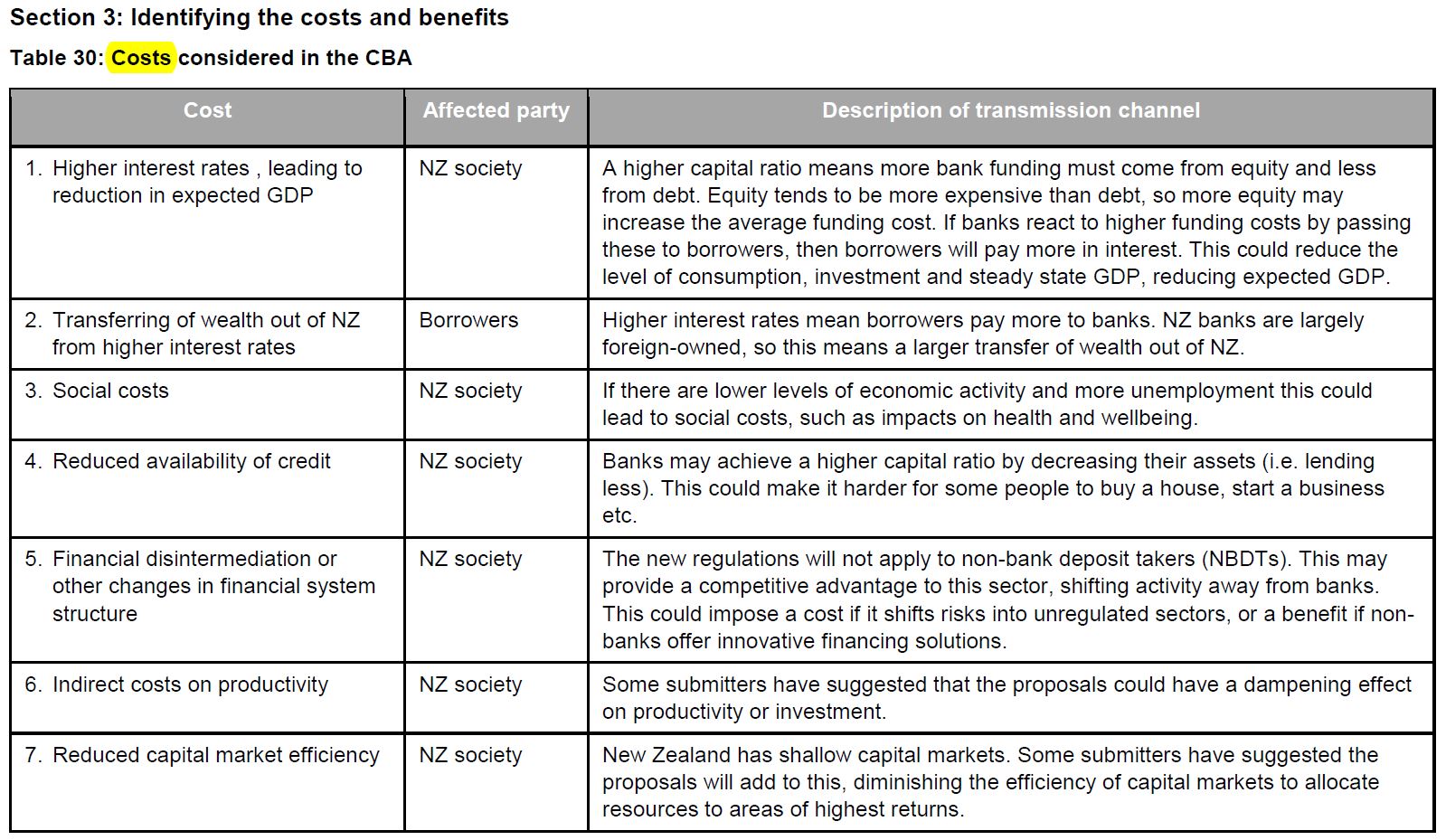
It expects that on average, the interest rates borrowers will have to pay will increase by 20.5 basis points. So someone paying 4% interest on their mortgage, may be charged 4.205%.
This will dampen investment in capital and lower long-term GDP by 0.205%.
But offsetting this, it expects the reduced probability of a banking failure to give GDP a 0.83% boost, resulting in a net 0.63% increase.
Turning to the impacts on the transfer of wealth, the RBNZ accepts bank owners will want to make larger profits to compensate for the larger equity base. So they will charge borrowers higher interest rates. This money will go to banks’ foreign owners, denting GDP by 0.27%.
Countering this a little, is the fact that higher profits will require banks to pay more tax in New Zealand. This will add 0.08% to GDP. But weighed against the impact of profits going overseas, the RBNZ expects the net effect on the transfer of wealth to reduce GDP by 0.20%.
Mashing together the impact on the transfer of wealth with the impact on GDP, the RBNZ has concluded the total impact will be a 0.43% increase to GDP.
We welcome your comments below. If you are not already registered, please register to comment
Remember we welcome robust, respectful and insightful debate. We don't welcome abusive or defamatory comments and will de-register those repeatedly making such comments. Our current comment policy is here.