

Kiwibank has trimmed its mortgage test rate by 50 basis points following the Reserve Bank’s Official Cash Rate (OCR) cut last week.
A Kiwibank spokesperson told interest.co.nz on Monday afternoon Kiwibank is now using a home loan serviceability rate of 8%, down from of 8.5%. The reduction comes after the Reserve Bank trimmed the OCR to 4.75% from 5.25%.
Banks use mortgage serviceability test rates to gauge the repayment capacity of would-be home loan borrowers’ if interest rates rise. A lower test rate increases borrowers' borrowing capacity.
Kiwibank had confirmed last Wednesday following the OCR decision it was still testing at 8.5%, but the test rate was under review.
Following the cut to 8%, Kiwibank appears to have the lowest mortgage serviceability test rate across the country’s five biggest retail banks. Kiwibank had home loan exposure of $26.945 billion as of June 30.
Interest.co.nz asked the country’s biggest banks last week if they had plans to review or lower their mortgage serviceability test rates after the OCR announcement.
Westpac confirmed it was planning to cut its home loan serviceability rate to 8.15% from 8.65% with the change effective from October 14.
ANZ NZ, New Zealand’s biggest mortgage lender, said last week its affordability test rate was 8.5%.
On Tuesday, a spokesperson said its loan affordability rate had been dropped from 8.5% to 8.05% as of October 15.
BNZ told interest.co.nz last week that its current mortgage serviceability test rate was 8.5%.
ASB confirmed on Tuesday that the bank is still testing mortgage serviceability at 8.7%.
“Our current test rate is under review following our recent reductions to our fixed and floating rates,” a spokesperson said.
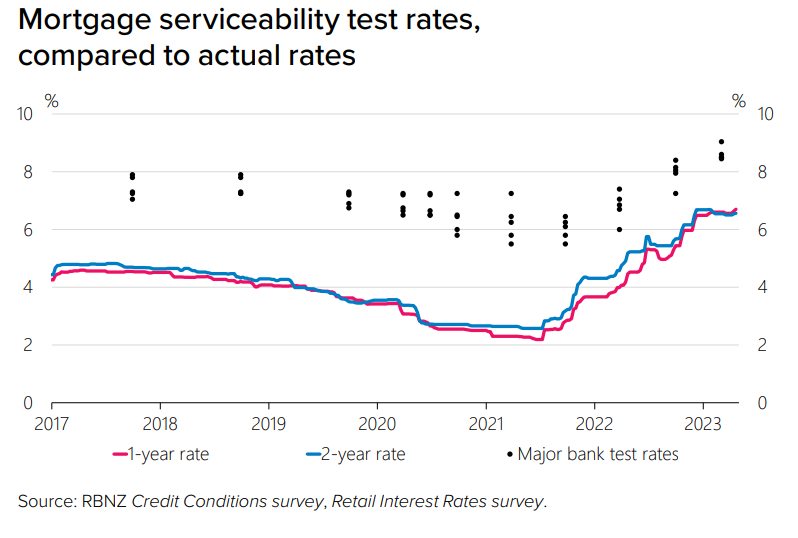
With mortgage rates and the OCR now falling, test rates are also on the way down. However, sharp interest rate rises from the record lows of 2020-21, meant by May 2023 the Reserve Bank estimated about 25% of outstanding mortgages by value were stress tested by banks at lower interest rates than were then prevailing. ANZ NZ's test rate reached 9.1% last year, having been as low as 5.8% in the 2020-2021 period.
*The chart below comes from the Reserve Bank's May 2023 Financial Stability Report.
*This article was first published in our email for paying subscribers. See here for more details and how to subscribe.
We welcome your comments below. If you are not already registered, please register to comment
Remember we welcome robust, respectful and insightful debate. We don't welcome abusive or defamatory comments and will de-register those repeatedly making such comments. Our current comment policy is here.