
After a summer of speculation and volatility, wholesale interest rates have settled back to roughly where they were in November after the previous Reserve Bank (RBNZ) Monetary Policy Statement.
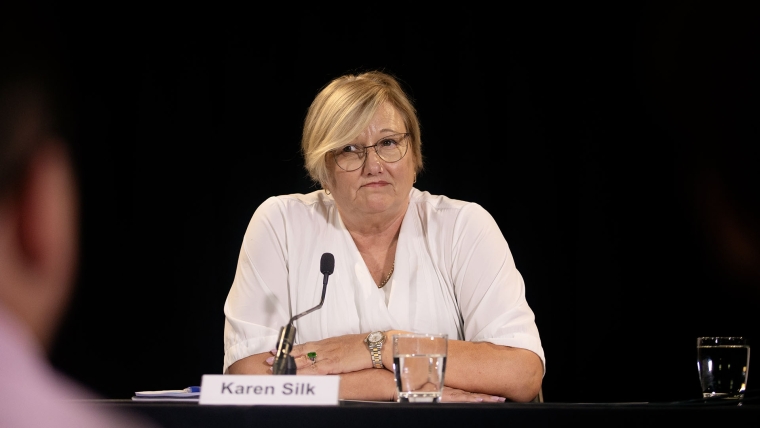
Karen Silk, an Assistant Governor at the RBNZ, said the central bank had been “pretty consistent” in its message from meeting to meeting.
The one-year swap rate swung almost 50 basis points during this time as market traders reacted to weak economic activity and, later, stronger non-tradable inflation and labour data.
RNBZ Chief Economist Paul Conway gave a speech at the end of January on the importance of quality research, but also discussed the economic data releases. His comments were interpreted as being hawkish.
While market reaction was limited, it set the stage for a huge rally in interest rates after labour market data printed above expectations and ANZ lifted its Official Cash Rate forecast to 6%.
Silk said the chief economist’s speech was intended to correct interpretations of the Gross Domestic Product data and not to set the tone for future policy settings.
“[When] talking to some of the market strategists the other day, I said you need to just sit back and reflect on how you’ve interpreted that”.
The market reaction to historical revisions in the GDP data, which coincided with some dovish US Federal Reserve commentary, sent interest rates tumbling.
“The market kind of went wildly one way without actually understanding what the data was saying,” Silk said.
Conway’s speech was intended to correct an interpretation that capacity pressure had “fallen off a cliff” when really it had declined a more modest amount.
“It might have felt hawkish to the market, relative to where they were, but I don't think it was hawkish relative to what we had talked about in November”.
Silk suggested observers should interpret speeches between meetings narrowly and not attempt to extrapolate them out to an entire monetary policy stance.
“My guidance would be to think what he is saying around those very specific pieces, realising you’ve got to stand back and look at it in a much broader context”.
Cutting floor
While market traders will remain alert for possible signs of a rate cut, the RBNZ is driving home the message that they remain in the far future.
Policymakers want to be sure that inflation is on its way back to 2% and not just falling into the target band.
“Everybody kind of goes ‘surely you get to 2.9%, now’s the time’, well, not if you're going to bounce back to 3.5% by doing that,” Silk warned.
This was why the US Federal Reserve was holding off rate cuts. Headline inflation data in America has been hovering above 3% since July, while core inflation slowly tracks down.
Core inflation has dropped just 0.2 percentage points in the past four months, to 3.9%, and there are signs of strength building back up in the US labour market.
RBNZ policymakers were watching this experience and would need strong evidence that inflation was anchored to 2% before easing interest rates in New Zealand.
However, an easing of policy could come sooner if the Federal Reserve does find the confidence to cut its rates.
Silk said the difference in interest rates between the two countries would strengthen the NZ dollar which, all else equal, would lower import prices and headline inflation.
The central bank will continue to pay more attention to core inflation and domestic dynamics, but a stronger dollar would help more than hinder.
*This article was first published in our email for paying subscribers. See here for more details and how to subscribe.
We welcome your comments below. If you are not already registered, please register to comment
Remember we welcome robust, respectful and insightful debate. We don't welcome abusive or defamatory comments and will de-register those repeatedly making such comments. Our current comment policy is here.