

Followers of Statistics NZ's monthly electronic card transaction data will know that in the early months of this year spending by the Kiwi consumer has been grinding to a halt.
Figures have been dropping, despite prices having risen (which all things being equal should see sales figures rise), and despite the fact the NZ population surged by over 100,000 people in the past year. Again, all things equal, that's supposedly 100,000 extra wallets boosting the spending figures.
But it is the grand design. The Reserve Bank's shunting of the Official Cash Rate up from just 0.25% as of the start of October 2021 to 5.5% as of now was aimed at taking heat out of the economy so that runaway inflation could be brought to heel.
RBNZ Governor Adrian Orr even conceded that the central bank was engineering a recession. Well, job done. NZ was, as of the December quarter in recession. And we'll find out next week if this continued into the March quarter. If recent spending data is anything to go by, possibly. (I'll be having a closer look at the forthcoming GDP figures over the weekend.)
The country's largest bank has added some flavour and texture to the overall spending picture with the release of granular detail on card spending of ANZ customers during May.
The picture painted is one of serious cut backs occurring. Spending on home refurbishment has slumped. Discretionary spending and spending on durables are down. Spending on repair services is up. Make do and mend. Buy-now-pay-later (BNPL) spending is up.
ANZ points out that many data series are volatile month-to-month "at this very disaggregated level". The bank therefore presents the data in rolling 3-month average terms (3mma) to make trends clearer. The data is also seasonally adjusted where the diagnostics support this.
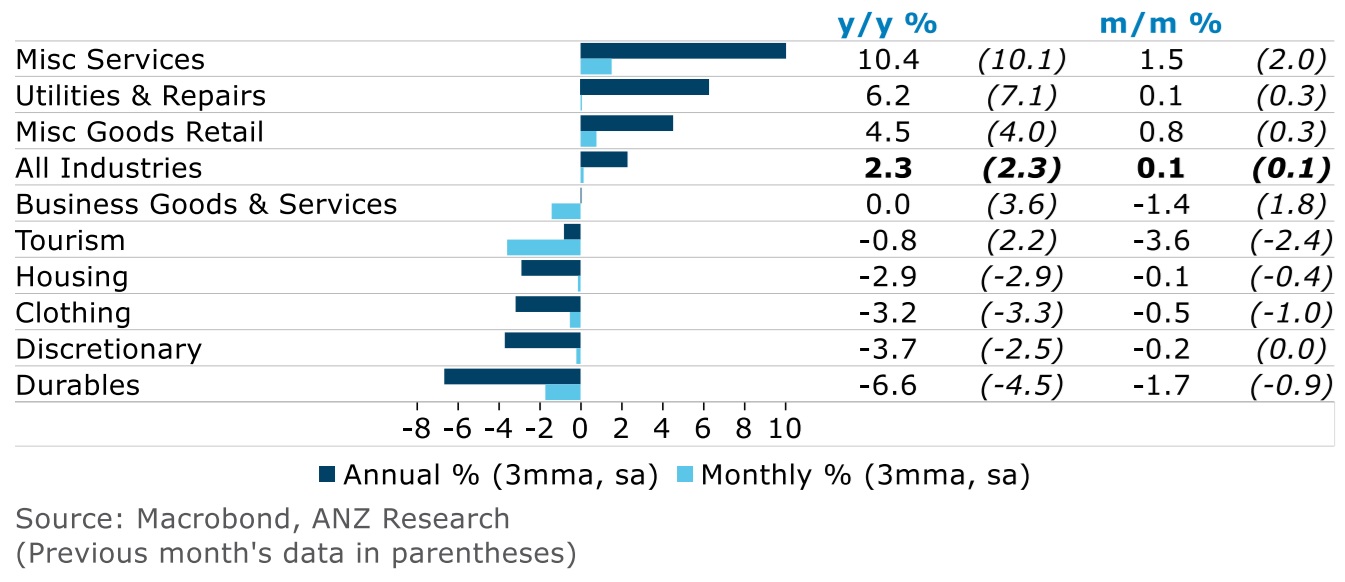
ANZ chief economist Sharon Zollner says annual growth in card spending was just 2.3% year-on-year in May, "despite inflation running at a considerably higher pace". (Annual inflation as measured by the Consumers Price Index - the CPI - was 4.0% as of the March quarter.)
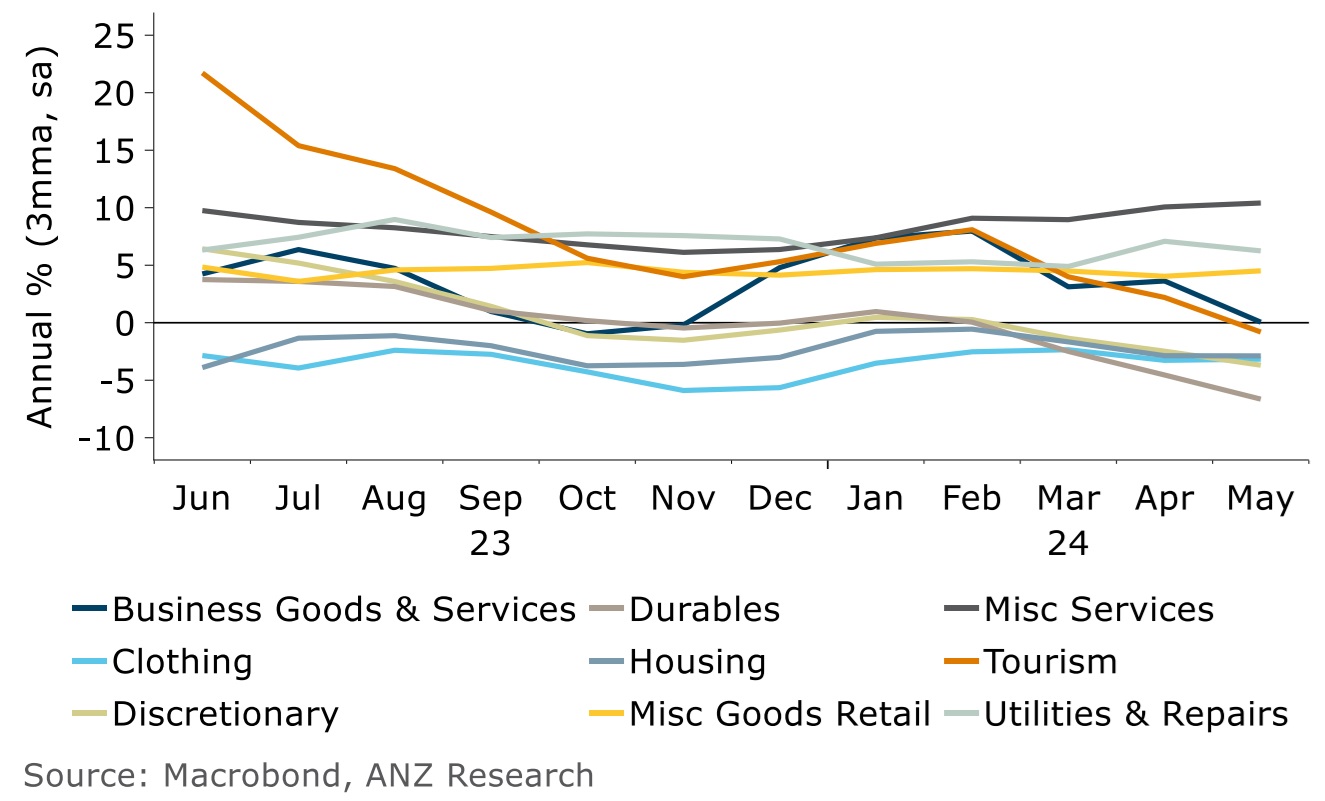
"Durables, discretionary spending categories and clothing continue to lag. The impetus from tourism-related spending has turned into a drag on growth. Miscellaneous services is one category gaining momentum, with strength here driven by finance services," Zollner says.
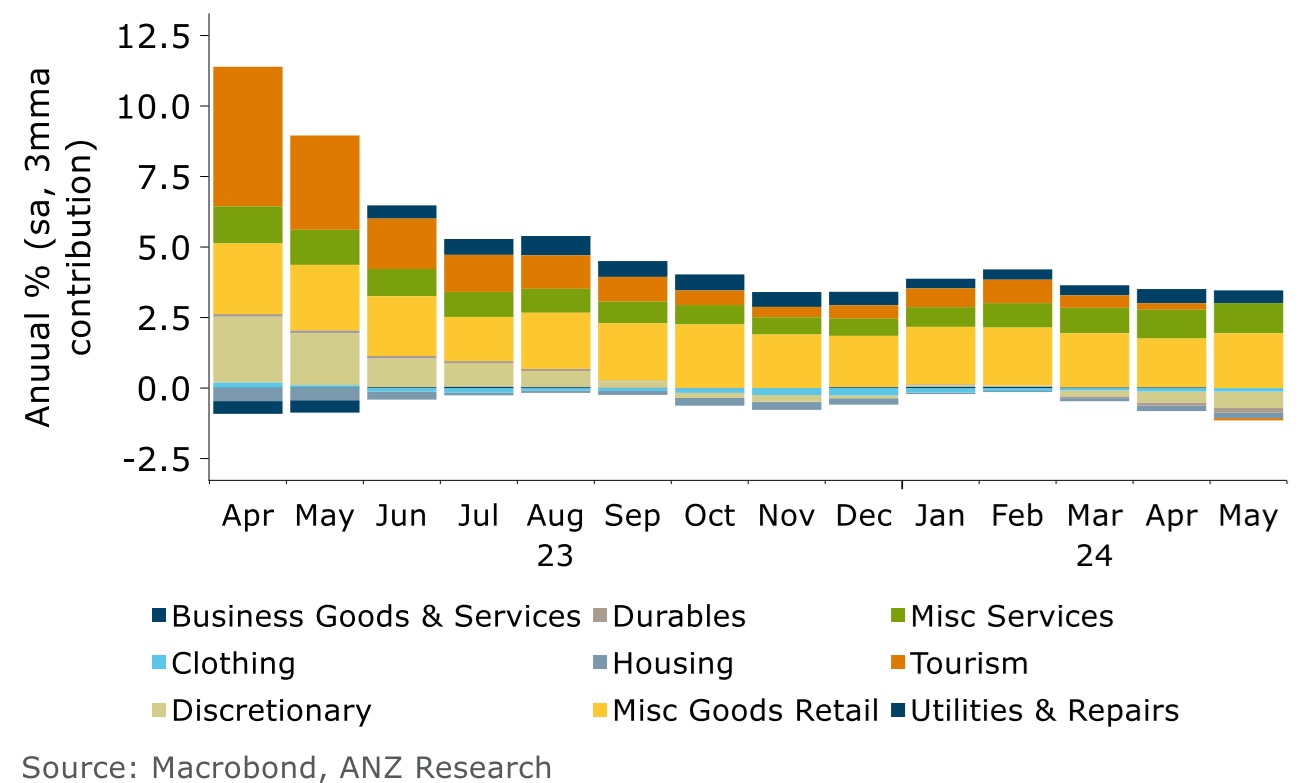
"Zooming in on the contributions of each category to total card spending growth in the past year [see graph below] shows growth being held up by just two categories: miscellaneous goods (which includes buy-now-pay-later payments) and miscellaneous services, which as noted, have been supported by finance services," Zollner says.
She adds that the strength in finance services "is not necessarily a strong indicator. Good advice is invaluable in tough times."
Looking at housing-related spending, Zollner says spending in this category is down nearly 3% year-on-year.
The only category in the housing group that is up more than negligibly year-on-year is 'glass, paint and wallpaper', "suggesting cheap spruce-ups may be standing in for expensive renovations".
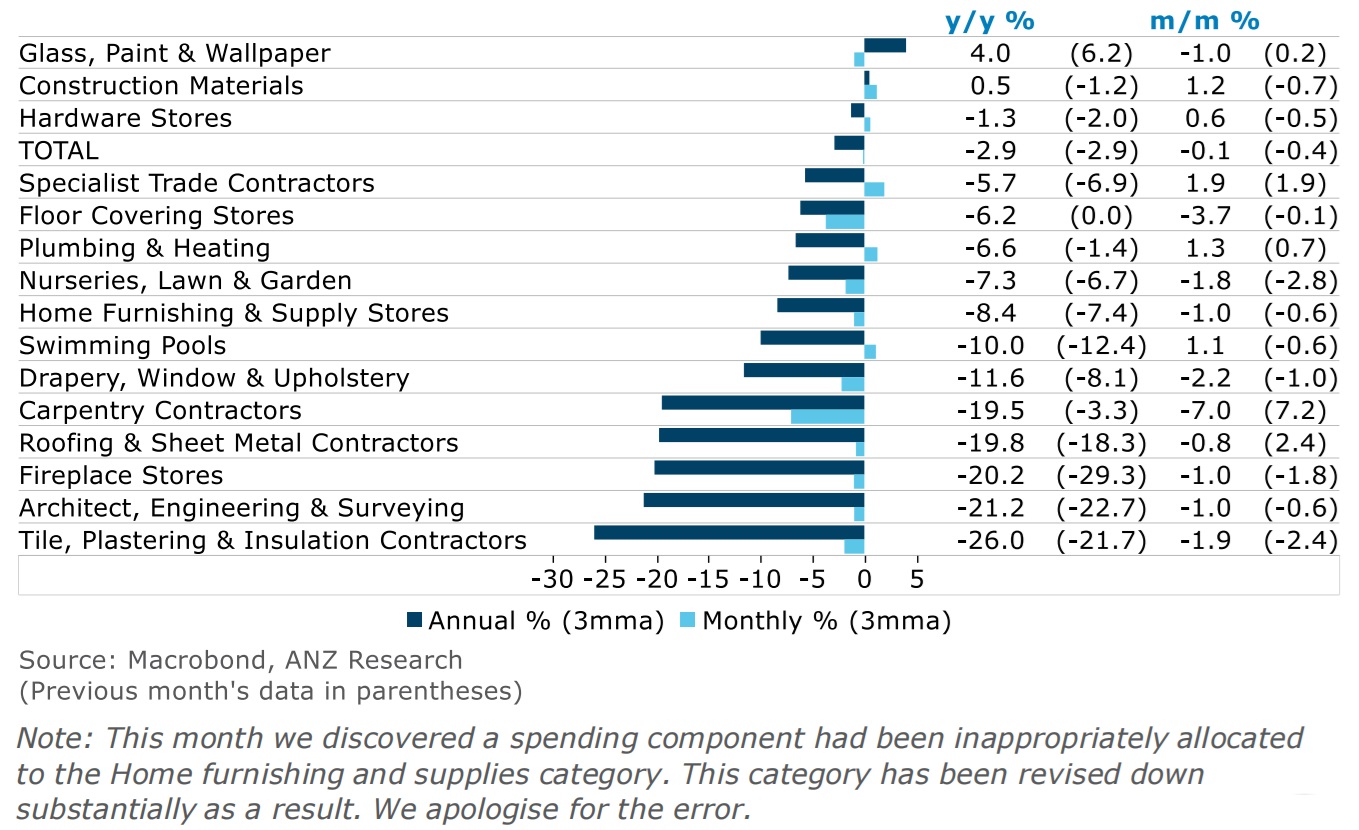
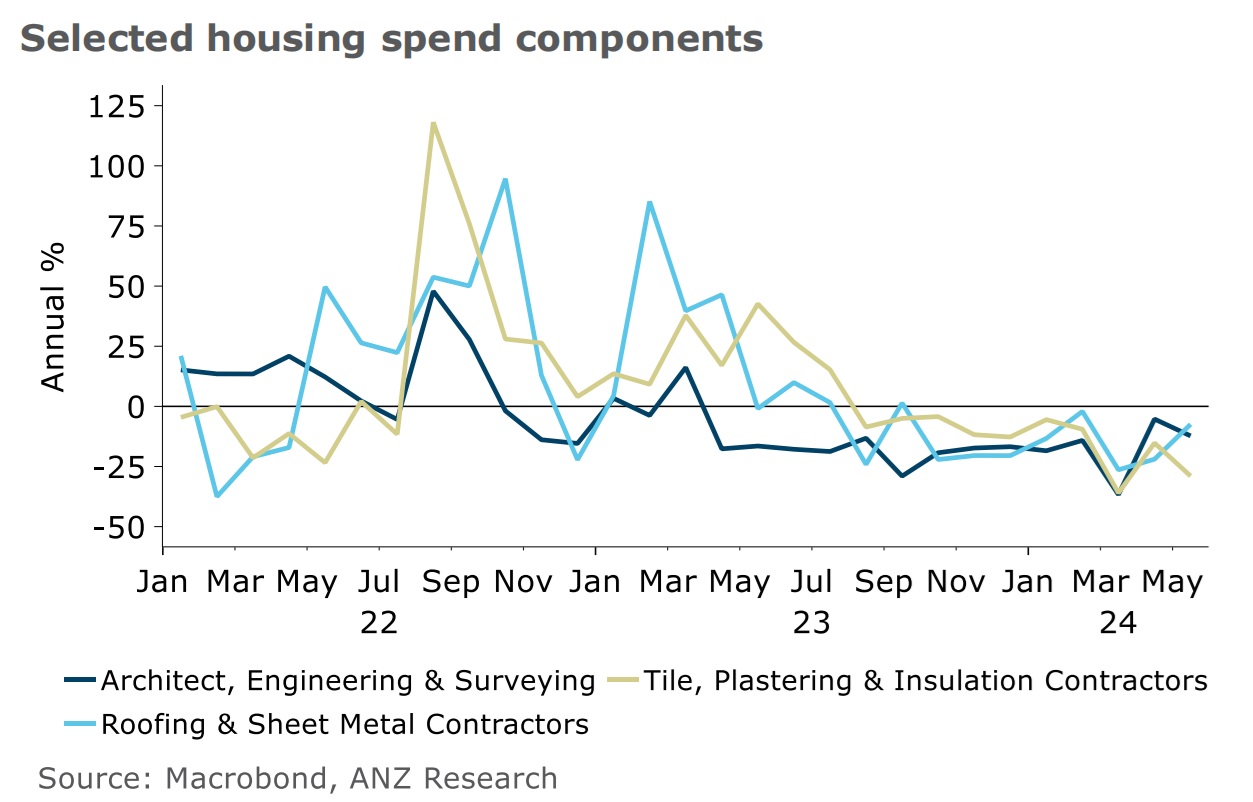
Zollner notes that sharply weaker construction activity is evident in the bottom five categories, which are all down 20-25% year-on-year.
"Categories related to building are particularly weak at present."
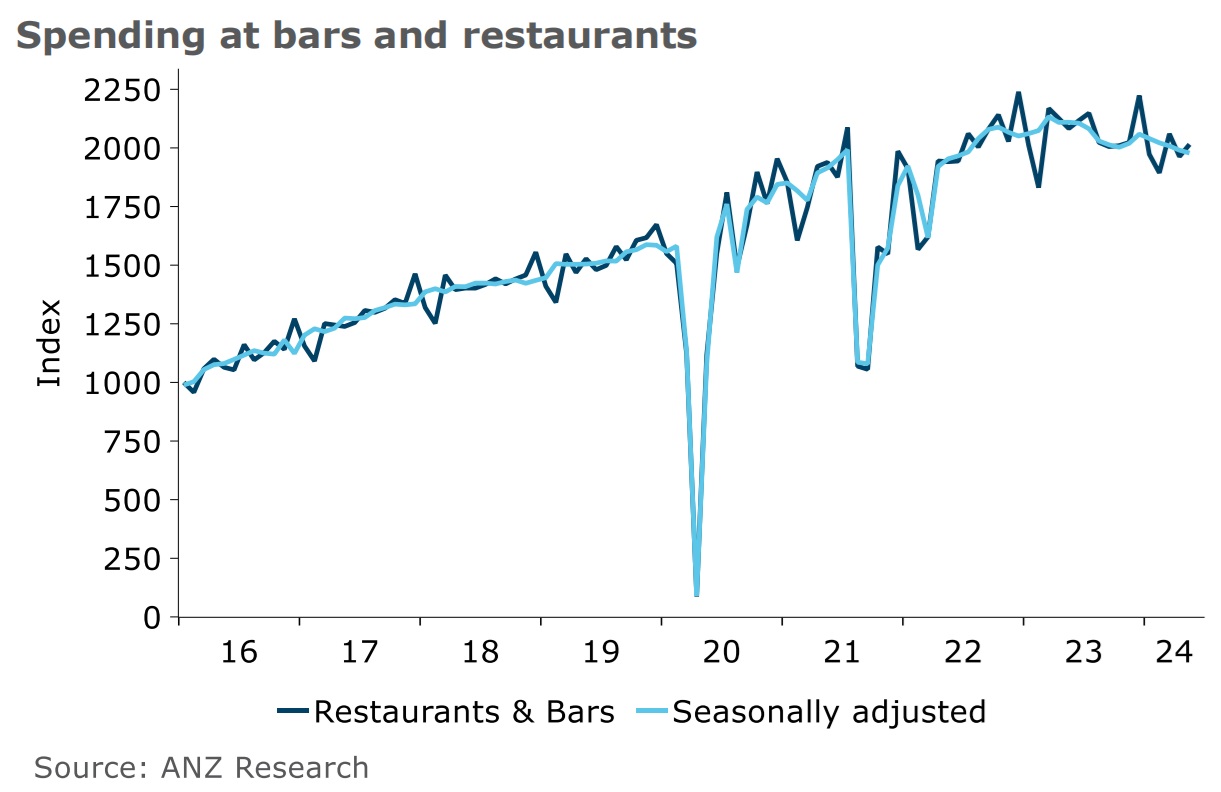
The flattening off and now outright decline in spending at restaurants and bars has been marked "as consumers increasingly watch their pennies", Zollner says.
Spending across a range of clothing store types remains very weak, while repairing existing clothing has been more popular.
Durables spending remains under pressure due to a soft housing market, high interest rates and a weakening labour market.
Boaties and motor home dealers may have benefited from the return of tourists, but now that the growth in tourist numbers is cooling, annual growth is following suit, Zollner says.
We welcome your comments below. If you are not already registered, please register to comment
Remember we welcome robust, respectful and insightful debate. We don't welcome abusive or defamatory comments and will de-register those repeatedly making such comments. Our current comment policy is here.