

By Roger J Kerr

On the surface, the 151,000 jobs increase for the month of August in the US was a disappointing result against the prior consensus forecasts of +180,000.
However, it must be remembered that historically August has always been a low month for new hires due to the summer holiday period.
Whilst the outcome was less than the US dollar bulls were expecting and thus put an immediate dampener on the probability of a rate hike in September, the USD did not weaken against the Euro after the data release. The employment number was not weak enough to cause USD selling in the forex markets.
As has been previously stated in this column the FX markets always price the future expectations today and that even if the timing of the next US interest rate increase is December rather than September we should still expect a strengthening US dollar value now.
It is instructive that the EUR/USD exchange rate remained below $1.1200 despite the marginally lower jobs result and weaker manufacturing data in the US last week. My view is that the EUR/USD rate will still head to under $1.1000 over coming weeks as the markets start to factor in the reality of tighter monetary conditions in the US and further loosening of monetary conditions in Europe by the ECB.
A stronger USD on global markets from here reinforces the cap on the Kiwi dollar at 0.7300, however USD strength alone may not be enough to force the Kiwi back below 0.7000 as we have been forecasting. It needs something extra to trigger and force a lower NZ dollar trend.
The NZD/USD rate has returned to its resistance level at 0.7300, pushing up the TWI index to 77.80.
The overall New Zealand currency strength makes a mockery of the latest RBNZ inflation forecasts already. Tradable inflation will continue to print significantly lower than RBNZ forecasts over the next six to nine months due to the current exchange rate strength. The exchange rate movement upwards since the 0.25% OCR cut by the RBNZ on 11 August just tells you that the markets believe the RBNZ is not doing enough to force New Zealand’s exchange rate lower to get inflation higher.
This column raised the need for a surprise 0.50% cut a month ago.
FX market developments over the last four weeks tells us that the RBNZ should have been much less timid in their approach in early August.
Slow, measured and cautious changes from the RBNZ are just not working to get the currency/inflation results they themselves desire and require.
The reality is that the RBNZ have allowed official interest rates in New Zealand to remain 0.50% above the Australian OCR levels all this year, resulting in the NZD/AUD cross-rate zooming up from 0.9000 to 0.9600 as FX traders/investors are still attracted to the higher yielding Kiwi dollar.
The currency dial needs to be shifted.
Unfortunately we do not have a central bank with the will or capability to do that currently.
Fears from the RBNZ that lower official wholesale interest rates would put more fuel on the housing market fire have proven to be unfounded as the banks have not fully passed through lower OCR rates into their lending interest rates as their own cost of funds have not really reduced. Bank retail deposit rates have actually increased and bank wholesale borrowing margins (credit spreads) offshore continue to increase as well.
The ball is firmly in the RBNZ’s court to surprise the markets with another 0.25% cut to the OCR on 22 September to get traction in the FX markets for a lower Kiwi, particularly if the US Federal Reserve do not hike their interest rates on 21 September. A failure of the RBNZ to act in this fashion could see the NZD/USD rate at 0.7500 and the TWI at 80.0 and even more pressure on themselves with a massive, prolonged and unacceptable inflation miss.
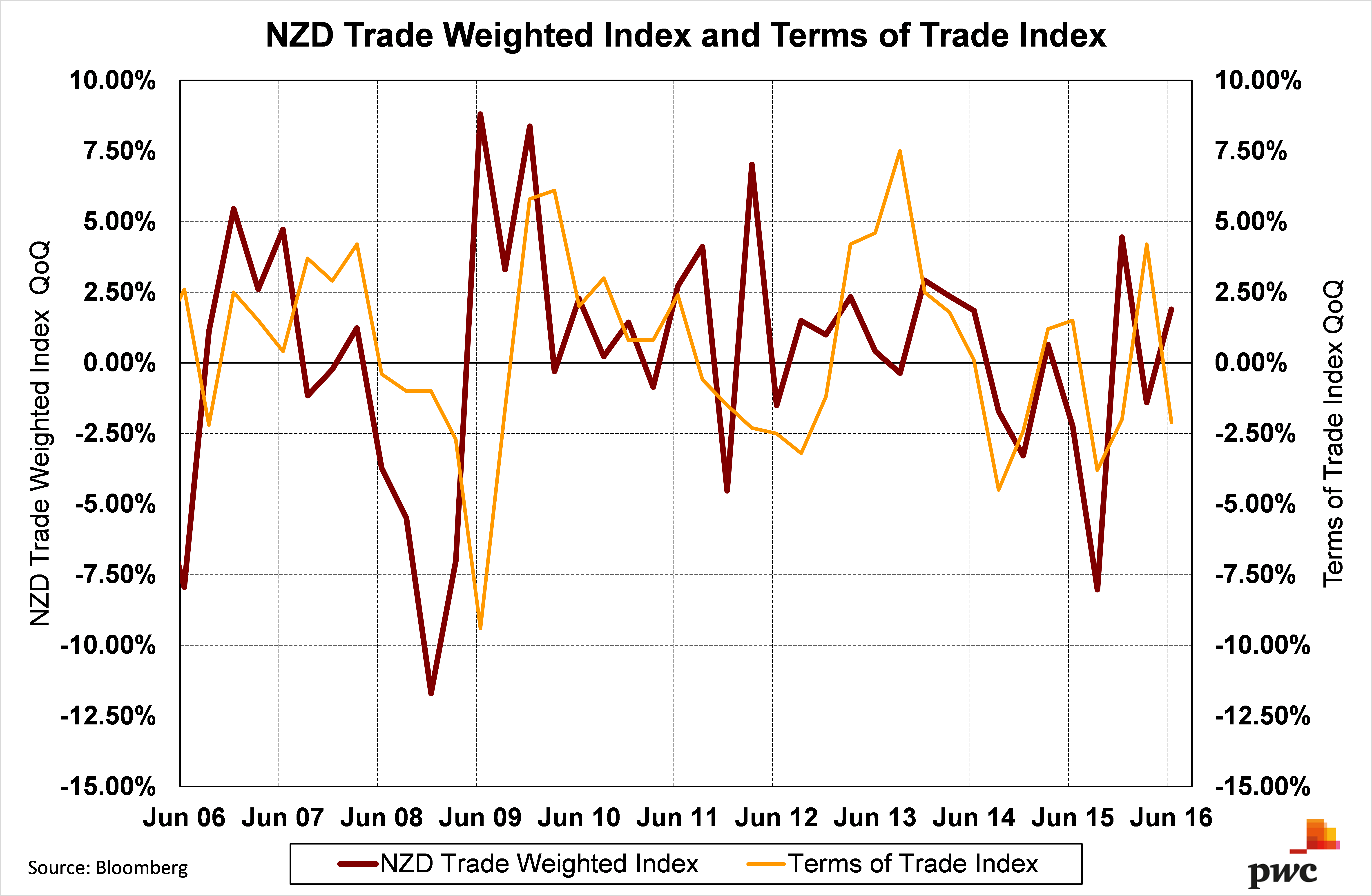
A reliable measure of whether the NZ dollar value is out of whack with our economic fundamentals is its value relative to the Terms of Trade Index (import/export prices). The chart below is self-explanatory in that the TWI Index has increased over a period the Terms of Trade Index has decreased, thus the recent currency gains do not look sustainable.
Daily exchange rates
Select chart tabs
Roger J Kerr contracts to PwC in the treasury advisory area. He specialises in fixed interest securities and is a commentator on economics and markets. More commentary and useful information on fixed interest investing can be found at rogeradvice.com
We welcome your comments below. If you are not already registered, please register to comment
Remember we welcome robust, respectful and insightful debate. We don't welcome abusive or defamatory comments and will de-register those repeatedly making such comments. Our current comment policy is here.