
Supply and demand in the New Zealand economy are back in balance and prices are behaving more normally, despite slow progress in domestic services inflation.
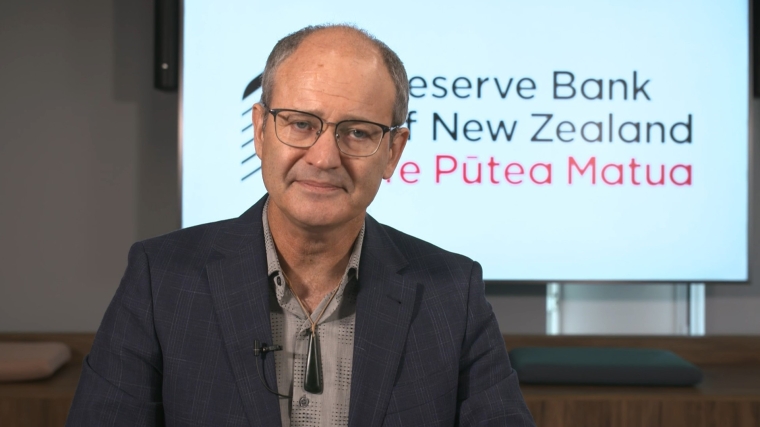
That’s the view of the Reserve Bank’s chief economist Paul Conway who leads the central bank’s research programme and sits on its Monetary Policy Committee.
“We've got an economy now where supply and demand are broadly in balance. Our output gap is pretty much zero and we're pretty much around what we used to call maximum sustainable employment in the labour market,” he said on Friday.
“So, the economy is in balance and ongoing inflation pressures are really being driven by people, that’s wage setters and price setters, not adjusting their expectations to a low inflationary future”.
Earlier this week, the committee opted to hold the Official Cash Rate at 5.50% despite forecasts showing disinflation was happening slower than expected just a few months ago.
Headline inflation was still forecast to drop into the target band by the end of the year but only just. Reserve Bank (RBNZ) projections show it scraping in at 2.9% in the December quarter.
The economy will have grown a very modest 1% across 2024, unemployment will have risen to 5%, and the first full rate cut could still be nine months away.
Conway said the central bank was still confident it was going to get inflation into the target band by the end of the year despite the “slight upwards nudge” in the projections.
Disinflation was occurring roughly as projected but with a different mix. Imported prices are back to normal—up just 1.6% year-on-year—while domestic prices have climbed 5.8%.
Down to the core
This is not unlike what has happened in other countries. The British Prime Minister called an election on Thursday, partly in response to headline inflation dropping to 2.3%.
However, core inflation in the United Kingdom remains uncomfortably high at 4%, while its services inflation was just under 6%.
Statistics NZ’s measure of core inflation shows an annual rate of about 4.5% in the most recent release and RBNZ’s flagship core measure puts it at 4.3%.
The central bank has been clear that it is targeting core inflation, as that is what defines the pace of future price increases, rather than headline Consumers Price Index inflation — which is the official target.
A rate hike to combat these sticky inflation pressures was considered in May but not delivered due to the long-term risk it would pose to the already weak economy.
“We've got the impression there are upside risks to inflation over the next couple of quarters, given we've been constantly surprised on domestic inflation, and that may persist for another few months. But beyond that we see the risks to the downside,” Conway said.
RBNZ Governor Adrian Orr said the inflation pressures were concentrated in the short-term and sectors less affected by interest rates. Another hike would hit those already hurting hardest.
Conway said you still see prices climbing in rents due to strong population growth, insurance premiums after extreme weather events, and council rates as they invest in infrastructure.
Higher interest rates mostly impact these things indirectly by limiting wages in the labour market and restricting how much people are willing or able to pay for those services.
The bank has forecast a further weakening of wage growth as employers let go of extra staff they hired when New Zealand’s border reopened after the pandemic amid a worker shortage.
“There has been a bit of [labour] hoarding and if firms come to realise that market fundamentals have changed, and we need a reallocation of workers, that could lead to further softening in the labour market,” he said.
Labour hoarding has also been hurting productivity as output has decreased faster than employment. This means more workers have been contributing to each unit of output.
Last domino to fall
Kelly Eckhold, chief economist at Westpac NZ, said the RBNZ was right to worry about both sides of the economic outlook.
It was “as likely as not” that inflation would fail to drop into the target band this calendar year, as even the smallest unexpected pressure could push the 2.9% forecast above 3%.
But on the other hand, it was very plausible that the economy could take a sudden turn for the worse and fall deeper into recession.
The message he was hearing from RBNZ was that we were “not out of the woods” on inflation, but that it really doesn’t want to hike rates unless the economy unexpectedly perks up.
Price pressures in a broad range of services were “not so easily dismissed” and were generally the so-called ‘second round effects’ that central banks try hard to prevent.
Insurance and rates were climbing not just because of capital and risk costs, but also because of all the previous wage and construction inflation that has occurred in the past two years.
The question is whether services are the last dominoes to fall at the end of the line, or whether they are still part of an ongoing inflation feedback loop.
We welcome your comments below. If you are not already registered, please register to comment
Remember we welcome robust, respectful and insightful debate. We don't welcome abusive or defamatory comments and will de-register those repeatedly making such comments. Our current comment policy is here.