
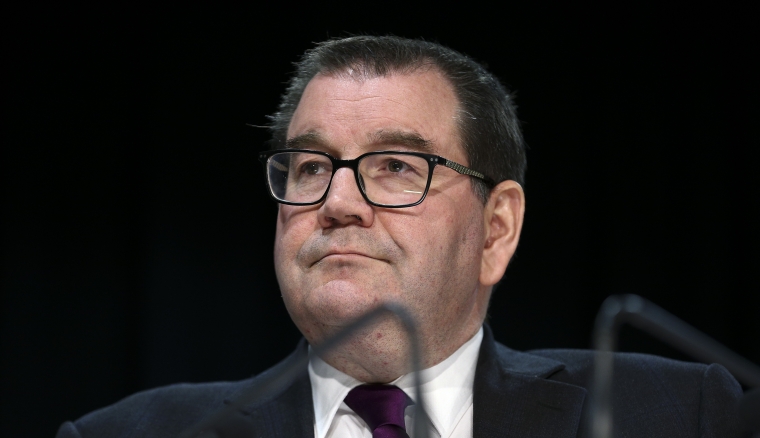
Finance Minister Grant Robertson is proposing to require the Reserve Bank (RBNZ) to “avoid unnecessary instability” in house prices, as it works to meet its inflation and employment targets.
Robertson wrote to RBNZ Governor Adrian Orr on Tuesday, asking for feedback on his suggestion to tweak the wording of the Remit for the Monetary Policy Committee (MPC).
The Remit, published in February 2019, is issued by the Finance Minister under the Reserve Bank Act.
Robertson would like to change Section 2b to say, “In pursuing the operational objectives, the MPC shall… Seek to avoid unnecessary instability in output, interest rates, the exchange rate, and house prices”.
Currently, the Remit doesn’t include the words “house prices”.
Robertson asked Orr for feedback on the suggestion, saying he also welcomed views on alternative proposals “with regard to the Reserve Bank’s monetary or financial policy that would help address our concerns”.
“I am concerned that the recent rapid escalation in housing prices, and forecasts for this to continue, are affecting the Government’s ability to meet the economic objective set out in the Remit," he said.
“I am also concerned about the potential that these price increases may present a financial stability risk to the economy, particularly when monetary policy returns to more normal settings.
"Housing price instability is harmful to our aims of reduced inequality and poverty, and is also likely to negatively impact the Government’s aim of creating a more productive and inclusive economy."
If changes are agreed upon, Robertson said he wanted them implemented soon: "I would request that you gave it your earliest possible consideration", he told Orr.
The New Zealand dollar jumped from 69.3 US cents to 69.7 US cents on the news. ANZ chief economist Sharon Zollner said this indicated the market expected OCR cuts to be less likely.
Robertson stressed he wasn’t proposing changing the MPC’s price stability and employment objectives. He also underlined the importance of RBNZ independence.
Taking some responsibility for soaring house prices, he said he directed Treasury to consider further demand-side measures to address asset price inflation.
These could include re-looking at the bright-line test. Robertson reiterated the Government’s commitment to not introducing new taxes.
He directed Treasury to report back by the end of the year.
See a copy of the letter Robertson sent to Orr here.
By way of background, the Policy Targets Agreement, which preceded the current Remit, required the RBNZ to "monitor" asset prices when conducting monetary policy.
However Treasury recommended the words “asset prices” be removed. Its advice to Robertson in 2018 was:
"[T]his requirement to monitor asset prices is not a good fit with the PTA as it does not relate to the policy target. It could also be argued that the reference to asset prices is superfluous as it is covered by the requirement to have regard to financial stability which is included in the Act and the PTA. On the other hand the provision is not harmful given the Bank will need to monitor prices in order to fulfil its functions. On balance, we recommend removing this clause as it is unnecessary and would assist in simplifying the document."
Here's a copy of a press release from Robertson:
New Zealand’s stronger-than-expected economic performance has flowed through to housing demand, so the Government will review housing settings to improve access to the market, the Finance Minister Grant Robertson announced today.
“Our focus is on improving access to the housing market for first home buyers and ensuring house price growth does not distort the effectiveness of our overall economic rebuild – which we want focussed on the productive side of the economy.
“We have been clear about the policy responses that we are not prepared to consider, but there are other options that need to be investigated.
“Overly restrictive planning rules are one of the causes of high house prices and the replacement of the RMA is a priority to address that. We will build on the National Policy Statement on Urban Development and examine other potential barriers to affordable housing. Minister Woods is working on new and innovative ways to increase supply.
“I have also sought advice on further demand side measures that can add to the initiatives that we have already taken. I expect to receive that advice towards the end of the year, and will discuss it with Cabinet as soon as possible after that,” Grant Robertson said.
“Today I can also confirm that I have written to the Reserve Bank Governor to seek his advice on possible ways the Reserve Bank can support the Government to meet its economic objectives, in particular with relation to house prices. One proposal I am seeking advice from the Reserve Bank on is whether to include stability in house prices as a factor for consideration in the Remit when formulating monetary policy.
“With an extended period of low interest rates, and some time before housing supply can catch up with demand, now is the time to consider how the Reserve Bank may contribute to a stable housing market. Undertaking this work is not to suggest the Reserve Bank bears responsibility for house prices, but simply that it should have regard to something that is influenced by monetary policy.
“I want to be clear I am not proposing any changes to the mandate or the independence of the Reserve Bank.
“I want to acknowledge the Reserve Bank’s approach during COVID-19 has served New Zealand incredibly well. I continue to support its independence and mandate. It is critical that it takes, as the Remit asks it to, an approach that looks beyond the short term,” Grant Robertson said.


We welcome your comments below. If you are not already registered, please register to comment
Remember we welcome robust, respectful and insightful debate. We don't welcome abusive or defamatory comments and will de-register those repeatedly making such comments. Our current comment policy is here.