
By Bernard Hickey
The Government and the Opposition are open to completely re-routing or realigning the main road and rail route from Picton to Christchurch at a cost of billions of dollars because of the massive earthquake damage done to the current coastal route north and south of Kaikoura.
Transport and logistic operators face delays and blockages to the key route linking Auckland, Wellington and Christchurch that could last months and possibly longer, forcing them to look at using coastal shipping in a way that transforms the economics and structure of the national transport network.
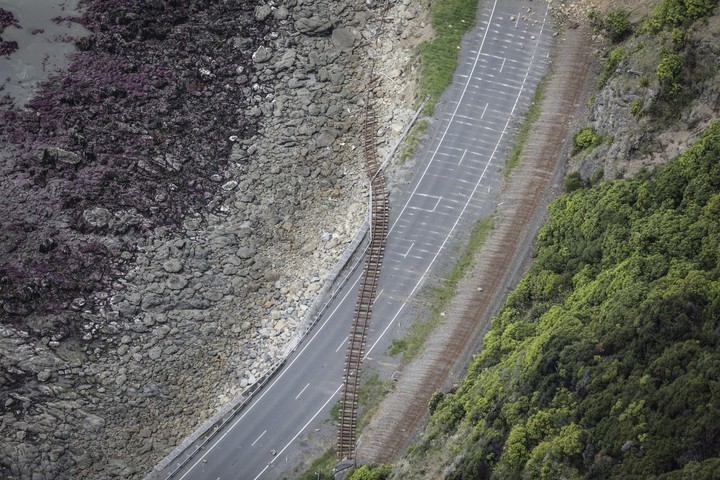
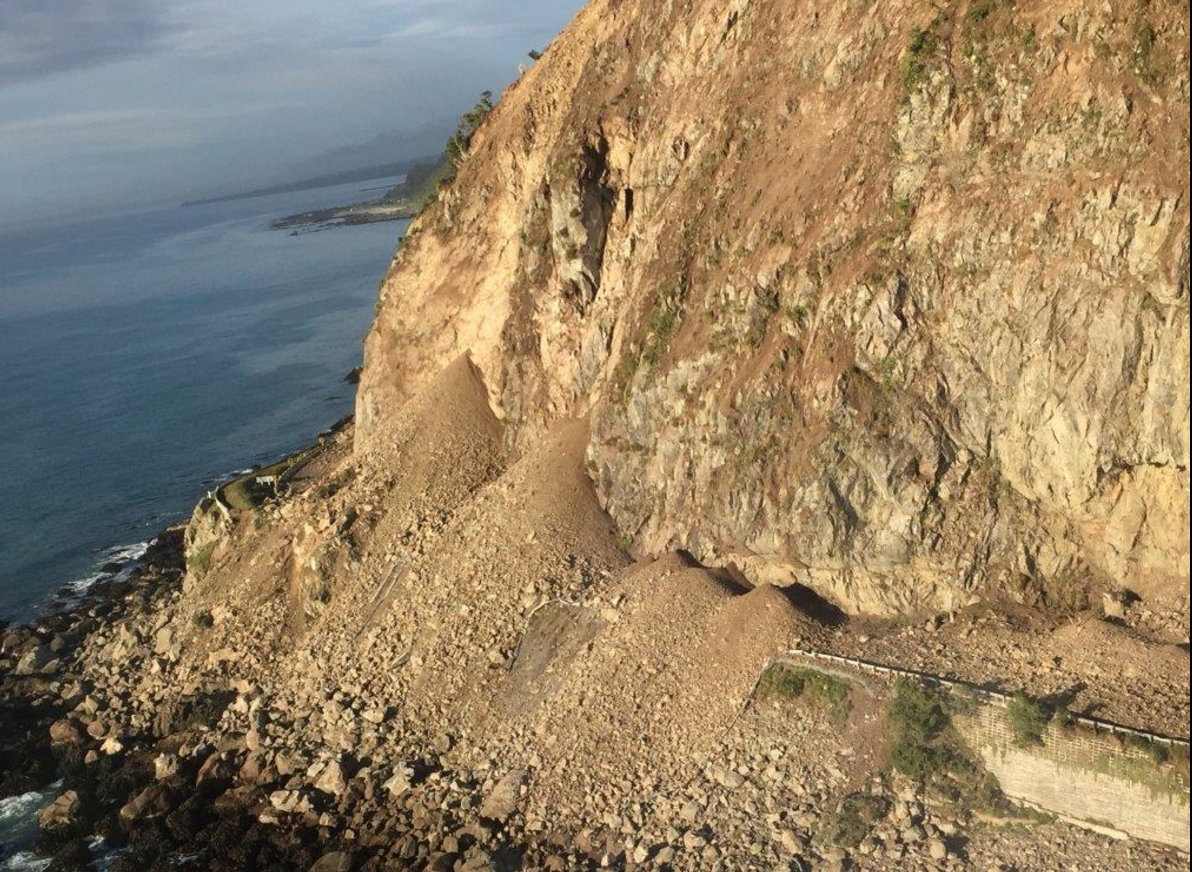
State Highway 1 and the railway through Kaikoura was engulfed or wiped out by slips at many points north and south of the town.
Last night NZTA said it re-opened an alternative route from Blenheim to Christchurch via State Highways 6 and 7 through Murchison and Lewis Passes that can handle trucks, but it was down to one lane in places and the route adds three hours to the journey. NZTA said it was also working to re-open the old State Highway 70 linking Culverden to Kaikoura to provide some road access to Kaikoura "within days."
Prime Minister Key said repairing the damage to State Highway 1 and the rail line could take many months and cost billions. He compared the task to the NZ$40 million spent over 13 months to reopen the Manawatu Gorge road after a slip in 2011.
"The roading and rail issues north and south on State Highway 1 are horrendous. If you turn your mind back to the Manawatu Gorge plus some. I saw at least six of that size north of Kaikoura," Key said in Kaikoura yesterday, adding he had not flown south of the town, where he had been told there were more slips of a similar size.
"It's a massive clean-up job," he said.
"You've got to believe it's in the billions of dollars to resolve these issues. They're huge slips. I'm not sure how long it will actually take to move this level of rubble off the road, not to mention the damage to the railways. It's a very, very big job for both the Transport Agency and KiwiRail," he said.
Move the road and rail?
He suggested in an RNZ interview this morning that NZTA and KiwiRail may even have to consider realigning the road and rail route along the coast north and south of Kaikoura.
The longer-term prospect prospect for the route is particularly challenging for KiwiRail, given it is losing around NZ$200 million a year and faces constant questions about the long-term viability of its main-trunk network -- of which the Picton to Christchurch route is a crucial part.
"When people have a chance to reflect on the scale of it and the damage to the rail network, you can't help but wonder whether the Transport Agency won't say that some sort of realignment programme (is needed)...or at least question whether the road might be in the right place," he said.
He denied the entire road would have to be abandoned.
"But it's not just about taking the rubble away. It's about future proofing the road to a certain degree," he said.
This leaves open the question about whether the Picton to Christchurch rail route is ever re-opened, given KiwiRail does not have access to the National Land Transport Fund, which has a contingency for this sort of natural event damage.
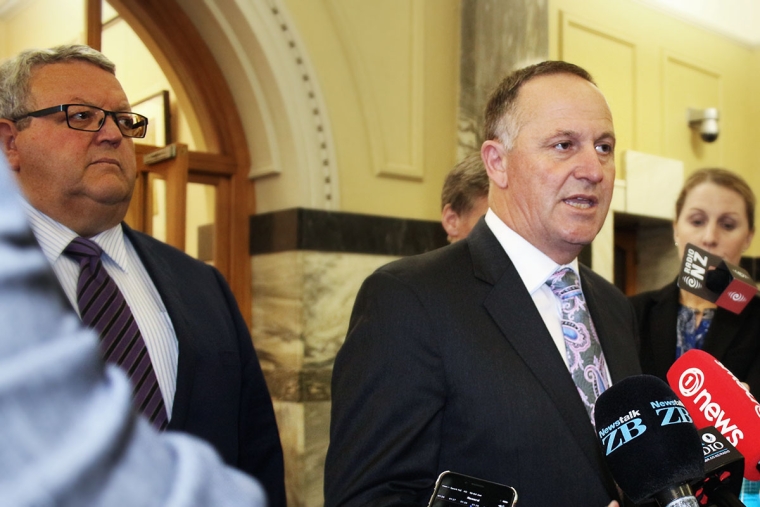
Key told a news conference in Parliament that the viability of the current State Highway 1 route was being questioned.
"The slips are of a scale that are very meaningful so one of the questions ultimately will be is it absolutely in the right place, is rail in the right place, and how susceptible is it to a future earthquake or slip," he said.
Finance Minister Bill English said night that the Land Transport Fund had the contingency funds to deal with the road repairs.
Big disruptions to Transport
English told the same news conference in Parliament the Government had the financial capacity to pay for the rebuild and repair of the transport route, and he agreed with Key that it could cost billions.
"Probably there is going to be a significant disruption from the transport links. You can see from Christchurch dealing with large landslips, dealing with issues like Picton and Wellington Port both having significant issues around damage and disruption -- these things are all a pretty hard fix," English said.
"I think that's probably the highest impact on the economy. This is the main arterial route from the North to the South Island and it is going to be significantly disrupted, in parts, for quite some time," he said.
"And the cost of that, some of it will fall to the Government, quite a lot of it, but some will also fall to the relevant ports in particular."
English said the business that would be most directly affected is Kiwirail.
He agreed with Key the cost would go into the billions.
"The combination of significant infrastructure damage in Wellington, obvious damage in Kaikoura -- all roading and rail issues -- this is going to add up to something fairly significant. We also know that those estimates change over time. The important point about the estimates is we've got the capacity to deal with it."
Opposition Leader Andrew Little also later said a Labour-led Government would be open to shifting the main route, and the attendant cost.
Freight operators eye coastal shipping
The closure of the main road and rail routes is particularly problematic for freight companies and businesses supplying and receiving goods to warehouses and supermarkets in Christchurch because it is the main way that imports into Auckland are moved to Christchurch, particularly Fast Moving Consumer Goods (FMCGs) in logistics systems using 'just-in-time' delivery.
The Wellington to Picton link was also cut off yesterday because of damage to the loading ramps for KiwiRail ferries at Wellington and checks to the berthing facilities for Bluebridge Ferries in Wellington. Bluebridge said it had resumed sailings late last night.
KiwiRail said this morning the Kaiarahi and Kaitaki ferries were scheduled to sail between Wellington and Picton today, while the Aratere would remain anchored in Wellington Harbour until a berth became available. KiwiRail said the sailings would carry freight and vehicle passengers only, while foot traffic passengers would not be carried because of damage to its terminal.
Mainfreight said late yesterday it was actively looking at using coastal shipping to move goods between Auckland and Christchurch.
"We are recommending to our Inter-Island customers to consider increasing stockhold in either our Christchurch or Auckland warehouses as an option to mitigate ongoing Inter-Island transit delays during this challenging period," it said.
"Under-cooked" coastal shipping
Road Transport Forum CEO Ken Shirley said the blockages to the main route to Christchurch would disrupt usual logistics systems for FMCG goods imported through Auckland and transported to Christchurch. He acknowledged New Zealand's coastal shipping system was "under-cooked" and the quake damage to the route through Kaikoura would force a re-think about the nation's transport infrastructure, including coastal shipping.
On the insurance front, Gerry Brownlee said he rejected suggestions EQC would be financially stretched to cope with the damage. "EQC is guaranteed by the Crown," he said.
(Updated with fresh pictures.)
We welcome your comments below. If you are not already registered, please register to comment
Remember we welcome robust, respectful and insightful debate. We don't welcome abusive or defamatory comments and will de-register those repeatedly making such comments. Our current comment policy is here.