
By Raf Manji*
As New Zealand braces for the economic and financial impact of the Covid 19 (coronavirus) pandemic, the government is preparing a large-scale fiscal support package, to be announced on Tuesday.
This morning the Reserve Bank cut the OCR by 75 basis points to 0.25% and indicated it would stay there for 12 months at least. This was a surprising, though warranted move, considering it had been relatively sanguine about the possible effects in recent weeks. It also indicated the option of large-scale asset purchases of government bonds.
The Federal Reserve Bank of New York has, just as I write this, cut the Federal Funds rate to a range of zero to 0.25%, and announced further buybacks of Treasury securities and government-backed mortgage securities over the coming months of up to US$700 billion.
These policy announcements sound eerily similar to the actions post-Global Financial Crisis (GFC), when the term QE or quantitative easing came into common knowledge. Essentially, QE is the large-scale purchase of assets, usually government bonds but also of mortgage backed securities, by monetary authorities, using newly created money. The purpose is to reduce the level of interest rate across the yield curve, in order to encourage new lending and reduce borrowing costs.
But to what end? The outcome government is looking for is to support businesses, whether from the perspective of the consumer, the investor or the producer. They want the economy to get back to ‘normal’, which in economic terms is around 2% per annum GDP growth.
So why not just put the money directly into those areas? Rather than going through the banking system, why not fund new projects directly, thus directly stimulating demand. In other words, massage the heart directly, rather than pump in some financial adrenaline.
I suggested this back in 2012, in an article entitled ‘Monetary Dialysis’ (published on interest.co.nz June 4th 2012!), as a response to the global program of quantitative easing, which had seen asset prices soar, whilst the general economy remained sluggish. All that new money had passed from one financial node to another, eventually boosting the economy through the wealth effect, but not really dealing with underlying issues. This money go round had benefited those who owned financial assets, including housing, but hadn’t really dealt with many of the economic challenges. This included the desperate need for new infrastructure in many countries, particular regional development, the lack of, which in the US at least, delivered Donald Trump to the White House.
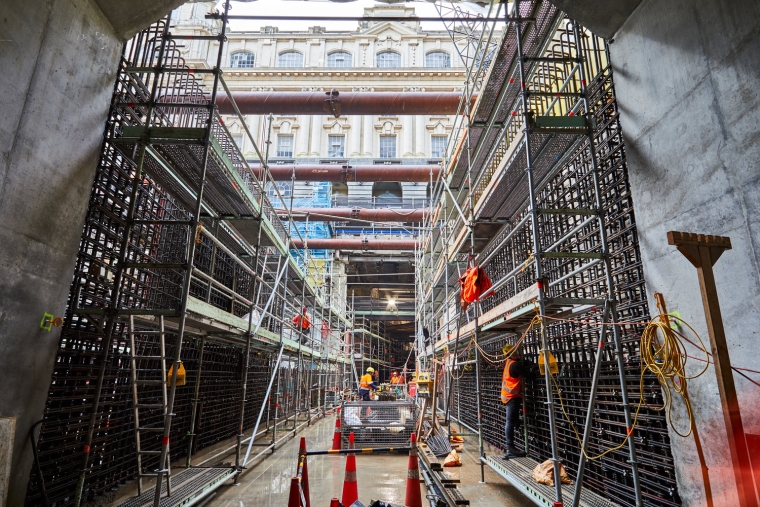
The most direct and sensible outcome is to direct new spending into the backlog of infrastructure projects, of which there are many. Just look at the state of the pipes in Wellington and Auckland. There is a long list of projects waiting for funding in local government, especially in regional areas. This is the time to boost our domestic industries, the ones we may look to now to provide basic support: energy, food, water, and housing. We can use this opportunity to build our self-sufficiency, climate change adaptation and mitigation. There is also the pressing need for an increase in core benefits, as identified by the Welfare Working Group, and studiously ignored by the current government.
The world is changing fast and we now need your support more than ever. Quality journalism is expensive and in these very troubled times our ad revenues are becoming very uncertain. We provide our coverage free to readers, and if you value that, we ask that you Become a Supporter. To do that, either click on the Red button below, or on the Black button at the top of this page. The level of your support is up to you. Thank you. (If you are already a Supporter, you're a hero.)
Directly injecting money into these areas will have an immediate effect, without the risk of missing the target through a QE style bazooka approach. The only limit to the amounts is the inflation rate and capacity in the economy. Both look to have plenty of headroom for the next 12-18 months at least. Whether the Reserve Bank funds this through purchasing government bonds, or directly credits the Treasury account, this new money must go directly into the economy, and not slosh about the banking system hoping for a pick up in new borrowing, at a time when the economy is contracting and businesses will be risk averse.
New Zealand should not get sucked into the type of QE we have seen overseas, which tends to favour asset price inflation, support zombie banks, and have only a marginal affect on the real economy. Now is the time for the Government to directly support the real economy, with funding for a targeted pipeline of infrastructure projects and increased income support, and a clear GDP target.
This crisis is also an opportunity. Let’s not waste it.
*Raf Manji is a strategy and risk consultant.
We welcome your comments below. If you are not already registered, please register to comment
Remember we welcome robust, respectful and insightful debate. We don't welcome abusive or defamatory comments and will de-register those repeatedly making such comments. Our current comment policy is here.