
By Gareth Vaughan
Ahead of the National Party's plans to float stakes in state owned enterprises on the sharemarket after November’s election, "ma & pa" retail investors have been handed an unfortunately timed reminder that the sharemarket can be a wild west with little or no accountability for hundreds of millions of dollars worth of investor losses.
It comes in the form of Feltex, the scourge of the NZX and one of the most high profile initial public offerings of the past decade. Amid little fanfare, Feltex's liquidator McDonald Vague has settled a legal spat with five former directors of the failed carpet maker.
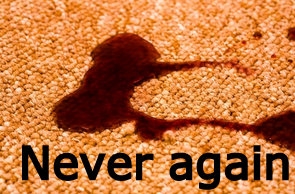
Feltex is a cautionary tale of wealth destruction that Sean Hughes, CEO of the government's new super financial markets regulator the Financial Markets Authority (FMA), and his troops must never let happen again.
Many ma & pa investors old enough to remember the 1987 crash have not gone near the sharemarket since. And as JBWere strategist Bernard Doyle has pointed out, the sharemarket has now slumped to the point where it's "ceasing to be relevant to the economy" and leaving a hole for what an equity market normally does such as providing businesses with capital to employ people and invest in growth.
Doyle recently noted the NZX's market capitalisation as a percentage of Gross Domestic Product has tumbled to just 29%, leaving us sandwiched between Ireland at 28% and Greece at 30%. It's down from 52% in 1997. Doyle has also pointed out the average daily turnover on our sharemarket has "oscillated around a flat trend" for 15 years, and at about NZ$60 million per day, is the same as in 1997.
And the latest ASB Investor Confidence Survey suggests New Zealanders have little interest in the sharemarket. According to the survey, term deposits are the most popular investment product with 19% support, followed by rental property at 15%, KiwiSaver and bank savings accounts equal third at 12%, managed Investments/unit trusts/superannuation next with 10% support, and finally investing directly in shares in listed companies bringing up the rear with just 6% support.
Hughes has been tasked with restoring retail "ma and pa" investors' confidence in the financial markets after the demise of dozens of finance companies (see our Deep Freeze List here for full details). He has acknowledged his task is a tough one and he isn't helped by the full implications of the Feltex debacle.
Liquidator's settlement removes hope of shareholders getting any money back
There's always investment risk and companies will continue to fail. But Feltex's story is a particularly grisly tale that could have been avoided. Feltex was a household name, had been around for donkeys' years, and its shares were peddled to retail investors by sharebrokers as a safe, high yielding investment opportunity.
Witness June Goldstein. A Christchurch widow then in her eighties, Goldstein told me in 2006 she had invested NZ$15,000 in Feltex after a Forsyth Barr adviser (Forsyth Barr was co-lead manager of the Feltex float with First NZ Capital) convinced her Feltex was a "long time, reliable firm" and a better bet than children's clothing retailer Pumpkin Patch which she had planned to invest in.
Within 27 months of its June 2004 IPO that raised NZ$254 million at NZ$1.70 a share, Feltex was gone, brought down by too much debt and, in my opinion, dismal management.
The McDonald Vague case was supposed to start a three week High Court trial this week. The liquidator had included shareholder claims worth about NZ$9 million stemming from Feltex breaching NZX continuous disclosure rules in its action against the five directors.
But the settlement means shareholders have now almost certainly lost their last realistic chance of getting any money back. There is still a separate live case, led by ex-Fay Richwhite staffer Tony Gavigan. A class action type case, this is seeking compensation from parties associated with Feltex's IPO on behalf of investors. However, the prospectus was cleared by the Securities Commission and most in legal circles believe this case has a particularly hard row to hoe.
The liquidator's settlement comes without the five - former chairman Tim Saunders, ex-CEO Peter Thomas, and ex-directors Peter Hunter, Michael Feeney, and John Hagen who have always denied any wrongdoing- admitting any liability. It's a confidential deal McDonald Vague describes as "modest and pragmatic" and reached on a “costs saving” basis.
Why should the terms of a settlement relating to a publicly listed company be confidential?
If we leave aside the issue of how a major dispute involving claims worth the thick end of NZ$40 million involving the liquidator and directors of a publicly listed company can be settled confidentially, it appears safe to assume there’ll be nothing in the deal for investors. Nothing.
The receivership has seen secured creditor, and in my opinion highly justified plug-puller, the ANZ, recoup all bar A$2.9 million (plus interest) of the A$119.5 million it was owed. But shareholders, who thought they were buying into a long standing and safe business, have got nothing.
And this is after a Securities Commission investigation concluded, among other things, that Feltex failed to disclose a breach in its banking covenants with the ANZ and that the company classified about NZ$100 million of debt as non-current when it should have been classified as current, and due for repayment within 12 months.This meant Feltex - according to McDonald Vague and based on the Securities Commission's report - was in breach of NZX continuous disclosure rules for 10 months - until the breach was finally disclosed to the sharemarket in June 2006.
The directors, meanwhile, allowed firstly Talley's Group (famed for fishing) and Sleepyhead owners Craig and Graeme Turner (famed for making beds) to do due diligence on Feltex in opposition to a deal with fellow carpet maker and rival Godfrey Hirst that would have secured all ANZ's money and 12 cents per share for shareholders. According to McDonald Vague, the directors weren't taking justified business risks.
Godfrey Hirst walked away from that deal only to return to pluck Feltex out of receivership in a second deal that - compared with its initial offer - saw Godfrey Hirst take over the cost of only 625, or about half of Feltex's staff.
It saw Feltex trade creditors lose NZ$5 million, left ANZ with a NZ$14 million shortfall and saw staff lose out on NZ$523,204 worth of pay, and shareholders dip out completely.
Little accountability for the misleading of investors
If Feltex was in breach of NZX continuous disclosure rules that means investors were misled. And they weren’t misled over a minor issue. They were misled over Feltex’s debt, the very issue that ultimately brought the company down.
So where’s the accountability?
NZX, whose hierarchy told the parliamentary select committee overseeing the FMA establishment before Christmas there have been no regulatory failures on the sharemarket, stung Feltex for NZ$150,000 in an earlier settlement of an alleged continuous disclosure breach, this one over a profit downgrade. That’s Feltex. Not its directors or advisers. So that NZ$150,000 came out of shareholders funds rather than benefiting them as key victims.
The Securities Commission's report referred Feltex's auditor Ernst & Young and responsible partner Gordon Fulton to the New Zealand Institute of Chartered Accountants (ICANZ) in November 2007. This came after the watchdog concluded work done by E&Y in a review of Feltex's December 31, 2005 half-year accounts wasn't up to scratch.
Three years later, in 2010, ICANZ fined Fulton NZ$150,000. So again, no money for Feltex's shareholders who were the victims of the company's erroneous debt classification.
And in a criminal case taken against the same five directors McDonald Vague targeted by Registrar of Companies Neville Harris over the undisclosed banking covenant breach, District Court Judge Jan Doogue ruled the directors took all reasonable steps to comply with the rules and blamed E&Y. The Crown (read taxpayer) was ordered to cough up NZ$952,111 worth of legal costs that the directors ran up successfully defending the charges. The Crown is appealing.
How can investors be sure this won't happen again?
So without suggesting any of the SOEs the government might float will collapse, let alone in the fast and spectacular manner of Feltex, where's the assurance to ma & pa that this type of debacle won't happen to a listed company again?
Well, a law change in 2008 means the FMA can now take action directly against company directors in relation to an alleged breach of continuous disclosure as the Securities Commission did against Nuplex directors over that company's continuous disclosure. In that case Nuplex coughed up NZ$3 million for shareholders.
Then there's the FMA's new Australian Securities and Investment Commission (ASIC) style powers. Here, the new watchdog has the ability to act against the likes of company directors, auditors and trustees where there is significant public interest to do so, over - for example - an alleged breach of directors' duties. This could mean, for example, the FMA following a similar route to that taken by ASIC in a successful case against auditor KPMG and directors of failed property finance group Westpoint. ASIC recouped up to A$67.5 million for Westpoint investors.
So should another Feltex type situation emerge, Hughes & Co have the tools to do something about it , - for the benefit of shareholders. And they must do so because the sharemarket, should the SOE floats breathe some life into it, may not be able to withstand another Feltex type blow.
This article was first published in our email for paid subscribers this morning. See here for more details and to subscribe.
We welcome your comments below. If you are not already registered, please register to comment
Remember we welcome robust, respectful and insightful debate. We don't welcome abusive or defamatory comments and will de-register those repeatedly making such comments. Our current comment policy is here.