
By Bernard Hickey
Just imagine that one day the Reserve Bank deposited NZ$1,000 in your account, along with every other citizen in New Zealand.
It sounds downright crazy, yet it's something that some central bankers are talking about in a crazy world of deflation, negative interest rates and much slower economic growth for much longer than anyone expected.
This idea is called 'Helicopter Money' and it's suddenly the hot topic in the sometimes arcane and always sober world of central banking. It's a truly radical idea that would seem utterly irresponsible and dangerous in normal times. It's the sort of thing we used to think only Robert Mugabe would do, and it would inevitably lead to everyone pushing around barrows of cash to buy bread.
It's even more 'out there' than the suggestion from Russel Norman in 2012 that the Reserve Bank lend money to build infrastructure in Christchurch. 'Helicopter Money' would see everyone get a big dollop of freshly invented money to spend on cigarettes, booze and a trip to Rotovegas if they saw fit. It seems to break all the rules about economics, let alone of politics in a world where means testing and work-tested benefits are the convention.
So what is 'Helicopter Money' and how has it come to this?
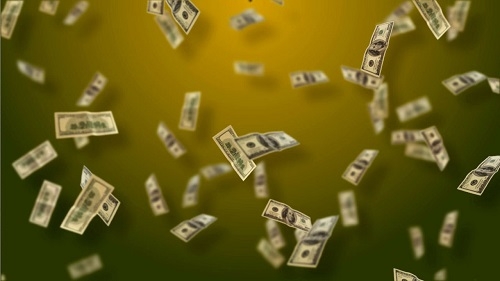
Its modern genesis came in a speech in 2002 from Federal Reserve Governor Ben Bernanke. Speaking as Japan was grappling with deflation, he said one option would be for a central bank to finance a tax cut for everyone -- a so-called 'Helicopter drop'. This term was invented by the godfather of monetarism, Milton Friedman, in 1969. He used the parable of dropping thousands of newly printed $1,000 bills onto a city from a helicopter to show how the immediate boost to spending would increase inflation and output in an economy that was underperforming and suffering chronic deflation.
It all seemed an academic exercise that made for a great lecture and very poor economics and politics.
Until now.
That's because the world's biggest central banks cut their interest rates to almost 0% during the Global Financial Crisis. It helped avoid financial armageddon, but proved ineffective in restarting the engine of growth. They then bought US$7 trillion of government bonds to drag down long term interest rates in a process called Quantitative Easing. That helped unleash big jumps in stock markets and property markets, but again appears not to have reversed a steady fall in inflation and stubbornly low economic growth. It made a few people much richer, but much of the money has ended up back in bank accounts because rich people save most of their money.
In desperation, four European central banks and Japan have now cut their interest rates for bank deposits to negative levels. That means banks pay the central banks of Switzerland, the Euro zone, Sweden and Denmark to look after their money. Almost a quarter of the world's economy now has negative interest rates. The theory is it will force the banks to lend the money out and encourage people to spend rather than save.
But it appears this apparently last resort isn't working either to boost their growth and inflation rates. Europe's prices fell unexpectedly in February and Japan's negative interest rates had the worst unintended consequence -- nervous Japanese investors pulled their money home and pushed up the yen. That makes Japanese exporters less competitive and worsens the potential for imported deflation. Many investors worried it would also further undermine the profits of already weak banks because they were unable to pass on these negative interest rates to their own customers.
So here we are at the ultimate last resort -- printing money out of thin air and giving it to real people to spend on real goods and services, rather than just buying assets and putting the proceeds in the bank.
Late last year the former chairman of Britain's Financial Services Authority, Adair Turner, recommended something similar. He suggested monetary financing of Government deficits, which means the central bank prints money to lend to the Government to spend on new infrastructure or tax cuts or whatever it feels like. This is more like the Russel Norman suggestion.
The other one is that the central bank simply pay the freshly invented money into everyone's accounts. This is classic helicopter money without the actual helicopters. It would be fair and have an immediate effect because much more of it would go to poorer spenders, rather than richer savers. Central banks also don't have to get elected so could do it without the pesky political issues of who deserves the money and who doesn't. Anyway, many argue the world is in such an economic mess because politicians could not get their political act together to reform their economies and fix their broken infrastructures with Government spending. So why not give the job to a bunch of technocrats.
No one is suggesting this is appropriate for New Zealand any time soon. Our Reserve Bank still has another 2.5% of interest rate cuts to go, and is expected to signal a few as early as this Thursday.
But Helicopter Money is now being actively discussed in the Northern Hemisphere and as we've seen over the last decade, where they go, we often follow.
A version of this article first appeared in the Herald on Sunday. It is here with permission.

We welcome your comments below. If you are not already registered, please register to comment
Remember we welcome robust, respectful and insightful debate. We don't welcome abusive or defamatory comments and will de-register those repeatedly making such comments. Our current comment policy is here.